
ÓSCAR MURILLO: LA PINTURA COMO POZO DE ACUMULACIÓN
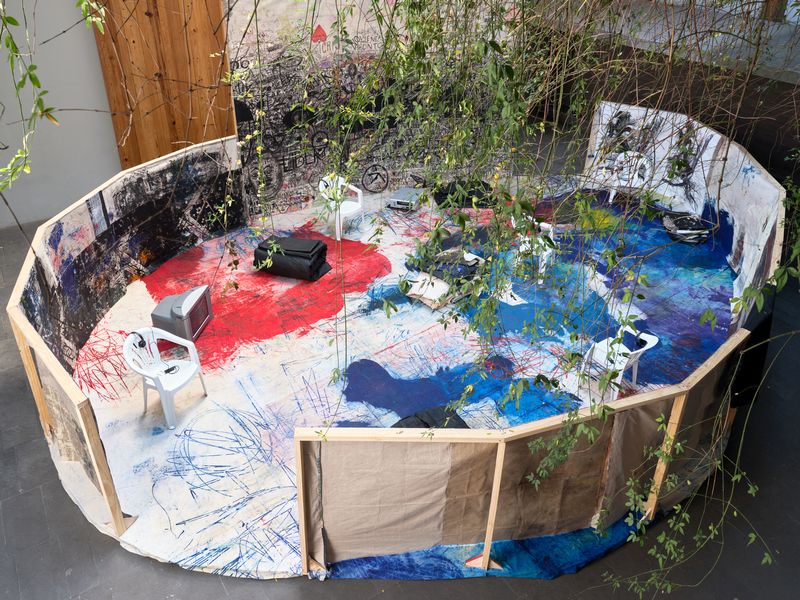
The article profiles Colombian-born artist Oscar Murillo and his expansive, socially-engaged practice. It details his rise to international prominence in the early 2010s with large-scale paintings that incorporate text, textiles, and studio detritus, and highlights his ongoing, collaborative project 'Frequencies,' which involves students from over thirty countries creating works on canvases attached to school desks. The piece also references his major solo exhibitions, including 'El pozo de agua' at kurimanzutto in Mexico City (2026), 'Masas' at WIELS in Brussels (2024), and 'The flooded garden' at Tate Modern (2024).
Murillo's work matters for its radical redefinition of painting and authorship within contemporary art. His practice moves beyond the canvas to create participatory events that bridge the art world and social spheres, focusing on themes of migration, labor, and collective experience. Projects like 'Frequencies' challenge traditional notions of the artist as sole creator, instead presenting art as a palimpsest built from anonymous, communal gestures. This approach offers a critical lens on global circulation, cultural memory, and the hierarchies embedded within artistic production.