filter_list Showing 6 results for "British Pavilion" close Clear
dashboard All 6 museum exhibitions 4article news 2
date_range Range Today This Week This Month All
Subscribe

Venice Biennale Special 2026—podcast

This episode of The Art Newspaper's podcast is a Venice Biennale special, covering the opening week of the 2026 edition. Host Ben Luke, along with Louisa Buck and Jane Morris, reviews the main exhibition "In Minor Keys," curated by the late Koyo Kouoh and realized by five collaborators. The podcast features interviews with artists Gabrielle Goliath, whose work for the South African pavilion was cancelled and is instead staged in a Venice church, and Lubaina Himid, showing in the British pavilion. It also includes conversations with writer Saidiya Hartman and Daniella Kaliada of Belarus Free Theatre about their collateral projects. The episode concludes with a focus on two restored Tintoretto paintings at the Basilica of San Giorgio Maggiore, funded by Save Venice.
6 Rising Artists to Watch at This Year’s Venice Biennale

The article profiles six rising artists at the 2026 Venice Biennale, focusing on Sung Tieu and Gala Porras-Kim. Tieu transforms the German Pavilion with a tile shell recreating a former housing complex for Vietnamese contract workers, while inside she scatters chocolate ladybugs as a symbol of occupation. Porras-Kim presents work in the Arsenale examining 'institutionally defined damage' and how decay can realign objects with their natural state.

At the Venice Biennale I saw anger at Russia and Israel – and its leadership pretending everything was fine | Charlotte Higgins

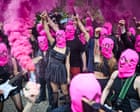
At the 2024 Venice Biennale, the Russian pavilion returned with festive performances and prosecco deliveries, drawing sharp criticism from observers who saw it as a propaganda effort to distract from Russia's war in Ukraine. Meanwhile, Ukraine's Kramatorsk was bombed, and protests erupted, including a Pussy Riot intervention. Biennale president Pietrangelo Buttafuoco defended Russia's and Israel's participation, rejecting preemptive bans despite open letters and appeals. European Commission investigated potential sanctions breaches, and culture ministers from Ukraine, Poland, Estonia, and Baltic states boycotted or condemned the biennale's stance, accusing it of yielding to the aggressor.

What not to miss at the 2026 Venice Biennale

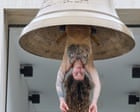
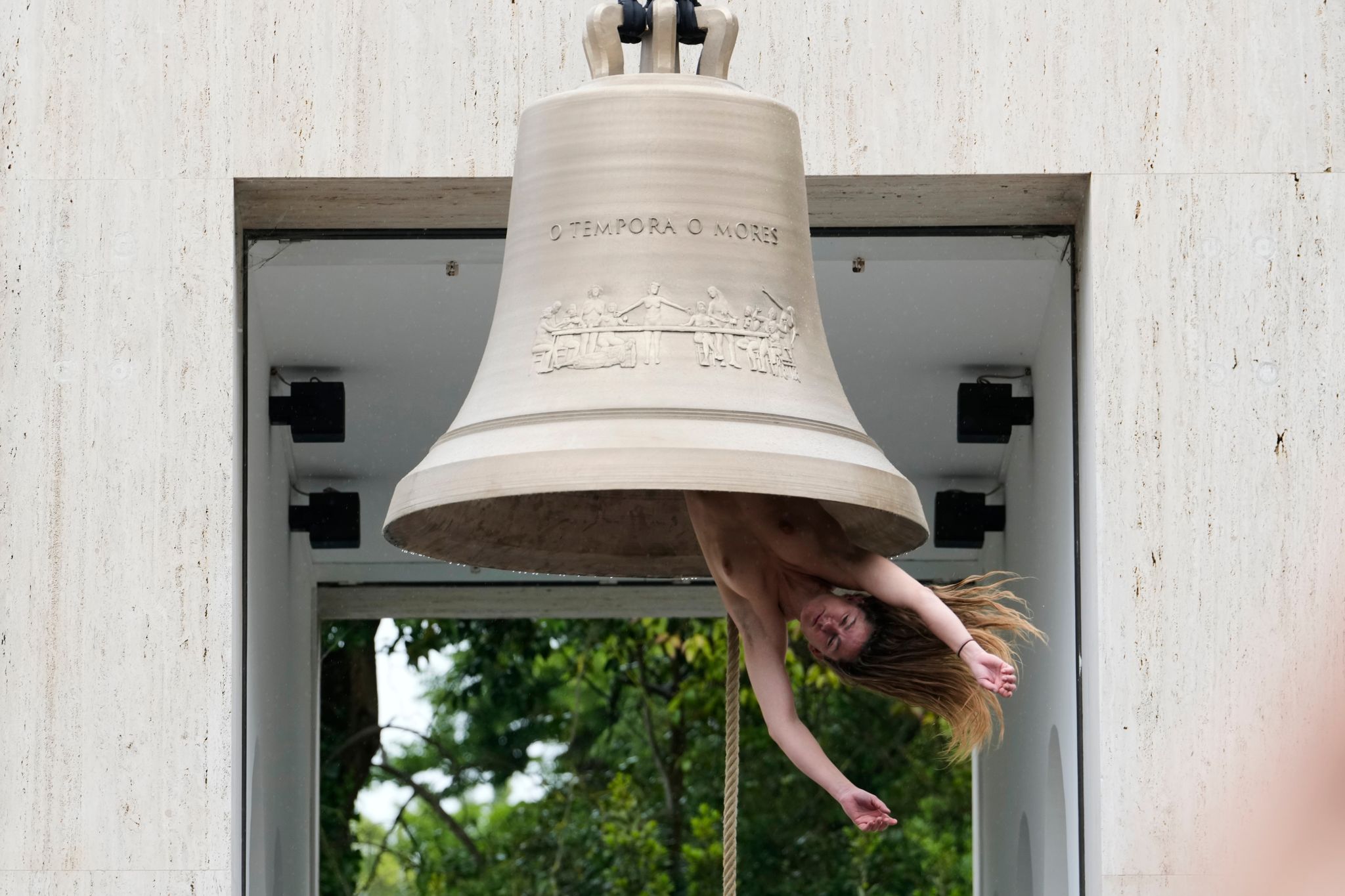
The article highlights five standout pavilions and installations at the 2026 Venice Biennale. Florentina Holzinger's Austrian pavilion features extreme, nude performances including a woman submerged in a urine-purified tank, drawing police attention. Sanya Kantarovsky presents eerie paintings and a Murano glass sculpture in a historic palazzo. Gabrielle Goliath's 'Elegy'—a hypnotic mourning performance for women killed in violence—was banned by South Africa but staged with London's Ibraaz. Carrie Schneider's 1.5km photographic curl in the Arsenale references Chris Marker's 'La Jetée'. Lydia Ourahmane's delicate sculptural show uses materials sourced from Venice, including a bead curtain made by inmates.

Several Venice Biennale pavilions shut in protest over inclusion of Israel

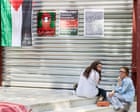
Several national pavilions at the 2026 Venice Biennale shut down during the final preview day in a strike organized by the Art Not Genocide Alliance (Anga) protesting Israel's inclusion due to its war in Gaza. Pavilions from Belgium, the Netherlands, Austria, Japan, Macedonia, and Korea closed entirely, while others like Britain, Spain, France, Egypt, Finland, and Luxembourg partially closed or reopened later. Artists in the main exhibition added Palestinian flags and posters reading "Palestine is the future of the world." The Israeli pavilion was closed for a private event, and earlier in the week Pussy Riot staged a protest at the Russian pavilion.

Venice Biennale opens without a jury amid strife over Russian and Israeli participation

The Venice Biennale, one of the world's most prestigious contemporary art exhibitions, opens its most contested edition in memory without a jury after the jury resigned in protest over the participation of Israel and Russia, both under investigation by the International Criminal Court for human rights abuses. Protests have erupted outside the Israeli and Russian pavilions, with demonstrators clashing with police, while feminist groups from Ukraine and Russia converged on the Russian Pavilion and Palestinians remembered artists killed in Gaza. The Biennale has replaced the jury with a public vote via email, with winners announced at the close on November 22.