filter_list Showing 4 results for "Christian Caliandro" close Clear
dashboard All 4 article culture 2museum exhibitions 2
date_range Range Today This Week This Month All
Subscribe

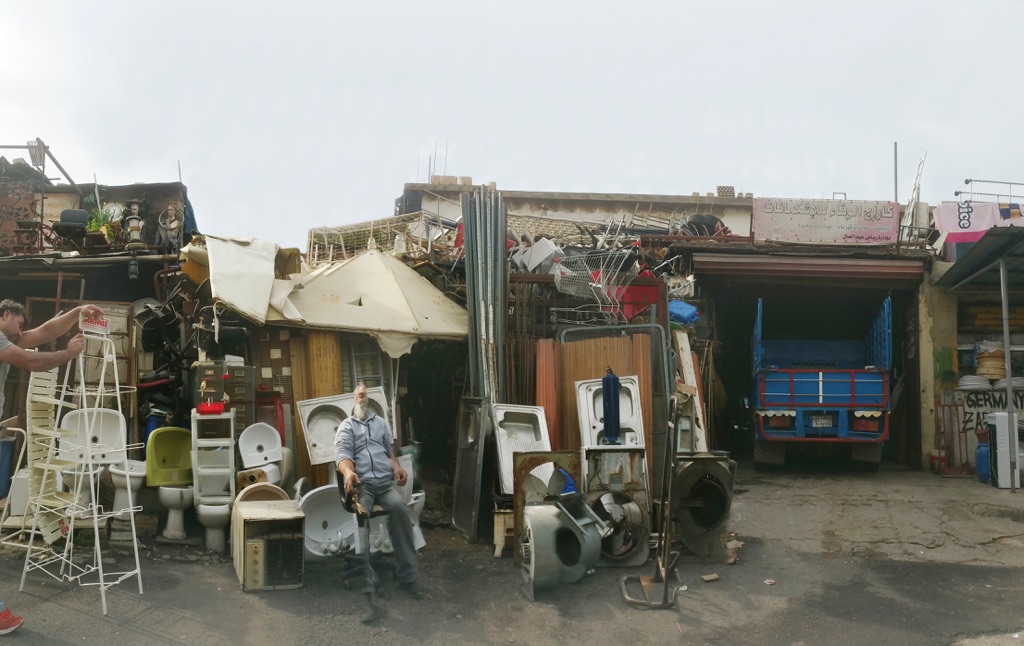
Dahiye, il quartiere di Beirut che non esiste quasi più. Nelle foto di un artista italiano

Italian photographer Armando Perna (born 1981 in Reggio Calabria) has documented Dahiye, a southern suburb of Beirut known as Hezbollah's stronghold, using a digital camera hidden inside a car and controlled remotely via Bluetooth. His project, initiated in 2013 and exhibited in 2017 at the Fondazione Pino Pascali in Polignano a Mare (Bari), creates a street-view-style mapping of a neighborhood that has been heavily bombed by Israeli forces, most recently in the past weeks. The work was promoted by Planar gallery, founded by Antonio Ottomanelli, with Perna and Anna Vasta as part of the #showcase project.
The Paradox of Contemporary Art: The World Is Violent, but the Works Are Correct and Inoffensive

Il paradosso dell’arte contemporanea: il mondo è violento, ma le opere sono corrette e inoffensive

The article examines a paradox in contemporary art: as the world grows more violent and chaotic, art has become increasingly 'correct,' morally irreproachable, and inoffensive. The author argues that over the past fifteen years, artworks have been judged primarily by their moral and identity credentials, with curators acting as moral gatekeepers and censors. This shift coincides with a period when geopolitics, history, and public behavior have spiraled out of control, creating a strange compensatory dynamic where art is expected to be perfectly controlled and polite while reality grows brutal.

Interview to discover Theo Eshetu, the only Italian artist at the 2026 Venice Biennale

Intervista per scoprire Theo Eshetu, unico artista italiano alla Biennale di Venezia 2026

Theo Eshetu (London, 1958), the only Italian artist invited to the central exhibition "In Minor Keys" of the 2026 Venice Biennale curated by Koyo Kouoh, is profiled in an interview. Born to an Ethiopian father and Dutch mother, Eshetu trained in the Netherlands and London before settling in Rome in the early 1980s. He discusses his cosmopolitan background, his early struggles with belonging, and how he transformed that into artistic strength. The interview covers his career, his memories of the Roman art scene in the 1980s and 1990s, and his current work presented at the Biennale, including the piece "The Return of the Axum Obelisk" (2010).

Literature Today: The Crisis of the Novel as a Symptom of Social Change

La letteratura oggi: la crisi del romanzo come sintomo di un cambiamento sociale

The article examines the perceived crisis of the novel as a literary form, tracing its historical rise alongside the bourgeoisie in the 17th and 18th centuries. It argues the novel functioned as a mirror for a coherent social class with shared values, serving as a device for collective representation. The form's foundational premise of a recognizable community began to fracture in the 20th century, particularly after World War II, as societies atomized and grand ideological narratives collapsed.