filter_list Showing 14 results for "Culture Ministry" close Clear
search
dashboard All 14 article news 7article policy 4museum exhibitions 2gavel restitution 1
date_range Range Today This Week This Month All
Subscribe

Venice Biennale 2026 Highlights: Off-Site Exhibitions

ArtReview editors highlight off-site pavilions and exhibitions at the 61st Venice Biennale, running from 9 May through 22 November 2026. Featured works include Li Yi-Fan's film *Screen Melancholy* at Palazzo delle Prigioni, which uses motion capture and a free-trial videogame engine to explore digital alienation and the 'enshittosphere,' and Roberto Diago's installation *Free Men* at the Pavilion of Cuban Republic, comprising rusted iron heads, fragmented wooden figures, and text works critiquing political oppression in Cuba.
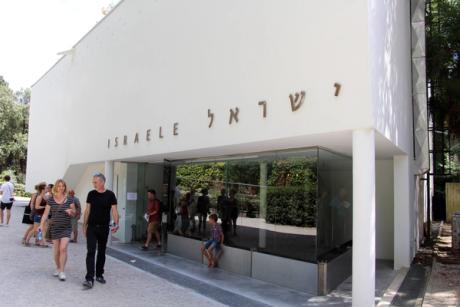
The art of politics: how global conflicts are playing out in this year's Venice Biennale

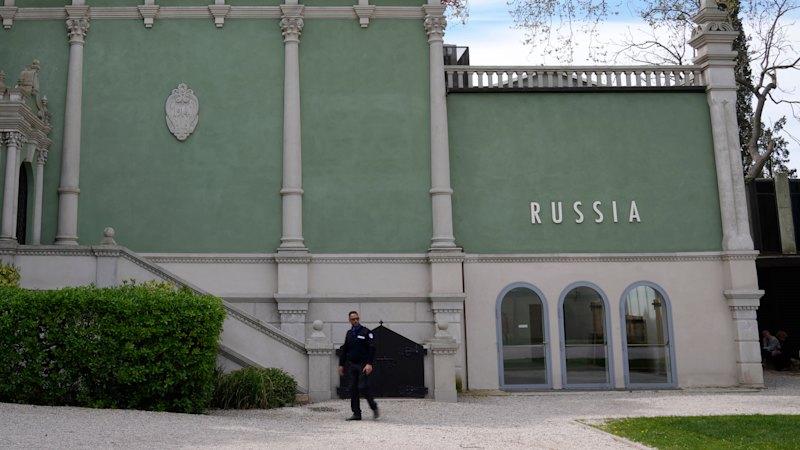
Israel is making a controversial return to the 2025 Venice Art Biennale after its pavilion was locked in 2024 with a note demanding a ceasefire in Gaza. The artist representing Israel, Belu-Simion Fainaru, will present his project "Rose of Nothingness" in the Arsenale, while Russia also returns to the Biennale after its Giardini pavilion was reassigned to Bolivia in 2024. The Art Not Genocide Alliance (ANGA) has renewed calls for a boycott and is organizing strike action to disrupt the event, accusing Israel of genocide.

Israel’s foreign ministry accuses Venice Biennale's jury of ‘politicising’ exhibition

Israel’s foreign ministry has accused the Venice Biennale's jury of politicizing the exhibition after jurors announced they would not consider for prizes countries whose leaders face International Criminal Court charges for crimes against humanity. The jury’s statement, which did not name specific nations, is broadly understood to apply to Israel and Russia, both returning to the Biennale for the first time since the Gaza war and the Ukraine invasion, respectively. The Israeli ministry posted on X that the jury had decided to 'boycott' Israeli sculptor Belu-Simion Fainaru, calling it 'a contamination of the art world.' The Biennale distanced itself from the jury’s announcement, stating the jury acts autonomously, while the Russian pavilion is reportedly set to open only for a limited pre-opening period due to budget constraints amid sanctions.

Venice Biennale’s jury resigns

The entire jury of the 61st Venice Biennale, presided by Brazilian curator Solange Farkas and comprising four other curators, resigned just nine days before the exhibition's scheduled opening on 9 May 2026. The jury had announced it would not award prizes to countries whose leaders are charged with crimes against humanity by the International Criminal Court, a move widely understood to target Israel and Russia. In response, the Biennale's organisers cancelled the prize-giving ceremony and will instead award Golden Lions via a popular vote among ticketholders. The row escalated further when the Israeli representative, sculptor Belu-Simion Fainaru, accused the jury of discrimination and threatened legal action, prompting intervention from Italy's culture ministry.

Musée d’Orsay displays Renoir and Degas works looted by Nazis

The Musée d’Orsay in Paris has opened a new gallery dedicated exclusively to artworks suspected of being looted or forcibly sold during the Nazi occupation of France. Among the 13 works on display is Edgar Degas's *Dinner at the Ball* (1919), originally owned by Jewish collector Fernand Ochsé, who was deported to Auschwitz with his wife in 1941. The painting passed through multiple hands before being identified as one of over 100,000 artworks plundered by the Nazis. The museum has assembled a team of six provenance researchers to spend three years tracing the original owners of these works, which are part of the "MNR" (Musées nationaux récupération) collection—some 2,200 pieces deemed too important to sell but whose owners remain unknown.

Meloni takes control of Italian museums

Meloni reprend en main les musées italiens

Italy’s culture ministry under Prime Minister Giorgia Meloni has appointed 14 new directors for so-called “second-tier” museums, reinforcing a shift away from the international “super-director” model introduced by the 2014 Franceschini reform. All appointees are Italian except for French director Axel Hémery, who was reappointed at the Pinacoteca di Siena due to his strong performance. The move follows the earlier ousting of foreign directors at top-tier museums, with only two foreign-born directors—Eike Schmidt and Gabriel Zuchtriegel—remaining, both of whom hold Italian citizenship.

Parliamentary report calls for major changes at French museums in the wake of Louvre heist

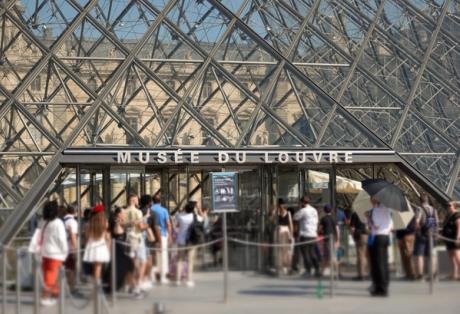
A French parliamentary report published on 13 May, following the October 19 heist of the crown jewels at the Louvre, issues a damning assessment of the country's museum security and management. The commission heard around 100 testimonies and examined some 2,000 museums, dedicating a special chapter to the Louvre. It blames former director Laurence des Cars's leadership for a "dysfunctional drift" that prioritized contemporary art interventions and fashion shows over basic infrastructure and collection protection, allowing the heist to occur. The report lists rising threats including riots, burglaries, cyberattacks (which forced the National Museum of Natural History in Paris to cancel an exhibition after a ransomware attack in July 2025), and terrorist plots. It proposes 40 recommendations, including raising budgets by an estimated €20–25 billion over a decade, enhancing staff training, and overhauling museum leadership.

Venice Biennale jury quits amid row over participation of Russia

The entire jury of the Venice Biennale resigned just days before the 61st international art exhibition's opening on May 9, following a dispute over the decision to allow Russia to participate. The five-member panel, led by Solange Farkas and including Zoe Butt, Elvira Dyangani Ose, Marta Kuzma, and Giovanna Zapperi, had previously stated it would not award prizes to artists from countries whose leaders face charges of crimes against humanity, a move seen as targeting Russia and Israel. The Biennale responded by postponing the award ceremony to November 22 and announcing it would give two awards, including one that could go to any national participation, citing its founding principles of openness and rejection of censorship.

Italian Culture Minister Launches Inspection of Venice Biennale’s Russian Pavilion

Italian Culture Minister Alessandro Giuli has launched an official inspection of the Russian Pavilion at the 61st Venice Biennale, just days before the exhibition opens. An inspector has been sent to Venice to review all documentation related to Russia's participation, focusing on potential irregularities such as visa issues for Russian artists and delegation members. The investigation follows the Biennale's international jury decision to exclude Russia and Israel from awards due to accusations of crimes against humanity. The Russian Pavilion will be open only during the pre-opening vernissage, after which it will close, with digital documentation displayed in its windows.

Korea’s art market grows, but working conditions for entry-level workers do not

A 20-something intern at a small Seoul gallery, identified as Park, accepted a job paying 1.35 million won ($910) per month after taxes—below South Korea's minimum wage—because she believed early experience was essential for career advancement in the art world. The article, based on interviews with the Korea JoongAng Daily, reveals that many entry-level workers face low pay and precarious conditions, exacerbated by a severe oversupply of arts graduates (48,000 annually) versus only about 3,523 job postings per year on the industry site Art More, leading to reliance on personal connections and informal hiring.

Venice Biennale jury resigns amid row over Russian entry

The international jury of the Venice Biennale resigned en masse just nine days before the opening of the world's oldest contemporary art fair, amid a dispute over Russia's participation and the panel's decision to bar prizes for countries accused of crimes against humanity by the International Criminal Court. The jury, comprising president Solange Farkas and members Zoe Butt, Elvira Dyangani Ose, Marta Kuzma, and Giovanna Zapperi, stepped down without explanation, following tensions that also involved Italy's Culture Ministry cutting €2 million in EU funding over Russia's presence and sending inspectors to the Russian Pavilion.

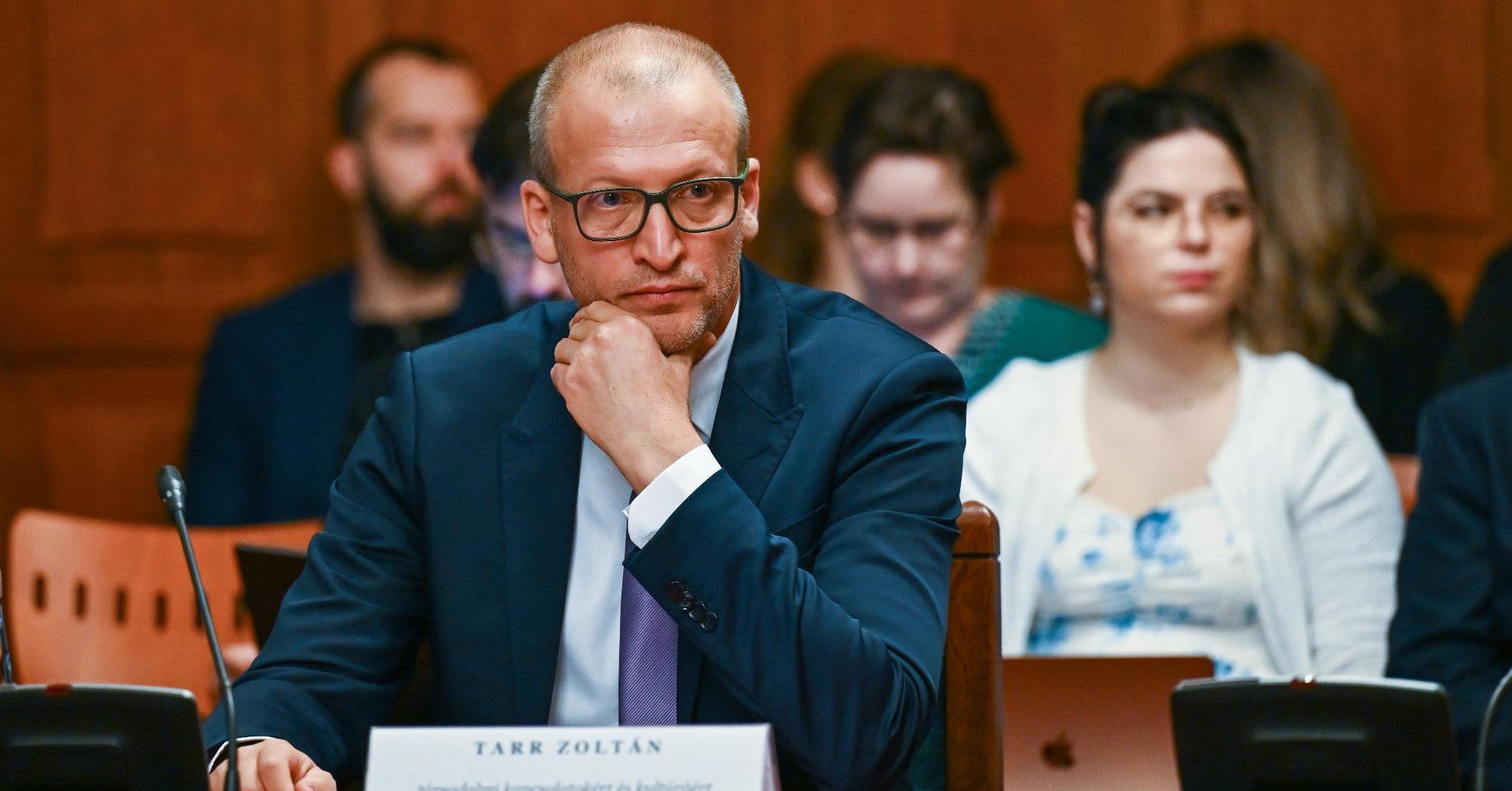
Who is the new Minister of Culture in Hungary in the first post-Orbán government? The profile of Zoltán Tarr

Chi è il nuovo Ministro della Cultura in Ungheria nel primo governo post-Orbán? Il profilo di Zoltán Tarr

Zoltán Tarr è stato nominato Ministro delle Relazioni Sociali e della Cultura nel primo governo post-Orbán in Ungheria, guidato dal nuovo Primo Ministro Peter Magyar. Tarr, 52 anni, ex pastore della Chiesa riformata ungherese ed europarlamentare per il PPE, ha promesso di ripristinare la libertà d'espressione e smantellare il sistema di favoritismi politici nella cultura, dopo 16 anni di governo autoritario di Viktor Orbán.

Venue of National Centre for Contemporary Arts on Niakrasava Street to Cease Exhibition Activities in June

The National Centre for Contemporary Arts (NCCA) in Minsk, Belarus, has announced that its venue on Niakrasava Street will cease exhibition activities from June 22, 2026. The institution is set to be liquidated, with its premises and collections transferred to the National Art Museum, while the Niakrasava Street space will be taken over by the Belarusian State Academy of Arts. The closure is linked to the newly appointed chairman of the Union of Artists, Andrei Vasileuski, and reportedly supported by the Culture Ministry.

National Art Museum presents vibrant exhibition within World Urban Forum [PHOTOS]

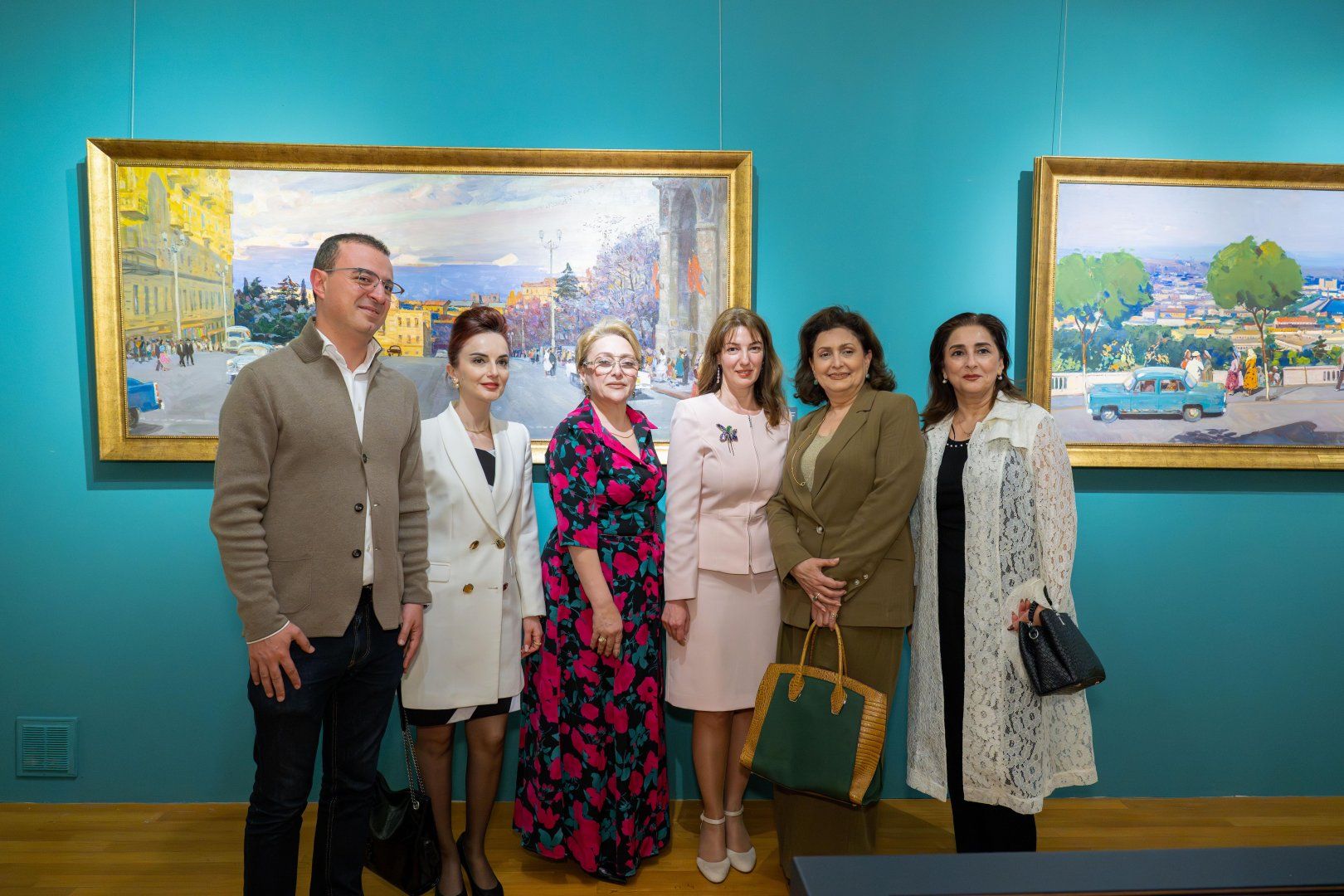
The Azerbaijan National Art Museum has opened an exhibition titled 'Chronicle of the City of Winds: Baku in the Works of Artists from the 19th to 21st Centuries,' organized jointly by the Azerbaijan Culture Ministry and the museum. Featuring over 80 works of painting, graphic art, and sculpture, the show traces Baku's historical, architectural, and cultural evolution from the 19th century to the present day. It includes pieces from the museum's collection alongside contemporary works, and is part of the 13th session of the World Urban Forum (WUF13), held within the Year of Urban Planning and Architecture in Azerbaijan. The opening ceremony featured speeches by Deputy Culture Minister Saadat Yusifova, museum director Shirin Malikova, and People's Artist Salhab Mammadov, as well as a musical performance by Honored Artist Nargiz Karimova and Zumrud Alizade.