
filter_list Showing 4 results for "Estonian Pavilion" close Clear
dashboard All 4 article news 2museum exhibitions 2
date_range Range Today This Week This Month All
Subscribe

Curators Announced for 16th Baltic Triennial

The Contemporary Art Center (CAC) Vilnius has appointed artist Nikita Kadan and curator Natalia Sielewicz as curators of the 16th Baltic Triennial, scheduled for 2027. Kadan is a Kyiv-based artist, while Sielewicz is chief curator at Warsaw's Museum of Modern Art. The duo has proposed "grief and resurrection" as the triennial's theme, framing despair and mourning as spaces for careful listening and potential renewal.

Lithuanian, Latvian, and Estonian Pavilions Stage Pro-Ukraine Procession During Venice Biennale

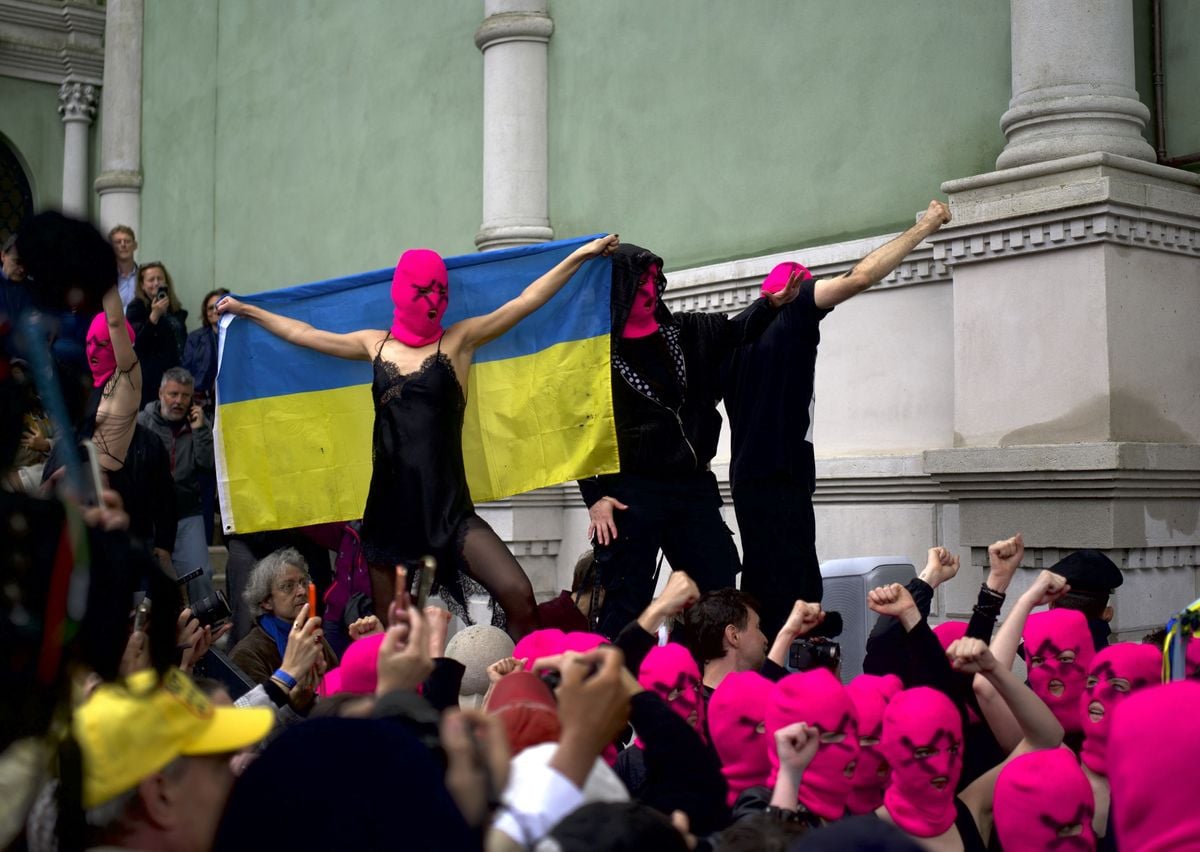
On May 6, 2026, the Lithuanian, Latvian, and Estonian pavilions at the Venice Biennale organized a procession in solidarity with Ukraine, walking approximately one and a half miles from the Lithuanian Pavilion in the Fucina del Futuro to the Estonian pavilion. The action honored Ukrainian cultural workers creating under war conditions and those who have died. It is one of several political protests at the contentious 2026 Biennale, including demonstrations by Pussy Riot and FEMEN at the Russian pavilion, a "Solidarity Drone Chorus" opposing Israel's inclusion, and a planned 24-hour strike by the Art Not Genocide Alliance.

Merike Estna on Representing Estonia at the 61st Venice Biennale

Artist Merike Estna will represent Estonia at the 61st Venice Biennale in 2026 with a project that transforms the national pavilion into an active, open studio. Eschewing the display of finished products, Estna plans to start with empty canvases and complete a series of 22 paintings over the course of the exhibition, allowing visitors to witness the "living" process of creation.

Anti-Russia Protests Spread Beyond the Biennale and Into Venice

Protests against the reopening of the Russian pavilion erupted at the Venice Biennale and spread across the city on the second day of the 61st edition. Visual artist Shalva Nikvashvili, who grew up in post-Soviet Georgia, began a silent performance wearing a muzzle-style mask and carrying a chair, holding a sign reading “La Biennale di Venezia” and “violence.” Shortly after, a group of about 20 protesters led by Pussy Riot co-founder Nadya Tolokonnikova gathered outside the Russian pavilion, chanting against Vladimir Putin, waving Ukrainian flags, and releasing a pink smoke flare. The protests followed the Biennale's decision to allow Russia to participate for the first time since its 2022 invasion of Ukraine, despite calls from artists and politicians to exclude the country.