filter_list Showing 28 results for "Giovanna Zapperi" close Clear
dashboard All 28 article news 24person people 2museum exhibitions 2
date_range Range Today This Week This Month All
Subscribe

Venice Biennale’s 2026 Golden Lion Jury to Be Led by Videobrasil Founder

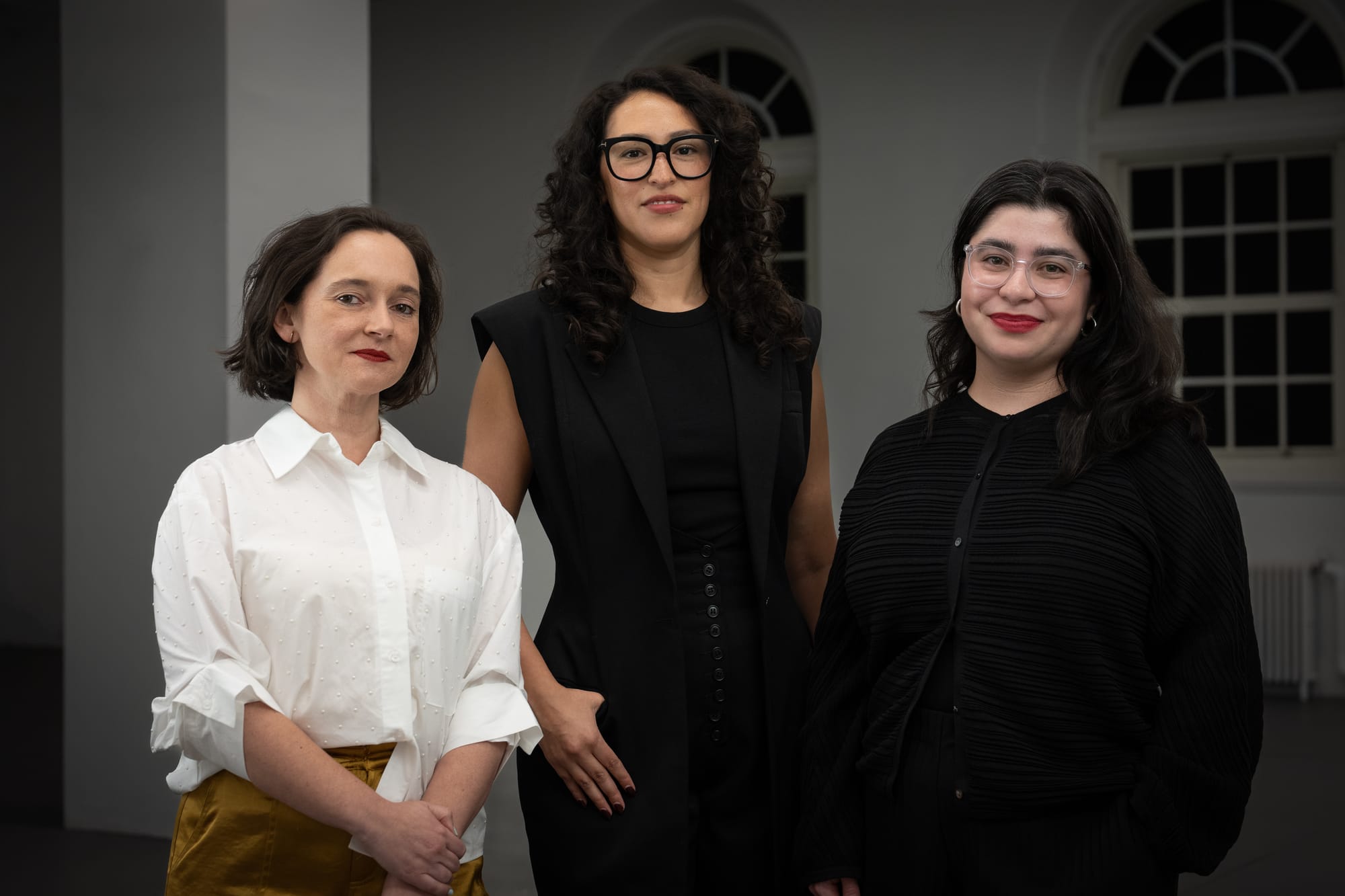
The Venice Biennale has announced the five-member jury for its 2026 edition, which will award the prestigious Golden Lion prizes. The jury president is Solange Oliveira Farkas, founder of the Videobrasil Biennial, and she will be joined by curators and academics Zoe Butt, Elvira Dyangani Ose, Marta Kuzma, and Giovanna Zapperi.

​​​​Art Movements: Curators Named for El Museo's Latine Art Survey

El Museo del Barrio has announced the curatorial team for the 2027 edition of La Trienal, its landmark survey of Latine contemporary art. The show will be organized by Susanna V. Temkin, interim chief curator at the museum; Zuna Maza, assistant curator; and guest curator Kaitlin Garcia-Maestas, formerly of Socrates Sculpture Park. In other biennial news, Amanda Carneiro and Raphael Fonseca were named chief curators of the 37th Bienal de São Paulo, the jury of the 61st Venice Biennale resigned after omitting Russia and Israel from awards consideration, and Marcello Dantas was appointed senior curator of the Vancouver Biennale. Hedwig Fijen will step down as director of Manifesta, with Emilia van Lynden and Catherine Nichols taking over in a new co-leadership model. Janne Sirén will resign as director of the Buffalo AKG Art Museum, Kate Kraczon was named chief curator at the Montclair Art Museum, and Charlie White was appointed dean of WashU’s Sam Fox School of Design & Visual Arts. Marina Abramović has designed wine labels for the Ornellaia estate, with limited-edition bottles to be auctioned by Bonhams to benefit the Guggenheim Pop exhibition.

Who are the members of the Venice Biennale jury?

Qui sont les membres du jury de la Biennale de Venise ?

The 61st Venice Biennale, opening May 9, 2026, has announced its international jury, which is composed entirely of women. The five members are Solange Oliveira Farkas (president), Zoe Butt, Elvira Dyangani Ose, Marta Kuzma, and Giovanna Zapperi, hailing from Brazil, Thailand, Spain, the United States, and Switzerland. Their backgrounds span the Global South, feminist studies, and transnational curatorial practices.

Venice Golden Lion jury won’t consider Russian and Israeli pavilions

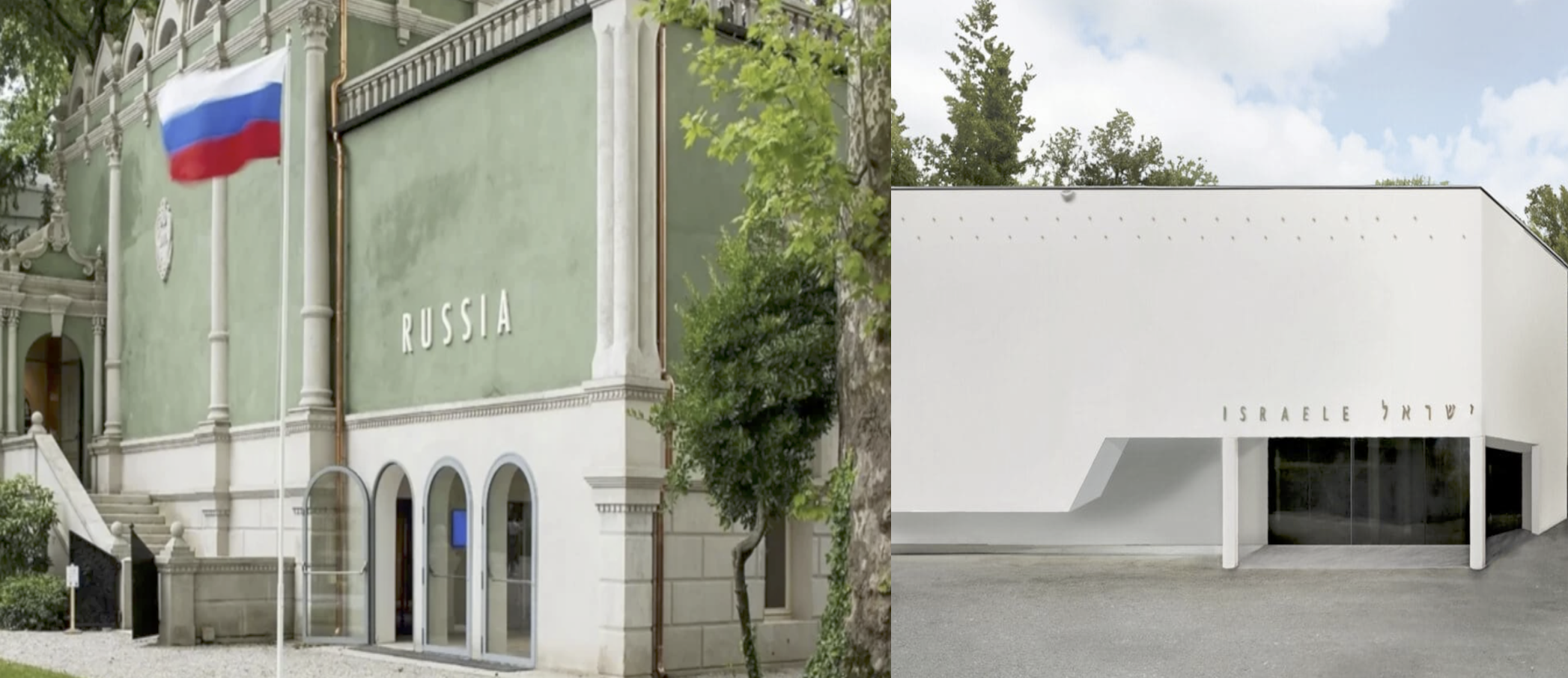
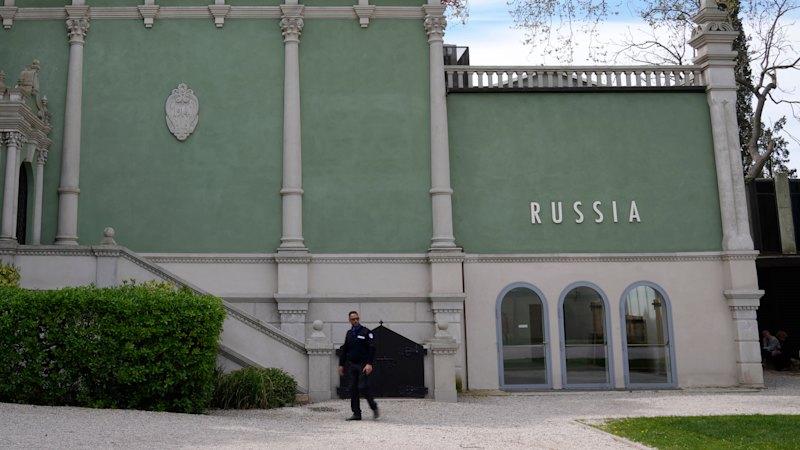
The jury for the Golden and Silver Lion awards at the 61st Venice Biennale has announced it will not consider the national pavilions of any country whose leaders are currently charged with crimes against humanity by the International Criminal Court. This decision specifically excludes Russia, whose president Vladimir Putin is charged with unlawful deportation of Ukrainian children, and Israel, whose prime minister Benjamin Netanyahu is charged with targeting Palestinian civilians and using starvation as a weapon. The jury, presided over by Solange Oliveira Farkas and including Zoe Butt, Elvira Dyangani Ose, Marta Kuzma, and Giovanna Zapperi, issued a full statement explaining their commitment to human rights and alignment with the curatorial vision of the late Koyo Kouoh.

Venice Biennale Jury Resigns En Masse, Organizers to Award “Visitors’ Lions” in November

The jury for the 2026 Venice Biennale has resigned en masse, announcing the decision via e-flux's Instagram account on April 30 without providing a reason. The five-member jury, including president Solange Oliveira Farks, Zoe Butt, Elvira Dyangani Ose, Marta Kuzma, and Giovanna Zapperi, had previously stated they would not consider national pavilions from countries charged with crimes against humanity by the International Criminal Court, directly affecting Israel and Russia. In response, the Biennale postponed the awards ceremony from May to November 22 and replaced the Golden Lions with two "Visitors' Lions" voted on by the public.

Venice Biennale Jury Resigns in the Wake of Controversial Prize Ban

The jury for the 2026 Venice Biennale has resigned just days before the public opening on May 9, after announcing on April 22 that it would not consider artists from countries accused of crimes against humanity for the Golden and Silver Lion prizes. The jury, consisting of Solange Oliveira Farks (president), Zoe Butt, Elvira Dyangani Ose, Marta Kuzma, and Giovanna Zapperi, cited its earlier statement of intention in its resignation, which directly impacted the participation of Russia and Israel—both subject to International Criminal Court warrants. In response, the Biennale postponed the awards ceremony from May 9 to November 22 and replaced the traditional jury with a public vote for best participant and best national participation, framing the move as upholding openness and rejecting censorship.

Venice Biennale’s Prize Ban on Israel and Russia Falls Short for Critics

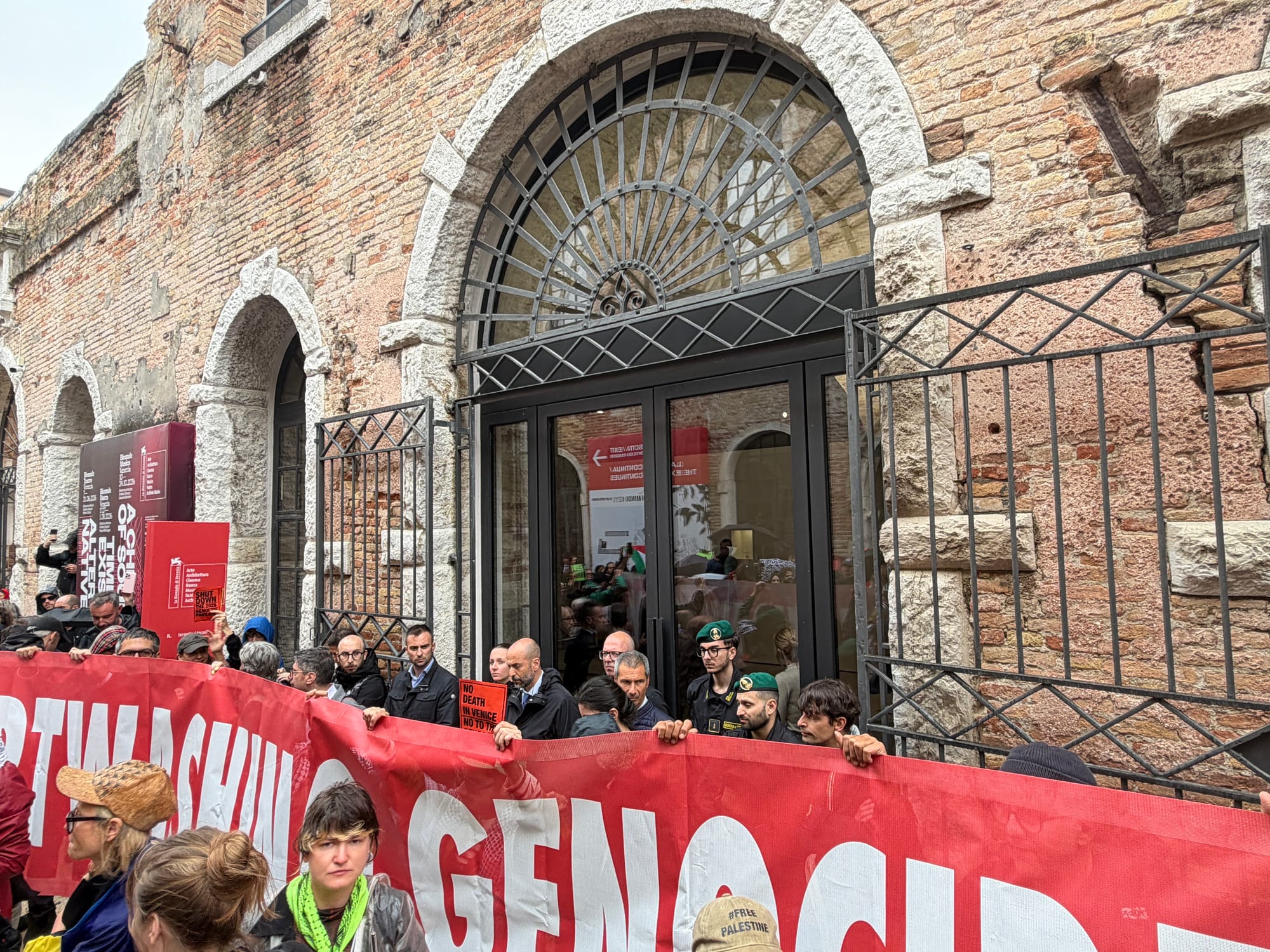
The jury of the 2026 Venice Biennale has ruled that Israel and Russia will be ineligible for the Golden and Silver Lion prizes, citing International Criminal Court charges of crimes against humanity against their leaders. The decision follows years of activism and political pressure, with the European Union withdrawing €2 million in funding from the event in protest of Russia's participation. While groups like Art Not Genocide Alliance praised the move as an unprecedented step, critics argue it falls short of a full ban on participation. Israel's artist representative, Belu-Simion Fainaru, condemned the policy as discriminatory, and an open letter signed by 70 artists and curators called for excluding all regimes committing war crimes, including the United States.

Venice Biennale Jury Bars Israel and Russia from Official Prizes

The international jury of the 61st Venice Biennale announced on April 23 that it will not consider the Israeli and Russian pavilions for official prizes, including the Golden Lion for national participation. The five-member, all-women panel—comprising Solange Farkas, Zoe Butt, Elvira Dyangani Ose, Marta Kuzma, and Giovanna Zapperi—said it would exclude countries whose leaders are currently charged with crimes against humanity by the International Criminal Court, a criterion that applies to Israel and Russia due to ICC arrest warrants for Benjamin Netanyahu and Vladimir Putin. The decision comes amid mounting controversy over the Biennale's decision to host both pavilions, with Russia returning after its artists withdrew in 2022 over the Ukraine invasion and Israel reopening after its 2024 pavilion remained closed pending a Gaza ceasefire. The European Commission had also threatened to suspend a €2 million grant over the Russian pavilion's reopening.

Venice Biennale’s jury resigns

The entire jury of the 61st Venice Biennale, presided by Brazilian curator Solange Farkas and comprising four other curators, resigned just nine days before the exhibition's scheduled opening on 9 May 2026. The jury had announced it would not award prizes to countries whose leaders are charged with crimes against humanity by the International Criminal Court, a move widely understood to target Israel and Russia. In response, the Biennale's organisers cancelled the prize-giving ceremony and will instead award Golden Lions via a popular vote among ticketholders. The row escalated further when the Israeli representative, sculptor Belu-Simion Fainaru, accused the jury of discrimination and threatened legal action, prompting intervention from Italy's culture ministry.

The Jury of the 2026 Venice Art Biennale Will Be Completely Composed of Women

La giuria della Biennale d’Arte di Venezia 2026 sarà tutta composta da donne

The organizing body of the Venice Biennale has announced the international jury for its 61st International Art Exhibition, titled 'In Minor Keys.' For the first time, the five-member jury is composed entirely of women: Solange Oliveira Farkas (president), Zoe Butt, Elvira Dyangani Ose, Marta Kuzma, and Giovanna Zapperi. They will award the prestigious Golden Lions and special mentions during the awards ceremony on May 9.

Venice Biennale Awards Jury Won’t Consider Russia and Israel

The international awards jury for the 61st Venice Biennale has announced it will not consider countries whose leaders are charged with crimes against humanity by the International Criminal Court (ICC) for prizes. The all-women jury, chaired by Solange Farkas, published a statement on e-flux declaring this policy, which implicitly targets Russia and Israel, whose leaders Vladimir Putin and Benjamin Netanyahu face ICC warrants. The jury is responsible for awarding Golden Lions for the best national pavilion and best artist in the central exhibition. A majority of artists in the main show issued an open letter supporting the decision, while the Biennale Foundation faces criticism for allowing both nations to participate in 2026.

Currents of the 61st Biennale: Inside Venice’s Flow of Art and Power

The 61st Venice Biennale jury, composed of five curators—Solange Oliveira Farkas, Zoe Butt, Elvira Dyangani Ose, Marta Kuzma, and Giovanna Zapperi—resigned on April 30th amid internal tensions over decisions that conflicted with the late Koyo Kouoh's curatorial vision. The jury had previously stated it would refrain from considering countries whose leaders are charged with crimes against humanity by the International Criminal Court. Meanwhile, Filipino artist Jon Cuyson prepares to present his installation at the Philippine Pavilion, featuring works shipped 60 days before geopolitical conflict escalated, navigating unstable maritime routes. His project includes the film series "Sea of Love (Dagat ng Pag-ibig)" and a new fourth film, "Sea of Echoes," exploring themes of migration, queer experience, and ecological resilience through mussels as non-human protagonists.

Venice Biennale jury resigns in latest politically charged controversy at art exhibition

The entire jury of the Venice Biennale has resigned, including president Solange Farkas and members Zoe Butt, Elvira Dyangani Ose, Marta Kuzma, and Giovanna Zapperi. The jury had announced it would not consider for prizes countries charged with crimes against humanity by the International Criminal Court, a stance that would affect Israel and Russia, both of which have national pavilions at the exhibition. As a result, the Biennale will not award several jury prizes, including the Golden Lion for best national pavilion and best artist in the group show, replacing them with visitor-voted awards.

Venice Biennale jury quits amid row over participation of Russia

The entire jury of the Venice Biennale resigned just days before the 61st international art exhibition's opening on May 9, following a dispute over the decision to allow Russia to participate. The five-member panel, led by Solange Farkas and including Zoe Butt, Elvira Dyangani Ose, Marta Kuzma, and Giovanna Zapperi, had previously stated it would not award prizes to artists from countries whose leaders face charges of crimes against humanity, a move seen as targeting Russia and Israel. The Biennale responded by postponing the award ceremony to November 22 and announcing it would give two awards, including one that could go to any national participation, citing its founding principles of openness and rejection of censorship.

Israel’s Artist Said to Have Threatened Legal Action Before Venice Biennale Jury Resignation

Belu-Simion Fainaru, the artist representing Israel at the 2024 Venice Biennale, allegedly threatened legal action against Biennale officials, accusing them of “racial discrimination” and “antisemitism” after the international prize jury announced it would exclude countries whose leaders are charged with crimes against humanity—effectively barring Israel and Russia from awards. The jury, handpicked by late artistic director Koyo Kouoh, resigned en masse on April 30, citing their earlier statement of intent. Fainaru had previously opposed calls to exclude Israel over its military actions in Gaza, arguing for dialogue over boycotts.

Statement of Intention by the International Jury of the 61st International Art Exhibition In Minor Keys of La Biennale di Venezia

The international jury for the 61st International Art Exhibition of La Biennale di Venezia, titled "In Minor Keys," has issued a statement declaring their intention to exclude from consideration any countries whose leaders are currently charged with crimes against humanity by the International Criminal Court. The jury, chaired by Solange Farkas and including members Zoe Butt, Elvira Dyangani Ose, Marta Kuzma, and Giovanna Zapperi, was selected by artistic director Koyo Kouoh to award the Golden and Silver Lions among the 110 artists in the exhibition.

Jury for Venice Biennale's art prize resigns after refusing to recognise Israeli, Russian artists

The international jury of the 61st Venice Biennale art exhibition resigned just over a week before the May 9 prize ceremony, after announcing they would not consider artists from countries whose leaders face International Criminal Court charges—an apparent reference to Russia and Israel. The jury included president Solange Farkas, Zoe Butt, Elvira Dyangani Ose, Marta Kuzma, and Giovanna Zapperi. In response, the Biennale established two Visitors’ Lions to be awarded by ticket-holder vote, postponed the awards to November 22, and reaffirmed that all national participations remain eligible, effectively reinstating Russian and Israeli artists.

Russia and Israel cannot win any prizes at the next Venice Art Biennale 2026. The jury takes a stand

Russia e Israele non potranno vincere nessun premio alla prossima Biennale Arte di Venezia 2026. La giuria prende posizione

The international jury for the 61st Venice Biennale, led by Solange Farkas, has unanimously declared it will not consider countries whose leaders are currently accused of crimes against humanity by the International Criminal Court. This means Russia and Israel are excluded from competing for the Golden Lion awards, including Best National Participation and Best Artist. The jury's statement, published on e-Flux Notes, emphasizes the Biennale's historical role as a platform connecting art with contemporary urgencies and acknowledges the complex relationship between artistic practice and state representation.

Statement of Resignation

The international jury for the 61st edition of La Biennale di Venezia, titled “In Minor Keys” and curated by Koyo Kouoh, has resigned as of April 30, 2026. The jury members—Solange Oliveira Farkas, Zoe Butt, Elvira Dyangani Ose, Marta Kuzma, and Giovanna Zapperi—cite their earlier Statement of Intention issued on April 22, 2026, as the basis for their collective resignation.

Israeli Pavilion Artist Made Legal Threats Before Venice Biennale Jury Resigned

New reports reveal that Israeli Pavilion artist Belu-Simion Fainaru issued legal threats against the Venice Biennale, alleging antisemitism and discrimination after the awards jury decided to exclude Israel and Russia from consideration due to human rights charges. The jury, which included Elvira Dyangani Ose, Zoe Butt, Marta Kuzma, Giovanna Zapperi, and Solange Farkas, initially stated on April 22 it would not consider nations whose leaders are charged with crimes against humanity by the International Criminal Court. Fainaru filed legal warnings with the Biennale, the Italian Ministry of Culture, and the Prime Minister's office. The jury abruptly resigned eight days later, leading the Biennale to scrap the Golden Lion awards and institute "Visitor Lions" decided by public vote. Reports indicate the Biennale's legal department warned jurors could be personally liable for damages, and Italian Culture Minister Alessandro Giuli promised to promote Fainaru's work.

Under pressure, the Venice Biennale jury resigns and is replaced by a public vote

Sous pression, le jury de la Biennale de Venise démissionne et est remplacé par un vote du public

On April 30, just days before the Venice Biennale's public opening on May 9, the entire international jury responsible for awarding the Golden and Silver Lions resigned. The jury—comprising Solange Farkas, Zoe Butt, Elvira Dyangani Ose, Marta Kuzma, and Giovanna Zapperi—had been caught in a escalating controversy after Biennale president Pietrangelo Buttafuoco reinstated Russia, which had been excluded since the 2022 invasion of Ukraine. The European Union threatened to suspend or cancel its €2 million subsidy if Russia remained included. The jury attempted to exclude countries whose leaders face International Criminal Court arrest warrants, effectively targeting Russia and Israel, but ultimately resigned under pressure from both external diplomatic turmoil and internal institutional opposition to any discrimination between pavilions.

Israel Criticizes Venice Biennale Jury over Pavilion’s Exclusion

The international jury of the 61st Venice Biennale has excluded the Israeli and Russian pavilions from consideration for official prizes, citing that countries whose leaders are charged with crimes against humanity by the International Criminal Court will not be eligible. Israel’s foreign ministry condemned the decision as a political boycott, and Israeli representative Belu-Simion Fainaru called it a hostile act that exceeds the jury’s mandate. The Biennale’s president, Pietrangelo Buttafuoco, has distanced the institution from the jury’s action, insisting the exhibition remain open to all nations recognized by Italy.

From Minor Keys to Uproar: The Crisis of the Venice Biennale

DE LAS MINOR KEYS AL ESTRUENDO: LA CRISIS DE LA BIENAL DE VENECIA

The 61st Venice Biennale is engulfed in a structural crisis, marked by geopolitical tensions over the inclusion of Russia (amid its invasion of Ukraine) and Israel (amid the Gaza genocide). The Biennale Foundation, led by Pietrangelo Buttafuoco, defended their participation on legalistic grounds, sparking outrage from over 200 artists, curators, and cultural workers who demanded Israel's exclusion, aligning with Art Not Genocide Alliance (ANGA). The international jury, chaired by Solange Farkas and including Zoe Butt, Elvira Dyangani Ose, Marta Kuzma, and Giovanna Zapperi, resigned collectively on April 30 after deciding not to award prizes to countries whose leaders face International Criminal Court arrest warrants. This led to the cancellation of the traditional Golden and Silver Lions, replaced by audience-voted "Visitor Lions," with awards deferred until November. The European Commission suspended a €2 million subsidy over Russia's participation, and Italian Culture Minister Alessandro Giuli notably skipped the May 9 opening.

Artists strike to protest Israeli participation ahead of Venice Biennale

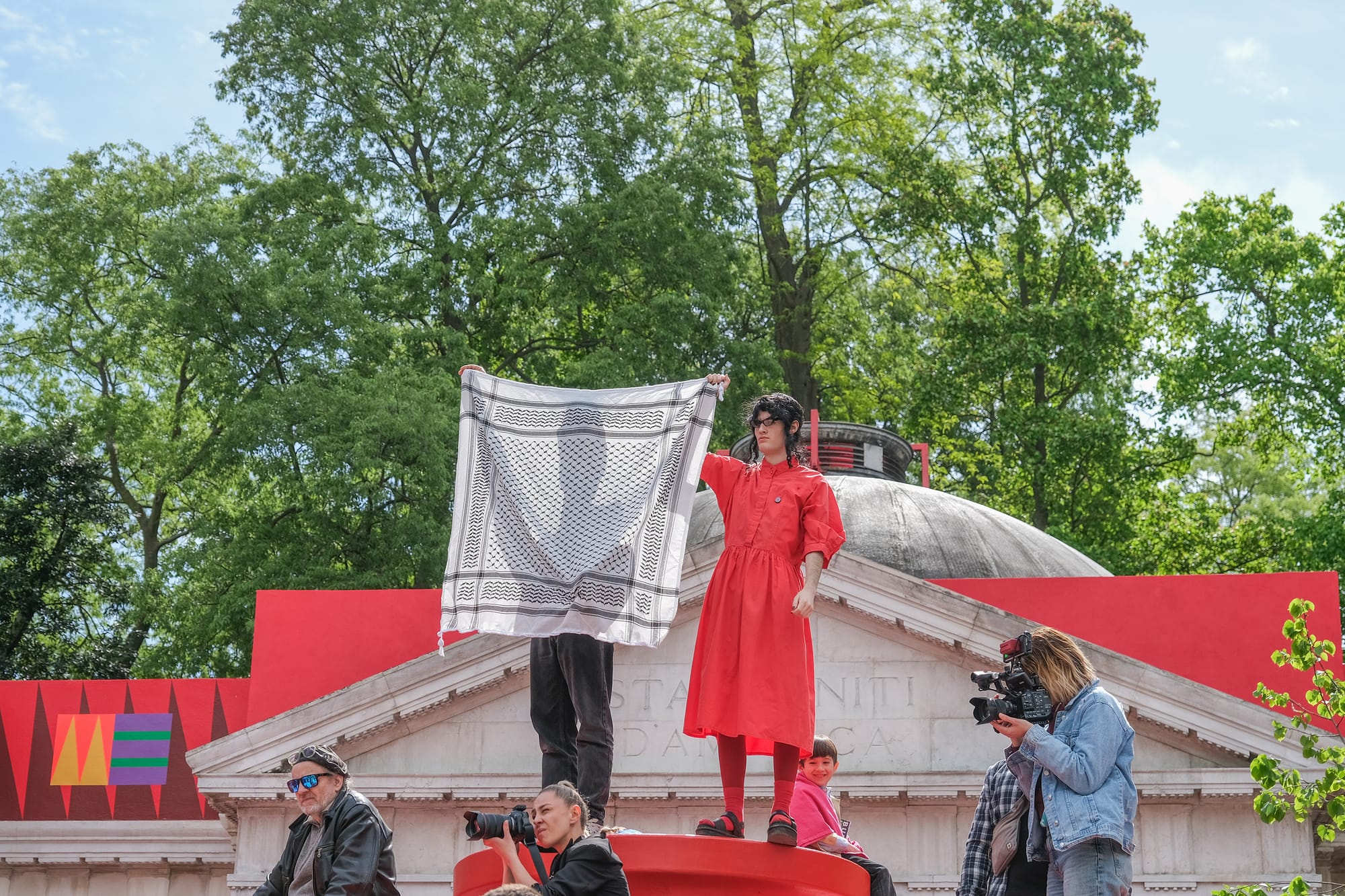
A group of artists has announced a strike to protest Israel's participation in the upcoming Venice Biennale. The action is intended to draw attention to the Israeli-Palestinian conflict and to pressure the Biennale organizers to exclude Israel from the event, reflecting growing tensions around cultural boycotts in the art world.

Venice Biennale jury resigns amid row over Russian entry

The international jury of the Venice Biennale resigned en masse just nine days before the opening of the world's oldest contemporary art fair, amid a dispute over Russia's participation and the panel's decision to bar prizes for countries accused of crimes against humanity by the International Criminal Court. The jury, comprising president Solange Farkas and members Zoe Butt, Elvira Dyangani Ose, Marta Kuzma, and Giovanna Zapperi, stepped down without explanation, following tensions that also involved Italy's Culture Ministry cutting €2 million in EU funding over Russia's presence and sending inspectors to the Russian Pavilion.

The Craziest Venice Biennale Ever: One Week Before Opening, the Jury Resigns (The Public Will Decide the Lions!)

La Biennale di Venezia più pazza di sempre: a una settimana dall’apertura si dimette la giuria (I Leoni li deciderà il pubblico!)

The entire international jury of the 61st Venice Biennale has resigned en masse just one week before the opening. The jury, chaired by Solange Oliveira Farkas and including Zoe Butt, Elvira Dyangani Ose, Marta Kuzma, and Giovanna Zapperi, had publicly announced they would not consider countries whose leaders are accused of crimes against humanity by the International Criminal Court—effectively excluding Russia and Israel from the Golden Lion competition. This decision came amid ongoing tensions between Italian Culture Minister Alessandro Giuli and Biennale President Pietrangelo Buttafuoco over Russia's participation, as well as controversy surrounding Israel's presence. After a meeting with Buttafuoco, the jury resigned, leaving the Biennale without a key body to award its top prizes.

Jury of the Venice Biennale Resigns

Jury der Venedig-Biennale tritt zurück

The entire jury of the Venice Biennale, appointed by artistic director Koyo Kouoh, has resigned with immediate effect. In a statement released on Thursday, the jury members—including chair Solange Oliveira Farkas, Zoe Butt, Elvira Dyangani Ose, Marta Kuzma, and Giovanna Zapperi—cited a prior declaration from April 22 in which they announced they would not award Golden or Silver Lions to artists from countries whose political leadership is currently indicted by the International Criminal Court (ICC) for crimes against humanity. Although no specific countries were named, the move implicitly targets Russia (President Vladimir Putin) and Israel (Prime Minister Benjamin Netanyahu), both subject to ICC arrest warrants. The resignation comes amid escalating tensions over Russia's participation in the Biennale despite EU sanctions, which had already led to a freeze of EU funding and widespread protests.

Jury of the Venice Biennial resigns, Russia and Israel return to Award Contention

The five-member international jury of the 61st Venice Biennale, led by Brazilian curator Solange Farkas, has resigned effective April 30, 2026. The jury—comprising Solange Oliveira Farkas, Zoe Butt, Elvira Dyangani Ose, Marta Kuzma, and Giovanna Zapperi—announced their resignation in a written statement, referencing a prior Statement of Intention issued on April 22. In response, La Biennale di Venezia postponed the Awards Ceremony from May 9 to November 22, the final public day, and introduced two new "Visitors' Lions" awards—one for the Best Participant in the main exhibition "In Minor Keys" by Koyo Kouoh, and one for the Best National Participation—to be decided by ticket-holder vote.