
filter_list Showing 2 results for "Harold Godwinson" close Clear
search
dashboard All 2 article culture 1article news 1
date_range Range Today This Week This Month All
Subscribe

bayeux tapestry canterbury mealtime reading

A new study by University of Bristol historian Benjamin Pohl, published in the journal *Historical Research*, proposes that the Bayeux Tapestry was originally designed as mealtime reading for monks in the refectory of St. Augustine’s Abbey in Canterbury. Pohl argues that the tapestry’s moralistic episodes, inclusion of Aesop’s fables, and simple Latin text align with Benedictine rules requiring silent dining accompanied by edifying readings. The theory builds on earlier speculation that the tapestry once hung in a private school’s refectory, but Pohl provides documentary and archaeological evidence for the Canterbury location.
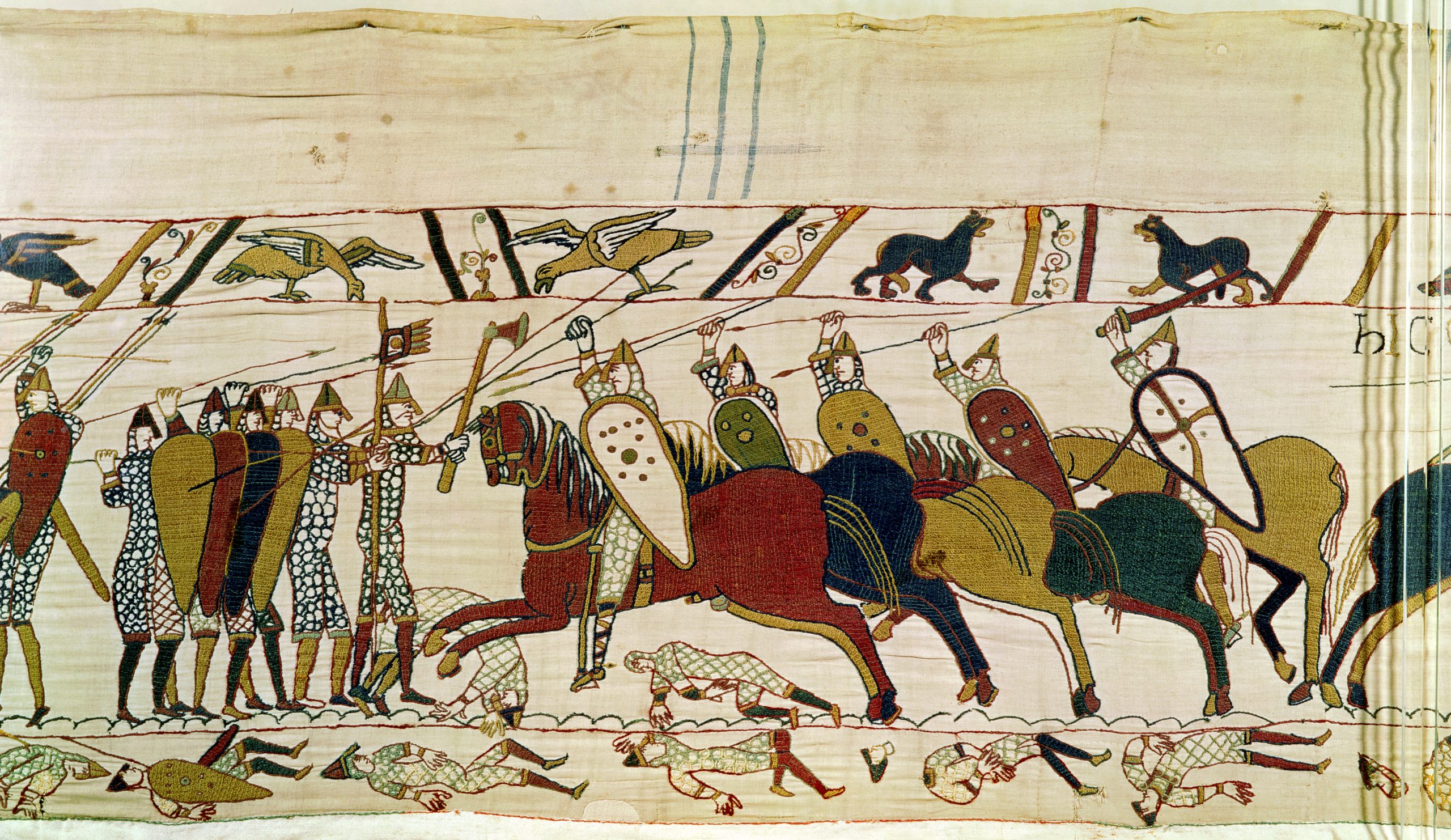
bayeux tapestry 93 penises offer clues

The article examines historian George Garnett's analysis of the 93 penises depicted in the Bayeux Tapestry, a 225-foot-long embroidery chronicling the Norman conquest of England in 1066. Garnett, a professor of Medieval history at Oxford University, argues that the size and placement of these genitalia—88 on horses and five on men—offer clues about the tapestry's meaning. He notes that the largest equine phallus belongs to Duke William's stallion, followed by those of Harold Godwinson and Odo of Bayeux, suggesting a hierarchy of importance. More significantly, Garnett interprets four penises attached to men in the tapestry's border as references to Aesop's fables, indicating themes of deceit, shame, and illicit sex, which he believes challenge the traditional attribution of the tapestry's commission to Odo of Bayeux.