
filter_list Showing 3 results for "Laszlo Moholy-Nagy" close Clear
search
dashboard All 3 article culture 1museum exhibitions 1candle obituary 1
date_range Range Today This Week This Month All
Subscribe

legendary art collector sylvio perlstein has died

Sylvio Perlstein, the legendary art collector, patron, and impresario, died on August 6. Hauser & Wirth confirmed the news, calling him a visionary who shaped one of the most important art collections of the past century. In 2018, the gallery exhibited 380 pieces from his collection across its Chelsea and Hong Kong locations in the show 'The Sylvio Perlstein Collection – A Luta Continua'. Perlstein was born in Belgium in the 1930s, fled to Brazil with his family during World War II, and later joined the diamond business in Antwerp. His collection spanned Dada, Surrealism, American minimalism, and Land art, featuring works by Man Ray, René Magritte, Donald Judd, and many others. He maintained close friendships with artists and displayed works throughout his Paris home, which cultural critic Arthur Lubow described as 'a contemporary version of Ali Baba's cave'.
Closures Can’t Dim the Spark: 9 Unmissable Bay Area Art Shows This October

The article highlights nine must-see art exhibitions in the Bay Area for October, despite recent gallery closures like KADIST and Gallery 16. Key shows include the Museum of the African Diaspora's twin exhibitions 'Continuum' and 'Unbound' for its 20th anniversary, Drew Villanueva's first solo exhibition at Good Mother Studio inside Ikea, Jim Melchert's retrospective at di Rosa Center for Contemporary Art, and Mills College Art Museum's '100 Years of Creative Visions'. The programming is anchored by the second edition of Nexus, a Bay Area art week spotlighting Black voices and bridging regional divides.

Simultaneous or Poly-Cinema

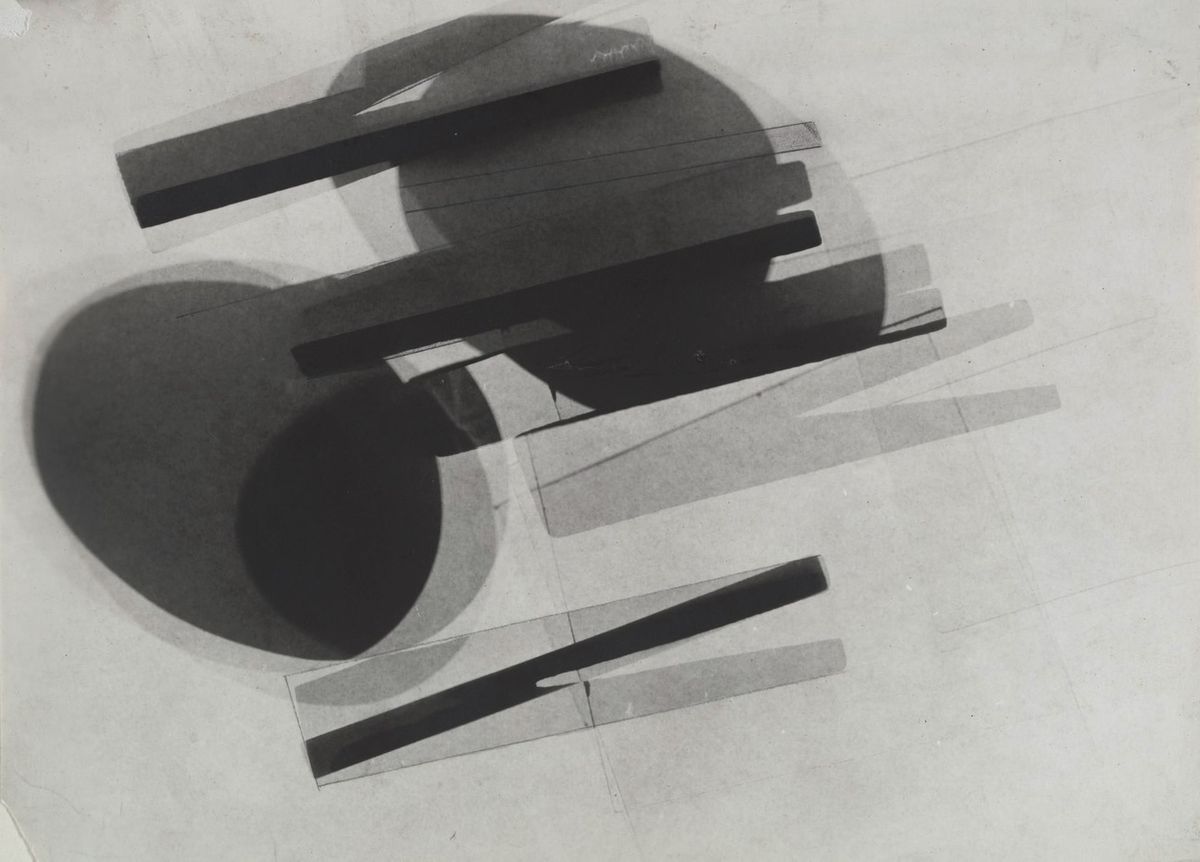
The Bauhaus artist László Moholy-Nagy proposes a radical departure from traditional filmmaking in his 1925 text, "Simultaneous or Poly-Cinema." He envisions a cinematic experience that moves beyond the static, rectangular screen, suggesting instead curved, spherical, or multi-planar surfaces that can accommodate multiple simultaneous projections. By utilizing rotating prisms and intersecting film strips, Moholy-Nagy describes a system where different narrative threads—such as the lives of multiple characters—can physically overlap and merge, creating a dynamic architectural arrangement of light and movement.