filter_list Showing 8 results for "Lucas Cranach" close Clear
dashboard All 8 article news 3gavel restitution 3museum exhibitions 2
date_range Range Today This Week This Month All
Subscribe

Allison Katz’s Playful Paintings Hide Serious Ideas in Plain Sight

Painter Allison Katz, who lived in New York for seven years but hasn't shown in Manhattan for over a decade, returns with a major debut solo exhibition at Hauser & Wirth's Wooster Street location. Titled "Outta the Bag," the show features a suite of New York–centric paintings, including depictions of the city's museums and skyscrapers, as well as an ironically small "Big Apple" composition, marking a significant moment for the mid-career artist.

Frieze New York, the Cranach in Hitler’s Munich apartment, Ajamu X—podcast

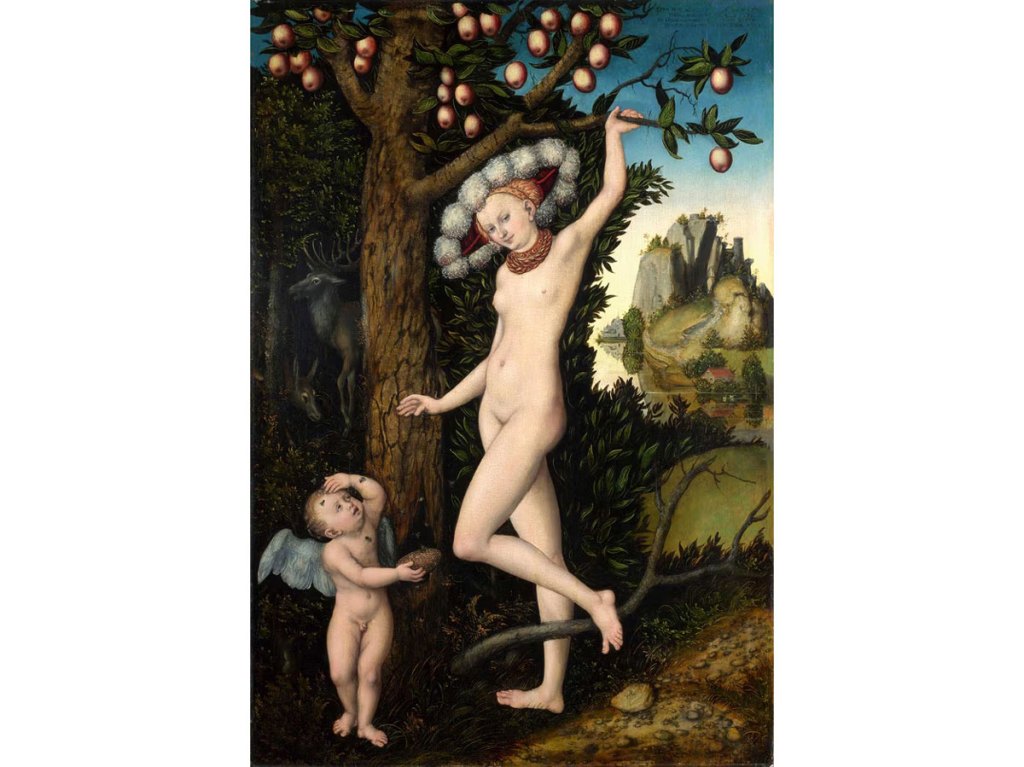
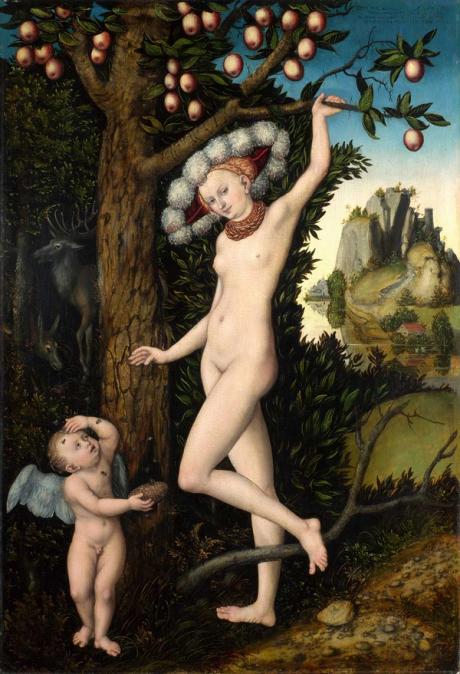
This episode of The Art Newspaper's podcast covers several art-world stories. Ben Sutton and Kabir Jhala discuss the current edition of Frieze New York, alongside other concurrent fairs like Esther and Tefaf, and preview the upcoming New York auctions. Ben Luke interviews Martin Bailey about a Lucas Cranach the Elder painting, 'Cupid Complaining to Venus' (1526-27), which once hung in Adolf Hitler's Munich apartment, with a newly published photograph from the 1940s. The episode also features a segment on Ajamu X's 'Glamour Posse' series from the early 1990s, part of the touring exhibition 'Gender Stories' opening at the Walker Art Gallery in Liverpool, with comments from gallery head Charlotte Keenan.

Tiny Cranach Painting That Vanished During WWII Returns to Dresden

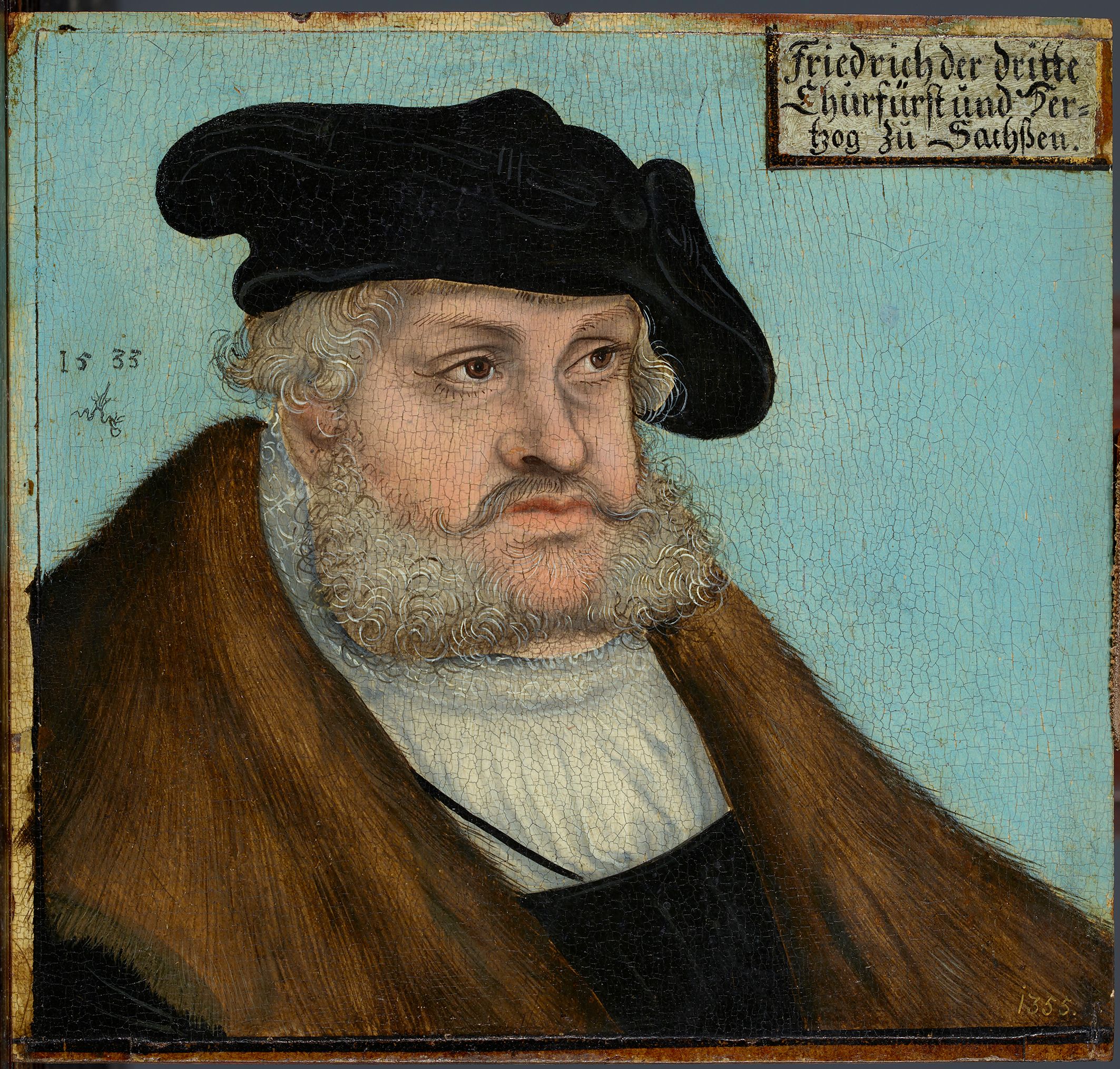
A miniature portrait of Friedrich III (Frederick the Wise) by Lucas Cranach the Elder, missing since World War II, has been returned to the State Art Collections of Dresden, Germany. The painting was last documented in May 1945 in a limestone quarry shelter near Pockau-Lengefeld before vanishing. It resurfaced in 2024 when consigned to Parisian auction house Artcurial, whose provenance investigation revealed a matching inventory number from 1722–1728. The Dreyfus family in France, the modern owners, returned the work after negotiations and a financial agreement. It is now on view at the Coin Cabinet of the Royal Palace in a special exhibition marking the 500th anniversary of Friedrich III's death, and will later be permanently displayed in the Semper Gallery.

Hungary’s New Minister of Culture Vows to Restore Artistic Freedom, Turner’s Famous ‘Self-Portrait’ Called Into Doubt, and More: Morning Links for May 14, 2026

An expert claims that the iconic self-portrait of J.M.W. Turner, which hangs in Tate Britain and appears on British £20 notes, was not actually painted by Turner. James Hamilton, a Turner scholar, argues the work was misattributed when it entered the Turner Bequest and may instead be by Turner contemporary John Opie. Meanwhile, Hungary’s new Minister of Culture, Zoltán Tarr, vows to restore artistic freedom and dismantle political control over cultural institutions following the election of Prime Minister Peter Magyar. The Trump administration is proceeding with construction of a contested Triumphal Arch and a White House ballroom, and a former Louvre employee has been charged in a ticket fraud scandal.

"Man besitzt Kunst nicht, man ist nur ihr Verwalter"

The 61st Venice Biennale opened on Saturday without ceremony or an opening celebration, amid political turmoil over the participation of Russia and Israel. Italy's Culture Minister Alessandro Giuli criticized Biennale director Pietrangelo Buttafuoco for not informing the government about Russia's participation request, suggesting it could have been used as leverage for a ceasefire in Ukraine. The entire jury resigned after attempting to exclude both Russia and Israel from prize awards, leading to the cancellation of the traditional jury decision in favor of a public vote, which over 70 participating artists have protested by withdrawing from this year's prizes. Separately, a rare photograph from the early 1940s has surfaced showing Lucas Cranach the Elder's painting "Venus with Cupid as Honey Thief" in Adolf Hitler's Munich apartment, raising unresolved questions about whether the work was looted from Jewish owners before 1935.

A Lucas Cranach the Elder Masterpiece Once Hung in Hitler’s Munich Apartment

A Lucas Cranach the Elder painting, *Cupid complaining to Venus* (1526–27), once hung in Adolf Hitler's Munich apartment, according to a report by the Art Newspaper. The work was identified in a 1940s photograph published in a 1978 furniture catalog and later in a 2023 article by art historian Birgit Schwarz, who confirmed Hitler's ownership via a 2006 discovery of an album at the Library of Congress. After World War II, American journalist Patricia Lochridge took the painting from a warehouse in Berchtesgaden and smuggled it to the US. The National Gallery in London acquired it in 1963 from A. Silberman Galleries, which falsely claimed it came from the 1909 auction buyer's heir; it had actually been purchased from Lochridge.

Famous Cranach painting spotted in rare photograph of Hitler’s apartment

A rare photograph from the early 1940s reveals that Lucas Cranach the Elder's painting *Cupid complaining to Venus* (1526-27), now a masterpiece in the National Gallery, London, once hung in Adolf Hitler's private Munich apartment. The image, previously published in Germany by provenance expert Birgit Schwarz, appears for the first time in an English-language publication. The painting was acquired by the National Gallery in 1963 from E. and A. Silberman Galleries in New York, which provided a false provenance. It had been taken from a warehouse of recovered art in 1945 by American journalist Patricia Lochridge, who smuggled it into the United States.

Martin Schongauer en toute majesté

The Louvre Museum in Paris has opened a major retrospective dedicated to Martin Schongauer (c. 1445–1491), the German engraver and painter from Colmar, bringing together a large portion of his known works. The exhibition features around one hundred pieces, including fifty engravings, five of his rare drawings, and nearly all of his attributed paintings—such as the "Virgin and Child at the Window" (c. 1480) from the Getty Museum and the "Orlier Altarpiece" (c. 1470–1475) from the Musée Unterlinden. The centerpiece is Schongauer's "Virgin of the Rose Bush" (1473), displayed at low height to reveal its botanical precision. Co-curated by Pantxika Béguerie De Paepe and Hélène Grollemund, the show also highlights Schongauer's influence on contemporaries and later artists through comparative works by Rogier van der Weyden and others.