filter_list Showing 8 results for "Lydia Ourahmane" close Clear
dashboard All 8 museum exhibitions 6trending_up market 1rate_review review 1
date_range Range Today This Week This Month All
Subscribe

Artists v fascists, Khmer Rouge horrors, fab flowers and an eye-popping nude – the week in art

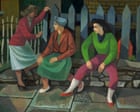
This week's art roundup from The Guardian features a major exhibition at Towner Eastbourne titled 'Comrades in Art: Artists Against Fascism,' which examines how artists, poets, and intellectuals used their work to resist the rise of extremism in 1930s Europe, drawing on the history of the Artists International Association (AIA). Other highlights include 'Hidden: Photography and Displacement Under the Khmer Rouge' at The Wiener Holocaust Library in London, a show of early Netherlandish drawings at the British Museum, Katharina Grosse's colorful installations at White Cube, and a flower-themed survey at Kettle's Yard. The image of the week is Sylvia Sleigh's 1963 portrait 'The Bridge (Johanna Lawrenson),' part of a new exhibition of the Welsh artist's work. The article also covers news items such as Lydia Ourahmane's Venice Biennale installation, a Holbein portrait mystery, a restored stained-glass window by Edward Burne-Jones and William Morris, and Anish Kapoor's call to exclude the US from the Venice Biennale due to 'politics of hate.'
What does a woman swimming in urine tell us about the state of the world? Lots! – Venice Biennale review

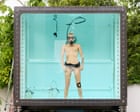
The 2026 Venice Biennale, curated by the late Koyo Kouoh under the theme "In Minor Keys," has been plagued by months of turmoil including countries withdrawing, artists being fired, exhibitions cancelled, funding pulled, and protests during the preview. A five-person curatorial team took over after Kouoh's death, resulting in what the critic describes as a disjointed, committee-driven exhibition that prioritizes quiet contemplation and healing over direct political engagement. The central shows in the Giardini and Arsenale feature a vast, poorly explained array of art from the global south, with installations of ceramics, textiles, slide projectors, and serene natural scenes that the critic finds anachronistic and dull.

The Venice Biennale has long been a sales platform—now no one is pretending otherwise

The Venice Biennale, traditionally a government-subsidized non-commercial institution where sales were downplayed, is experiencing an unprecedented open embrace of commerce. For the first time, Christie's is hosting an invitation-only selling exhibition in Venice, offering works ranging from Old Masters like Lucas Cranach to Modern and contemporary giants such as Andy Warhol, Louise Bourgeois, and Mark Bradford, with prices from $500,000 to over $35 million. Dealers, auction houses, and private foundations are openly pricing and selling works to collectors, spurred partly by Italy's reduced 5% VAT rate on art imports, now Europe's lowest.

Female nudity and art that stinks: key takeaways from Venice Biennale 2026

The 2026 Venice Biennale opened with 99 participating countries, including first-timers Somalia and Qatar, under the shadow of curator Koyo Kouoh's death. Her planned theme of "enhancement" and the main show "In Minor Keys" were disrupted by political protests: Pussy Riot objected to Russia's inclusion, and a strike against Israel's participation forced several national pavilions (UK, Austria, France) to close. Key takeaways include pervasive female nudity across pavilions, debates over Russia's presence, criticism of the US pavilion's lackluster art, maritime themes dominating several shows, and the rise of olfactory art.

In Venice For the Biennale? Don’t Miss These 15 Shows Around the City

The article is a guide to 15 art exhibitions taking place in Venice during the Biennale, curated by CULTURED magazine. It highlights shows such as "If All Time Is Eternally Present" at Palazzo Nervi-Scattolin, featuring film works by Tai Shani, Meriem Bennani & Orian Barki, and Kandis Williams; "Michael Armitage: The Promise of Change" at Palazzo Grassi; "Amoako Boafo: It doesn’t have to always make sense" at Palazzo Grimani; "Transforming Energy" by Marina Abramović at Gallerie dell’Accademia; and "Helter Skelter" by Arthur Jafa and Richard Prince at Fondazione Prada. Each entry includes location, dates, and curatorial context.

What not to miss at the 2026 Venice Biennale

The article highlights five standout pavilions and installations at the 2026 Venice Biennale. Florentina Holzinger's Austrian pavilion features extreme, nude performances including a woman submerged in a urine-purified tank, drawing police attention. Sanya Kantarovsky presents eerie paintings and a Murano glass sculpture in a historic palazzo. Gabrielle Goliath's 'Elegy'—a hypnotic mourning performance for women killed in violence—was banned by South Africa but staged with London's Ibraaz. Carrie Schneider's 1.5km photographic curl in the Arsenale references Chris Marker's 'La Jetée'. Lydia Ourahmane's delicate sculptural show uses materials sourced from Venice, including a bead curtain made by inmates.

Stick a euro in the slot for the lights! The mesmerising, strictly Venetian works of Lydia Ourahmane

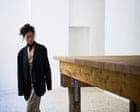
British-Algerian artist Lydia Ourahmane has created a new exhibition in Venice, opening alongside the Venice Biennale, that is deeply rooted in the city itself. Rather than shipping in materials, she built a pier for the island of Poveglia in collaboration with a local cooperative that saved the island from development, and she acquired a coin-operated light machine from the church of San Giovanni Crisostomo, which visitors must feed with a euro to illuminate the show. The exhibition is presented at the Nicoletta Fiorucci Foundation.

Venice’s Chicest Invite This Week? A Pizza Party Where the Artists Chose the Ingredients

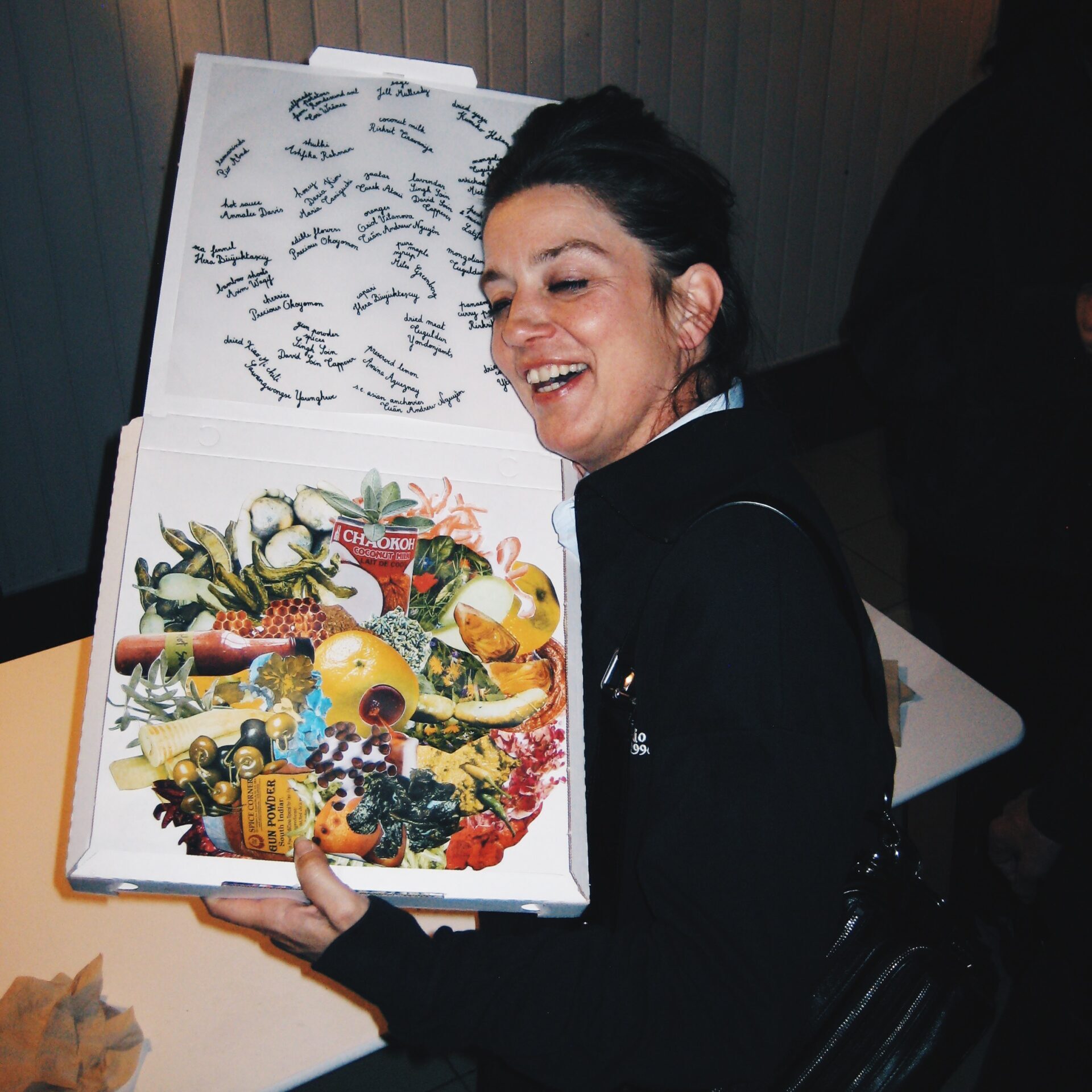
Diana Campbell, Chomwan Weeraworawit, and Paris-based art advisors Samy Ghiyati and Nicolas Nahab of NG Partners organized a pizza party called Pizzalo Mundo during the Venice Biennale. Each artist contributed an ingredient from home: Rirkrit Tiravanija brought a Penang coconut base, Precious Okoyomon added flowers, Daria Kim wild honey, Tarek Atoui za'atar on hummus, Miet Warlop artichoke hearts, Tori Wrånes self-grown potatoes, and Alexa Kumiko Hatanaka fig leaf oil with yuzu salt. The event drew a crowd of curators, directors, and collectors from institutions including Tate, Musée d'Orsay, Guggenheim Abu Dhabi, MoMA, and Centre Pompidou.