
filter_list Showing 7 results for "Nymphéas" close Clear
search
dashboard All 7 article culture 2article local 2museum exhibitions 1trending_up market 1gavel restitution 1
date_range Range Today This Week This Month All
Subscribe

With more than 3,000 participating institutions, the European Night of Museums returns this Saturday, May 23

Avec plus de 3 000 institutions participantes, la Nuit européenne des musées revient ce samedi 23 mai

The 22nd edition of the European Night of Museums returns on Saturday, May 23, with over 3,000 institutions across France and Europe opening their doors free of charge from late afternoon. Many museums are offering special activities such as concerts, performances, games, guided tours, and walks. The youth program "La classe, l'œuvre!" will again involve primary, middle, and high school students acting as mediators for artworks they studied throughout the year. Highlights include exhibitions at the Centre Pompidou-Metz dedicated to François Morellet and Louise Nevelson, a concert at Jean Tinguely and Niki de Saint Phalle's Cyclop in Milly-la-Forêt, a dance performance by Korean artist Eun-Me Ahn at the Musée d'Art Moderne de Paris, and exhibitions at museums in Tours, Vernon, Rouen, and Sète, as well as a Brazilian ball at the Château des ducs de Bretagne in Nantes.

Claude Monet’s Market Triumph: 12 Record‑Smashing Paintings That Define an Era

Claude Monet's market dominance is analyzed through twelve record-breaking paintings sold at auction over the past decade, led by *Meules (Haystacks)* (1890), which achieved $110.7 million at Sotheby's New York in 2019—a record for any Impressionist work. The article highlights key sales including *Le Bassin aux Nymphéas* (1919) at $80.45 million, *Nymphéas* (1906) at $54 million, and *Le Pont du chemin de fer à Argenteuil* (1873–74) at $41.4 million, tracing how Monet's serene yet radical landscapes have consistently commanded top prices across Christie's and Sotheby's.

In Giverny, Monet does not benefit everyone

À Giverny, Monet ne profite pas à tout le monde

The article examines the economic paradox of Giverny, the French village where Claude Monet lived and painted. While Monet's gardens attract nearly one million visitors annually—with ticket sales estimated at €9-10 million—the village itself, with a population of just 430 and an annual budget of €600,000, sees almost none of that revenue. Visitors flood in for half-day trips, queue for hours to see the gardens, and leave by evening, spending little in local shops. The gardens, run by the Académie des beaux-arts, are tax-exempt and operate as a closed economic loop, with their boutique and restaurant generating income that stays within the institution.

Les jardins de Monet à l’épreuve du surtourisme

Claude Monet's gardens in Giverny, France, which were recreated in 1980 after being abandoned in the 1950s, are now suffering from severe overtourism. The site, which attracted 70,000 visitors in its first year, is expected to exceed one million visitors in 2026, the centenary of Monet's death. Crowds are so dense that visitors report feeling unable to experience any emotion, and gardeners spend hours each morning repairing damage from trampling. The gardens have become a kind of industrial product, with 15,000 plants propagated each season to replace those destroyed.

Alain Passard's Art Recipe: Monet's Sublime 'Water Lilies' Invade the Plate

La recette d’art d’Alain Passard : les sublimes « Nymphéas » de Monet s’invitent dans l’assiette

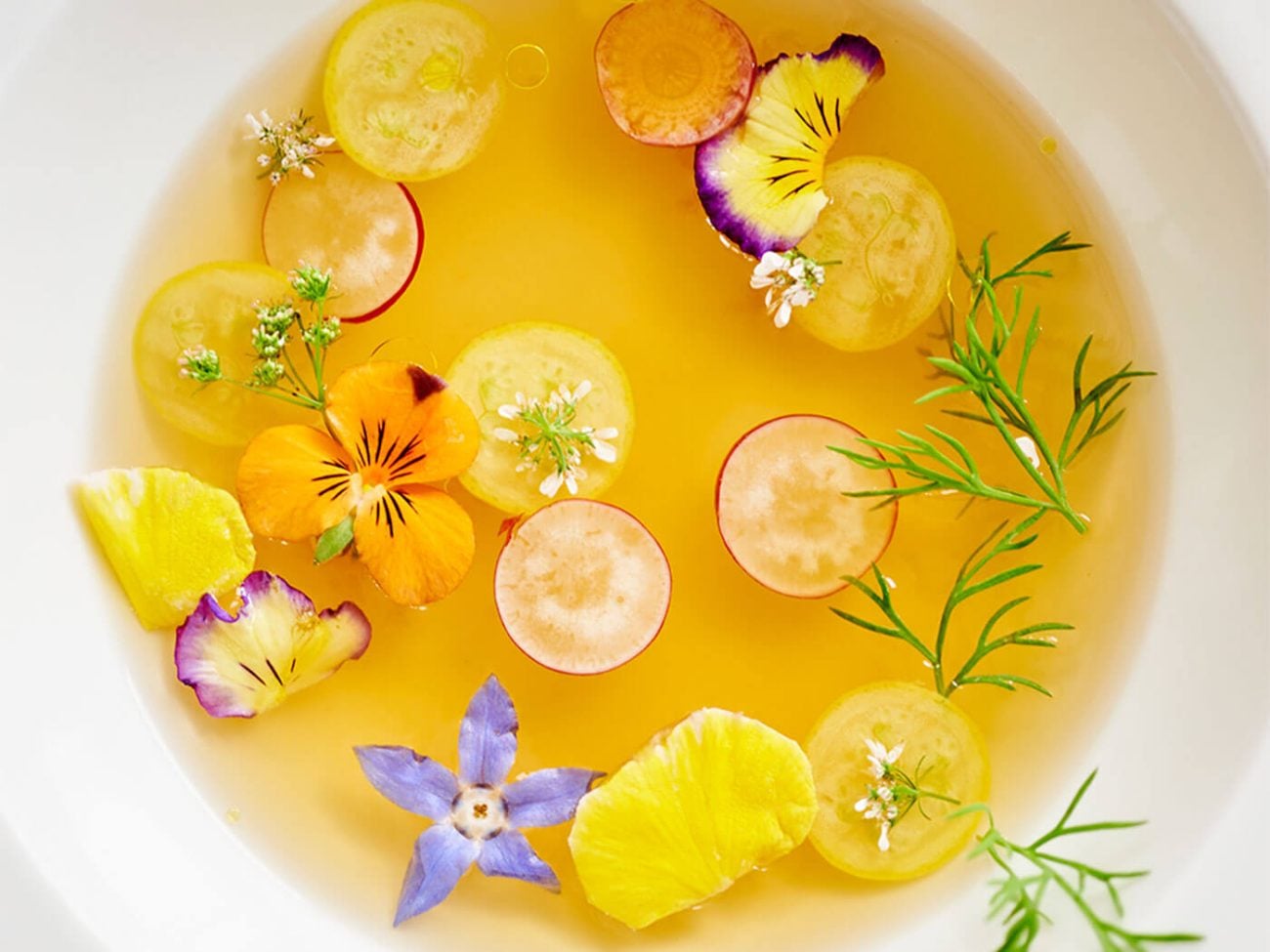
Chef Alain Passard shares a recipe inspired by Claude Monet's "Nymphéas" (Water Lilies) series, connecting the painter's obsessive depictions of his Giverny water garden to a spring consommé decorated with flower petals. The article recounts Monet's move to Giverny in 1883, his creation of a water garden, and his decades-long focus on painting the pond's surface, light, and reflections—culminating in the immersive panoramic panels gifted to France in 1918 and now housed at the Musée de l'Orangerie in Paris.

Which museums are free on the first Sunday of the month in Paris and Île-de-France?

Quels musées sont gratuits ce 1er dimanche du mois à Paris et en Île-de-France ?

This article from Beaux Arts Magazine lists museums in Paris and Île-de-France that offer free admission on the first Sunday of each month, including the Musée de l'Orangerie, Musée national Picasso-Paris, Musée des Arts et Métiers, Musée de la Chasse et de la Nature, Musée Carnavalet, Musée Cognacq-Jay, Crypte archéologique de l'île de la Cité, Maison Victor Hugo, and Musée de Cluny. It also notes that municipal museums in Paris are free year-round, and provides practical tips such as booking online and taking advantage of free entry for visitors under 18 or 26.

Malaysia Showcases Recovered 1MDB Artworks, From Picasso to Miró

Four artworks recovered from the 1MDB scandal—by Picasso, Miró, Balthus, and Maurice Utrillo—have gone on public display for the first time at the Malaysian Anti-Corruption Commission headquarters in Putrajaya. The paintings were repatriated from New York after being traced through Sotheby’s and shipped back to Malaysia on April 14. They are part of a broader art trail linked to the massive financial fraud, with Malaysian officials framing the display as an act of restitution rather than an art event.