filter_list Showing 6 results for "Oceania" close Clear
dashboard All 6 museum exhibitions 2article culture 1article policy 1person people 1article news 1
date_range Range Today This Week This Month All
Subscribe

Primitivism to Reinvent Art

Le primitivisme pour réinventer l’art

Philippe Dagen has published the third and final volume of his series on primitivism, covering the period from World War II to the late 1970s. The book traces how Western artists, from Barnett Newman and Jackson Pollock to members of the CoBrA movement and figures like Jean Dubuffet, Lucio Fontana, and Yayoi Kusama, engaged with so-called "primitive" art from Africa, Oceania, and the Americas, often as a means of rejecting or redefining modern civilization. Dagen also examines the intellectual debates surrounding primitivism, including the critiques of colonized peoples who refused the label "primitive," and the shifting attitudes of thinkers like Claude Lévi-Strauss, Michel Leiris, and Aimé Césaire.

Robert Filliou, artistes océaniens… Que nous réserve la prochaine édition de la Biennale de Lyon ?

The 18th edition of the Lyon Biennale, titled "Passer d’un rêve à l’autre" (Moving from One Dream to Another), will run from September 19 to December 13, 2026. Curated by Catherine Nichols, an Australian-born art historian and editor based in Berlin, the biennial will take place across ten venues in Lyon, including the Grandes Locos, macLyon, and for the first time the Musée des Tissus et des Arts décoratifs. More than half of the works will be new productions, and over half of the artists are women, with a substantial focus on Oceanian artists such as Timo Hogan, Jazz Money, and Kaylene Whiskey. The exhibition draws inspiration from Lyon's traboules (hidden passageways) and the writings of artist Robert Filliou, exploring themes of dreams, critical analysis, and a "poetic economy."

‘Rethinking, Reimagining and Reinstalling’ the Metropolitan Museum of Art

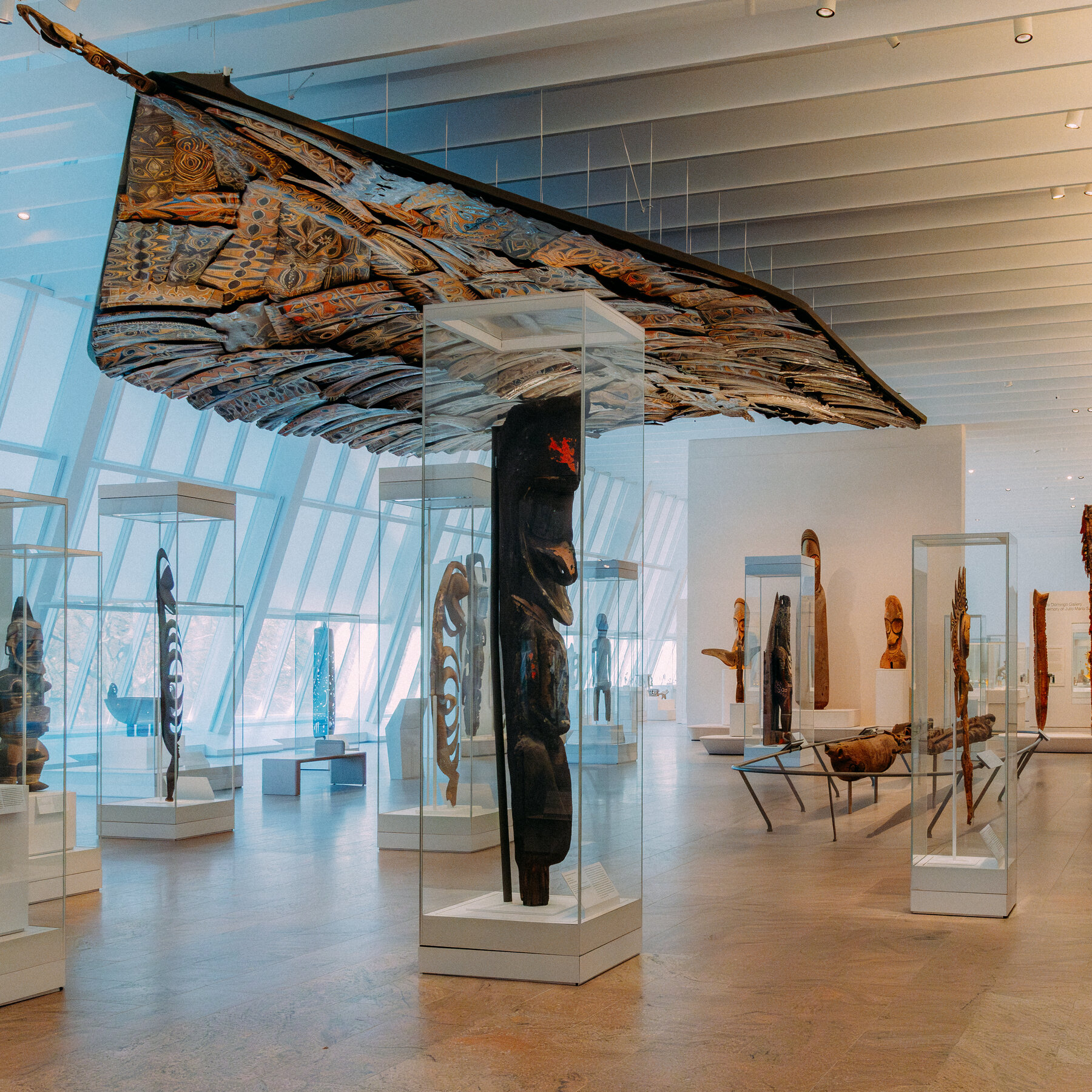
The Metropolitan Museum of Art has unveiled a massive $1.5 billion renovation plan titled "Rethinking, Reimagining and Reinstalling," which aims to transform approximately 25 percent of its galleries and public spaces. This ambitious capital project includes the complete overhaul of the Oscar L. and Annette de la Renta Wing for modern and contemporary art, the renovation of the Michael C. Rockefeller Wing for the arts of Africa, Oceania, and the Americas, and significant updates to the European Paintings galleries.

Curator Adriana Farietta On Why CONDUCTOR Is the Fair the Art World Needs Right Now

CONDUCTOR, a new art fair curated by Adriana Farietta in collaboration with Powerhouse Arts, launches this week in Brooklyn, New York. The fair features individual artists and galleries from Africa, Latin America, the Caribbean, South Asia, Southeast Asia, the Middle East, Oceania, and Indigenous Nations, with a focus on the Global Majority. A key innovation is its onsite fabrication model, allowing some works to be produced locally at Powerhouse Arts' facilities, reducing shipping and customs issues. The fair also offers an exclusive preview of artists presenting at the Venice Biennale, including Annalee Davis, Tammy Nguyen, RojoNegro, Beya Gille Gacha, and Bugarin + Castle.

Olivia Bourrat revient au Quai Branly

Olivia Bourrat, a 45-year-old chief heritage curator trained at the École du Louvre, the INP, and the Sorbonne, has been appointed director of the heritage and collections department at the Musée du quai Branly-Jacques Chirac in Paris. She succeeds Anne-Solène Rolland, and returns to the museum after previous stints there, as well as at France-Muséums, the Louvre Abu Dhabi, the French Ministry of Culture, and Paris Musées.

Cultural Observatories: Dinosaurs or Subjects Capable of Interpreting the Present?

Osservatori culturali. Dinosauri o soggetti in grado di interpretare il presente?

The Cultural Observatory of Canton Ticino has published a study on cultural observatories worldwide, including a map and list of surveyed organizations. The analysis reveals that cultural observatories are not a global phenomenon but are concentrated mainly in Europe and South America, with occasional presence in North America (especially Canada and Hispanic-oriented organizations in the US). Africa, Asia, and Oceania are almost entirely absent from the map. The study also highlights a high rate of inactive observatories: among the top 10 countries by active observatories, only Germany shows an effective activity ratio. Spain has 26 active observatories out of about 45 total, while Italy has 11 active out of over 20 inactive. The research defines observatories as non-profit organizations that combine cultural and statistical expertise to deepen and transfer knowledge about the cultural sector, and classifies as inactive those with no recent activity on web or social channels.