filter_list Showing 15 results for "Olga Temnikova" close Clear
search
dashboard All 15 museum exhibitions 8trending_up market 5article culture 1article news 1
date_range Range Today This Week This Month All
Subscribe

dynamo room uffner lius frieze wet paint

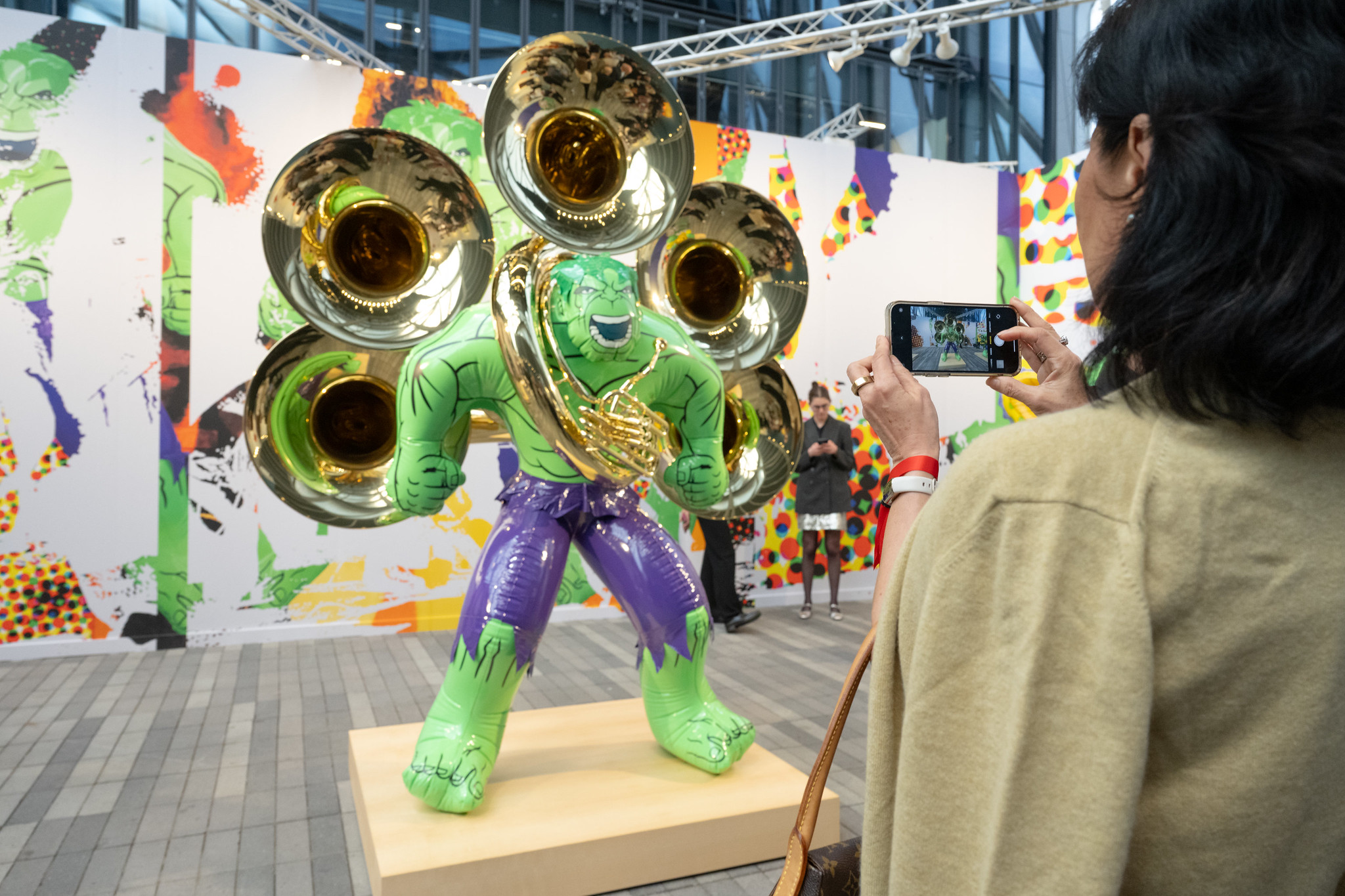
Artnet News's 'Wet Paint' gossip column reports from Frieze Week in New York, noting a prevailing cultural pessimism fueled by essays on the death of culture and the impact of the second Trump administration. Amidst this, Jeff Koons's 'Hulk Elvis' sculptures at Gagosian's Frieze booth (priced at $3 million each, with one sold) offered a perverse relief. The column also highlights the second edition of the Esther art fair at the Estonian House, described as an 'aura fair' prioritizing community and a welcoming environment over strict commercial focus, contrasting with the more predictable Frieze fair.

tommy cash

Estonian rapper and provocateur Tommy Cash sparked controversy at the 2025 Eurovision Song Contest in Basel, Switzerland, with lyrics that parodied Italian stereotypes, leading Italy to call for his disqualification. Despite finishing third, the incident has drawn renewed global attention to Cash, who has long been a boundary-pushing figure in European art and music. Artnet News resurfaced a 2022 interview with Cash, born Tomas Tammemets in 1991, who describes himself as an artist working across music, fashion, and installation projects, blending post-Soviet visual language with high and low culture references.

Esther fair goes out on top

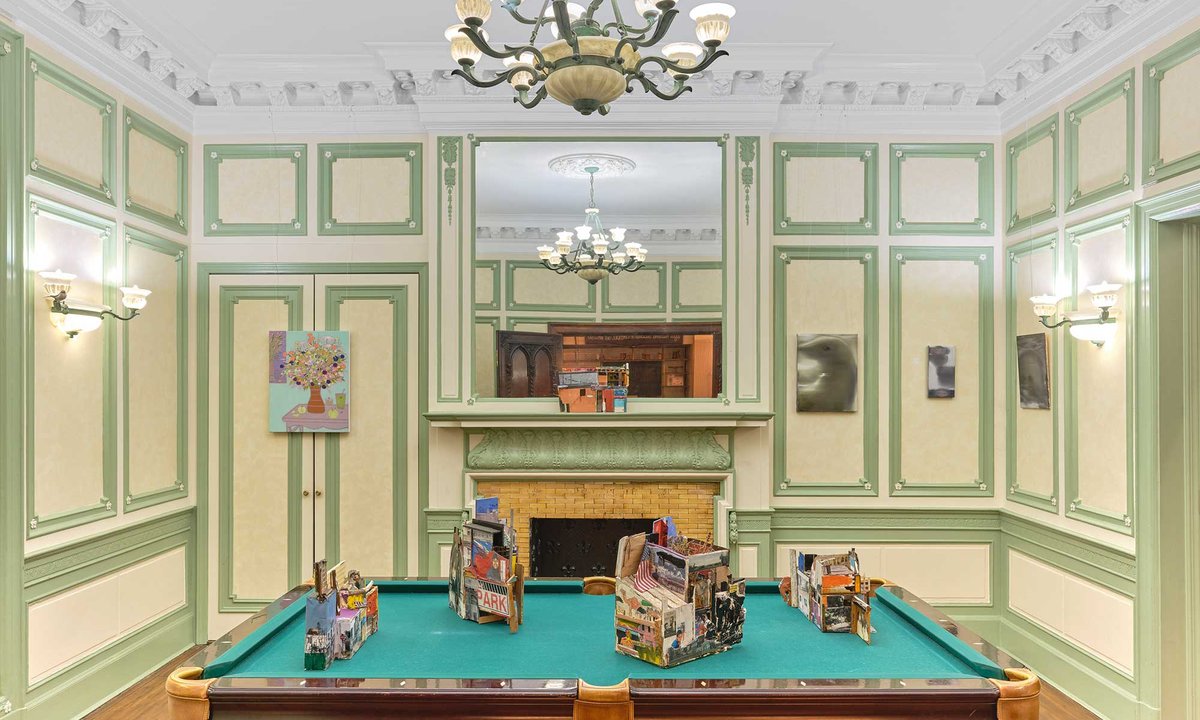
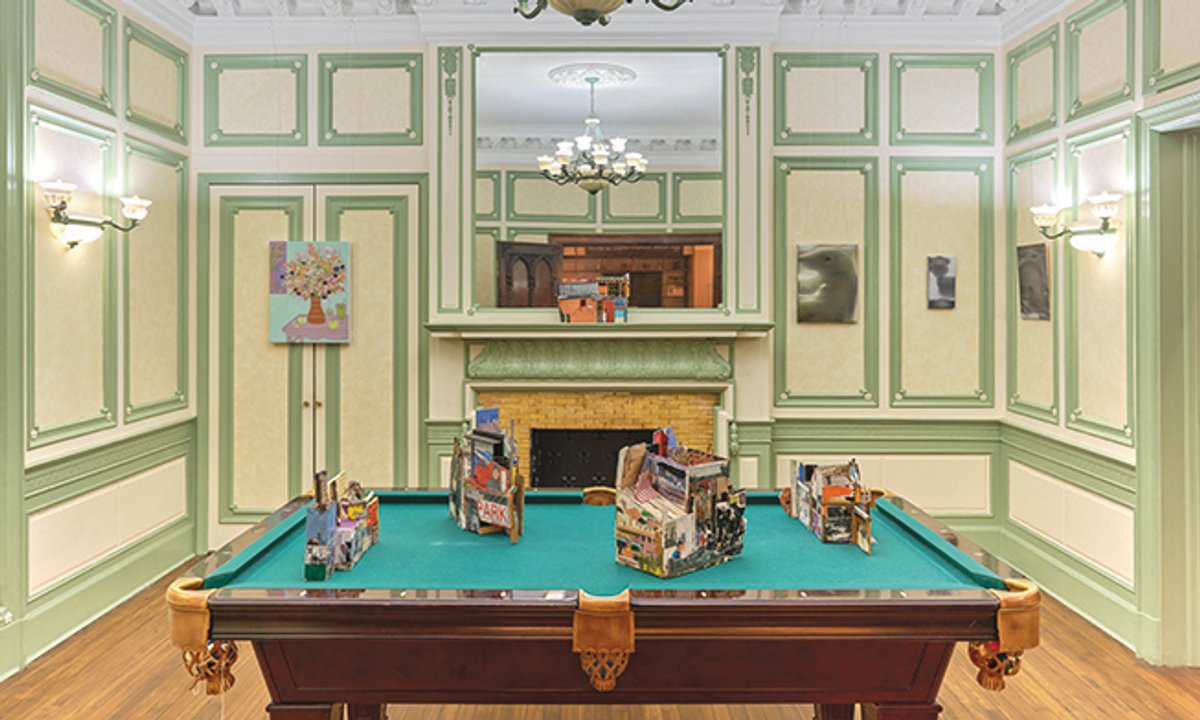
The Esther art fair, a satellite of Frieze New York, opened its third and final iteration at Estonian House on East 34th Street. Founded by Estonian gallerists Olga Temnikova and Margot Samel, the fair eschews conventional stands, instead arranging 22 participating galleries and three bespoke projects throughout the historic Beaux-Arts building’s basement, salons, and upper floors. Highlights include sold-out presentations at Adams and Ollman and Management, works by Katja Novitskova, Jill Goldstein, and Elīna Vītola, and a special project by Darja Popolitova and Madlen Hirtentreu turning beauty-industry equipment into installations. Gallerists praised the cooperative atmosphere, contrasting it with larger, more institutionalized fairs.

5 very different art fairs throughout two days in New York City

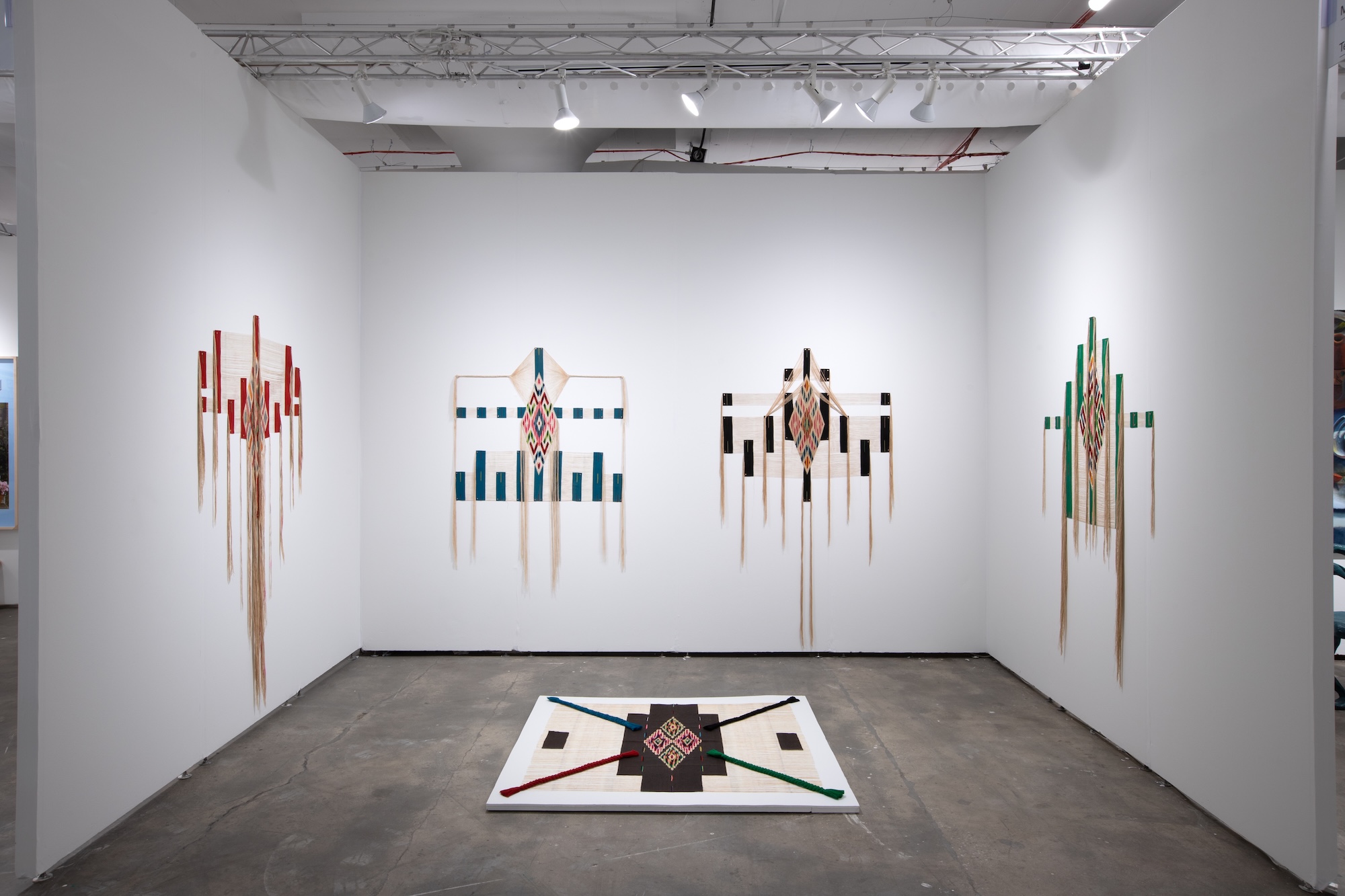
The article reports on five distinct art fairs—Frieze, NADA, Independent, 1-54, and Esther III—visited during New York Art Fair Week. It highlights key artists and works, including Kelly Tapia-Chuning's deconstructed serapes at NADA, Esaí Alfredo's queer nighttime paintings, Alex Burke's textile dolls at 1-54, and Laetitia KY's photographic self-sculpture. The fairs collectively emphasized themes of environmentalism, globalism, decolonization, and a growing textiles sector, with curation varying widely from commercial to conceptually driven.

Frieze New York shows signs of stability in challenging US art market

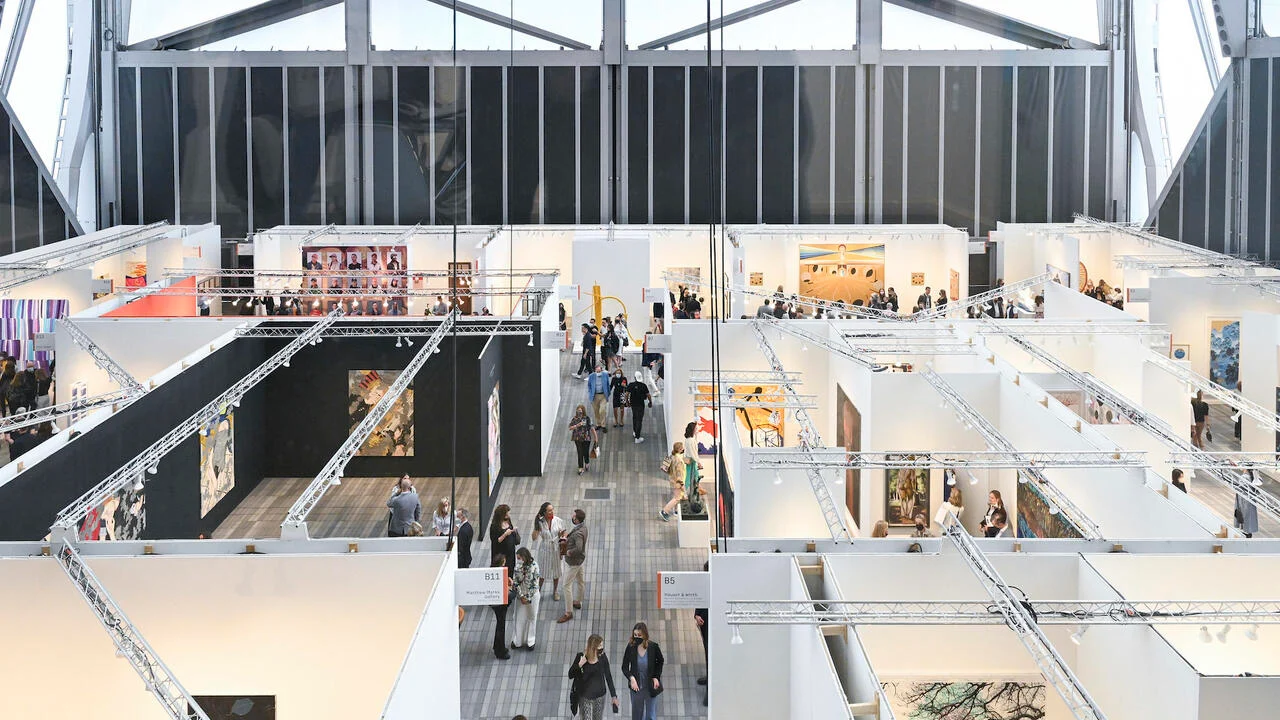
Frieze New York (7-11 May) opens its 13th edition at The Shed with around 65 galleries, including mega-galleries Gagosian, David Zwirner, Hauser & Wirth, Pace, and White Cube. The fair arrives amid a turbulent art market: global art sales declined 12% in 2024 per Clare McAndrew's Art Market Report, and President Trump's tariff decisions have roiled the stock market. Frieze's owner Endeavor recently sold the fair to a new company founded by former CEO Ari Emanuel. Despite this, US fair director Christine Messineo expresses optimism, citing strong sales at Frieze Los Angeles in February. The Focus section features 12 emerging galleries, seven of which are first-time participants, including King's Leap, Management, Voloshyn Gallery (Kyiv), and Public Gallery (London).

15 Outstanding Artworks from the May 2025 New York Art Fairs

Artsy's editorial team curated a selection of 15 outstanding artworks from the seven art fairs taking place in New York during May 2025, including TEFAF, NADA, Esther II, Future Fair, Independent, and 1:54. The article highlights specific works such as Brandon Morris's "Teapot (Desire for No Tomorrow)" at Esther II, and notes that the fairs range from blue-chip offerings at TEFAF to emerging art at NADA, all compressed into a single week.

esther ii conductor alternative art fair reports

During New York Art Week, two smaller art fairs—Esther II and Conductor—offer alternatives to the major events like Frieze and TEFAF. Esther II, now in its second edition, takes place at the Estonian House in Murray Hill, featuring 25 galleries from 17 cities with site-specific installations and performances. Conductor debuts at Powerhouse Arts in Gowanus, focusing on artists from the Global South and its diasporas, with a unique model that allows artists to fabricate work on-site using the venue's production facilities.

The Art Market Defies Doom and Gloom With Independent, Esther and Future Fair in Full Swing

New York City is hosting an unprecedented concentration of art fairs this week, with over nine fairs running simultaneously, including Independent, Esther, and Future Fair. Independent, held at Spring Place in Tribeca, opened on May 8 and is positioning itself as a boutique, hyper-curated alternative to mega-fairs like Frieze, featuring mostly solo presentations. Early sales were reported by several galleries: Europa sold works by Suyi Xu ($9,000–$20,000), Long Story Short sold six works by Keita Morimoto (up to $26,000), Charles Moffett nearly sold out his booth of Julia Jo ($10,000–$45,000), The Approach sold four works by John Maclean ($13,500 or less), and Copperfield presented works by Ada Patterson ($8,000–$23,000).

Observer’s 2025 May Art Fair Calendar (Updated)

Observer has published its updated 2025 May Art Fair Calendar, highlighting a packed schedule of art fairs in New York and around the world. Key fairs include CONDUCTOR 2026 (April 29–May 3), a Brooklyn-based fair focused on artists of the global majority; the Aotearoa Art Fair 2026 (April 30–May 3) in New Zealand; the Clio Art Fair 2026 (May 7–10 and 14–17), known as an "anti-fair" for unrepresented artists; and PHOTOFAIRS Shanghai 2026 (May 7–10), a leading platform for contemporary photography in China. The article notes that May is one of the busiest months in the spring art calendar, with many fairs concentrated in New York City during "Frieze Week."

Discover 5 Standout Talents at New York’s Satellite Art Fairs

Galerie magazine highlights five standout satellite art fairs running concurrently with Frieze New York and TEFAF New York: Independent, NADA New York, Esther III, 1-54 Contemporary African Art Fair, and Future Fair. The article profiles emerging and rediscovered artists such as Julia Maiuri (presented by 12.26 at Independent), Shangfeng Zhang (LATITUDE Gallery at NADA New York), and others, noting that more than a third of Independent's booths feature artists making their New York solo debuts.

New York Art Week Will Test the Market’s Momentum

New York Art Week is set to test the art market's momentum with half a dozen fairs and major auctions. Frieze New York opens at the Shed on May 13 with 68 galleries, while Sotheby's leads auction sales starting May 14, featuring a Mark Rothko painting estimated at $70–$100 million from Robert Mnuchin's collection. The total low estimate for Sotheby's week is $690.4 million, roughly 70% higher than last year's hammer total. Alternative fair Esther, co-founded by Margot Samel and Olga Temnikova, kicks off May 12 at the Estonian House for its third and final edition, emphasizing intentionality and community over scale.

In 2025, new ‘independent and nimble’ art fairs began redrawing the market map

In 2025, several established art fairs were cancelled or postponed, including the Art Dealers Association of America's Art Show in Manhattan, Taipei Dangdai, Photofairs Hong Kong, and the India Art Fair's Mumbai expo. Amid these retrenchments, a wave of smaller, alternative art fairs emerged in cities like New York, Paris, and the Berkshires, organized by gallerists and curators seeking new formulas focused on coalition, affordability, and intimacy. Examples include Esther in Manhattan (co-founded by Margot Samel and Olga Temnikova), the Arrival Art Fair in North Adams (co-founded by Yng-Ru Chen, Crystalle Lacouture, and Sarah Galender Meyer), 7 rue Froissart in Paris (organized by Sara Maria Salamone and Brigitte Mulholland), and Post-Fair in Santa Monica (founded by Chris Sharp).

New York's Art Week 2026 is underway. A guide to all the fairs to see in the city: Frieze and the others

È in corso l’Art Week di New York del 2026. La guida di tutte le fiere da vedere in città: Frieze e le altre

New York's spring Art Week is underway in mid-May 2026, anchored by two major fairs: Frieze New York (May 13–17) at The Shed, featuring about 70 galleries from over 25 countries, and TEFAF New York (May 15–19) at the Park Avenue Armory, celebrating its tenth edition with 88 galleries. Additional fairs include Independent Art Fair at Pier 36 (May 14–17) with 76 galleries and site-specific installations, and NADA New York at the Starrett-Lehigh Building (May 13–17), promoting emerging artists. The week also involves museums, cultural institutions, and galleries citywide.

Esther fair brings global galleries to Manhattan’s Estonian House

The Esther art fair, founded by Estonian dealers Olga Temnikova and Margot Samel, is holding its second edition at the Beaux-Arts Estonian House in Manhattan through May 10. The boutique fair features 25 galleries from the US, Europe, and Asia, including James Fuentes, Sargent’s Daughters, Pangée Gallery, Kogo Gallery, Ivan Gallery, Sophie Tappeiner, and Bank. New additions include on-site fashion designers Julia Heuer and Laivi creating custom t-shirts. Participation fees have risen from $1,500 to $2,500, allowing the founders to hire staff, but the fair remains vulnerable to global shifts such as US trade policies and immigration crackdowns that affect art shipping and artist travel.

‘Like a Malfunctioning Theme Park Ride’: Banality and Body Horror at New York Art Week

New York Art Week featured a range of exhibitions that blended banality with body horror, drawing comparisons to a malfunctioning theme park ride. The article highlights several shows that juxtapose mundane, everyday objects with grotesque, unsettling imagery, creating a disorienting experience for viewers. Artists presented works that explore the fragility and absurdity of the human body, often using visceral materials and jarring installations to provoke discomfort and reflection.