filter_list Showing 6 results for "Padiglione Russia" close Clear
search
dashboard All 6 article news 3museum exhibitions 2article culture 1
date_range Range Today This Week This Month All
Subscribe

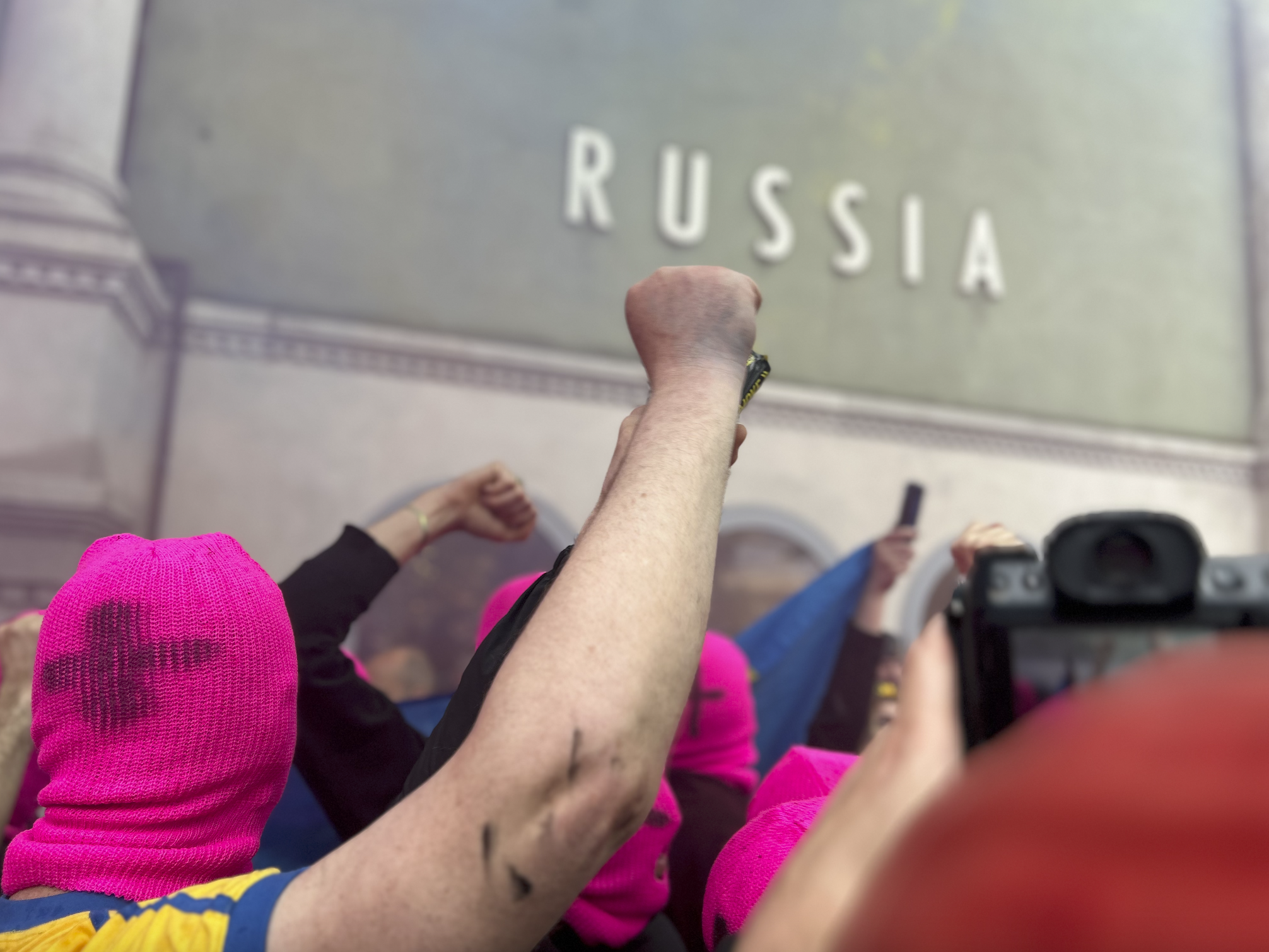
Pussy Riot and FEMEN protest at the Russian Pavilion at the Venice Biennale. "Blood is the true language of Russia"

Le Pussy Riot e le FEMEN in protesta al Padiglione russo alla Biennale di Venezia. “Il sangue è il vero linguaggio della Russia”

On May 6, 2026, during the preview days of the 61st Venice Biennale, Pussy Riot and FEMEN staged a joint protest outside the Russian Pavilion. Led by Nadya Tolokonnikova, the activists denounced Russia's participation in the Biennale as a form of political normalization while the war in Ukraine continues. The action included chants and slogans such as "Russia kills, Biennale exhibits. Blood is Russia's art," and targeted the Russian ambassador present inside the pavilion. The protest was unannounced and caught Biennale security off guard, drawing a crowd of journalists, visitors, and art professionals.
Il Padiglione Italia alla Biennale? “Deve essere uno spazio di possibilità”. Intervista alla curatrice

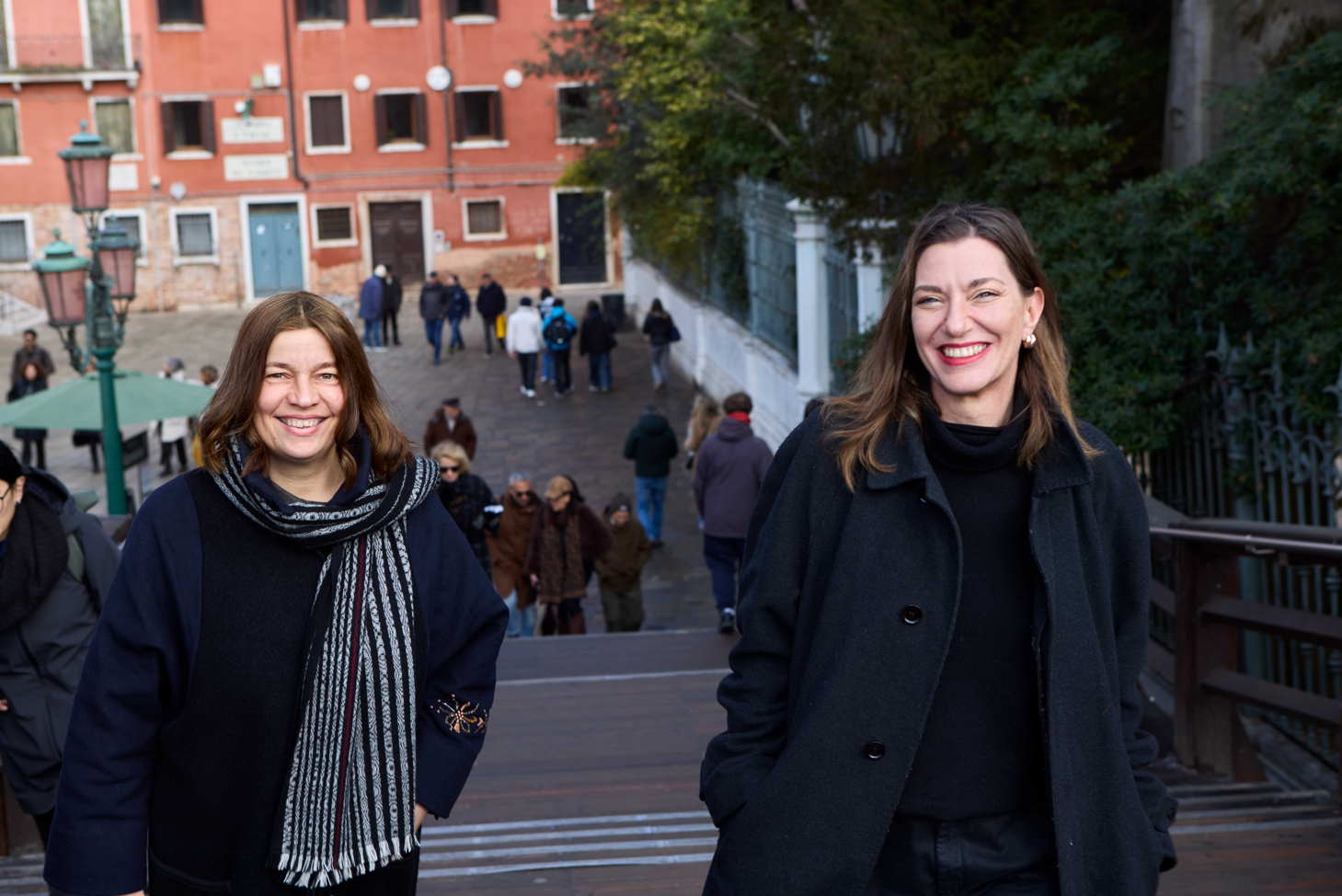
The article announces Chiara Camoni's project "Con te con tutto" for the Italian Pavilion at the 61st Venice Biennale in 2026, curated by Cecilia Canziani. The project emphasizes relational and communal practices, rejecting the identity-driven rhetoric of national representation. It stems from a fifteen-year dialogue between artist and curator, incorporating workshops, shared readings, and collaborative works like "La Giusta Misura." The pavilion is conceived as an ecosystem of artworks, texts, and activations rather than a linear exhibition, with a catalog designed as a critical reader.

Ministry of Culture inspectors present report on Biennale: Russia pavilion will remain closed

Gli ispettori del Ministero della Cultura in Biennale presentano relazione: il padiglione Russia resterà chiuso

Italian Ministry of Culture inspectors have submitted a report to the Prime Minister's office regarding Russia's participation in the 2026 Venice Art Biennale. The report concludes that Russia did not receive a formal invitation from the Biennale Foundation to participate, nor did it sign the participation agreement—a situation shared by other countries with permanent pavilions. While Russia submitted a project and appointed a commissioner, its pavilion will remain closed to the public due to EU sanctions, though a private vernissage may proceed. The report finds no serious violations that would cancel Russia's participation, but notes critical issues that warranted more caution. The international jury resigned en masse after announcing it would not consider countries whose leaders are accused of crimes against humanity by the International Criminal Court, including Russia and Israel, and after an Israeli artist threatened a discrimination lawsuit.

The Biennale and the Weight of Flags. What Is the Point of National Pavilions?

La Biennale e il peso delle bandiere. Che senso hanno i padiglioni nazionali?

The article examines the inherent contradiction within the Venice Biennale: its historical structure of national pavilions, a legacy of 19th-century world fairs and state-sponsored art, clashes with the transnational, post-identity vision of the international exhibition curated by Koyo Kouoh. The return of the Russia Pavilion amid geopolitical conflict and the international show titled "In Minor Keys," which rejects national belonging as an interpretive criterion, highlight this tension. The piece also addresses the controversy over the lack of Italian artists in the main exhibition, questioning whether a Biennale hosted in Italy should guarantee national representation.

Here's what the much-talked-about Russian Pavilion at the Venice Biennale looks like. Photos and video

Ecco com’è il chiacchieratissimo Padiglione Russia della Biennale di Venezia. Foto e video

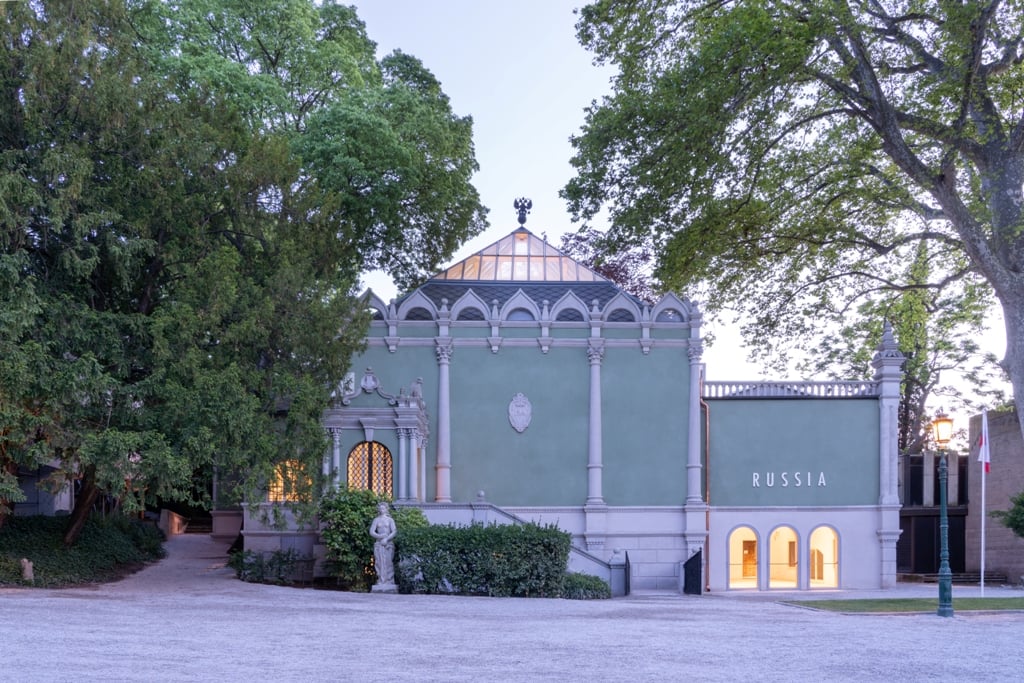
The Russian Pavilion at the 2026 Venice Biennale has opened amid intense controversy over its unauthorized participation. The pavilion, housed in a 1914 building recently restored by Italian architects 2050+, features a program of musical improvisations, ensemble performances, techno concerts, and interactive actions, including free used clothing. The space is designed as a fragrant flower shop with a chill-out room featuring a conifer grove and video installations. The exhibition, titled "L’Albero Radicato nel Cielo" (The Tree Rooted in the Sky), is organized by young poets, musicians, and philosophers who prefer to remain anonymous as a collective, coordinated by the Gnessin Russian Academy of Music. However, due to sanctions, the pavilion is only open from May 5 to 8, as organizers cannot obtain the necessary permit to operate beyond the private opening.

Golden Lions of the Biennale voted by the public? 7 reasons why they cannot work

Leoni d’Oro della Biennale votati dal pubblico? 7 motivi per cui non possono funzionare

On April 30, 2026, the International Jury of the Venice Art Biennale resigned en masse. In response, the Biennale Foundation hastily announced a new initiative called the "Visitor Lions" (Leoni dei Visitatori), where paying visitors would vote to award the Golden Lions for best artist and best national participation. The voting system would rely on ticket tracking to verify attendance at the main venues, the Giardini and the Arsenale. However, just a week before the public opening, no further details had been released, raising numerous practical concerns about the mechanism's feasibility.