
filter_list Showing 2 results for "Saturne" close Clear
dashboard All 2 museum exhibitions 2
date_range Range Today This Week This Month All
Subscribe

Who is Yto Barrada, France's representative at the Venice Biennale with a world-spanning work?

Qui est Yto Barrada, représentante de la France à la Biennale de Venise avec une œuvre-monde ?

Yto Barrada, the artist representing France at the 2026 Venice Biennale, has created a multidisciplinary installation titled "Saturne" for the French Pavilion. The work centers on textiles and natural dyeing, weaving together themes of postcolonial history, migration, craft transmission, and the symbolism of Saturn—from its astronomical mystery to its mythological role as the devourer of children. The installation features wool curtains, Aubusson tapestry, goat skins, wasp-nest sculptures, masks, muzzles, a color chart, and video, all housed in a renovated pavilion designed with the help of numerous artisans. Barrada, born in Paris in 1971 and raised in Tangier, founded the Cinémathèque de Tanger and later The Mothership, a research center focused on textiles and natural dyes. The exhibition is curated by Myriam Ben Salah.
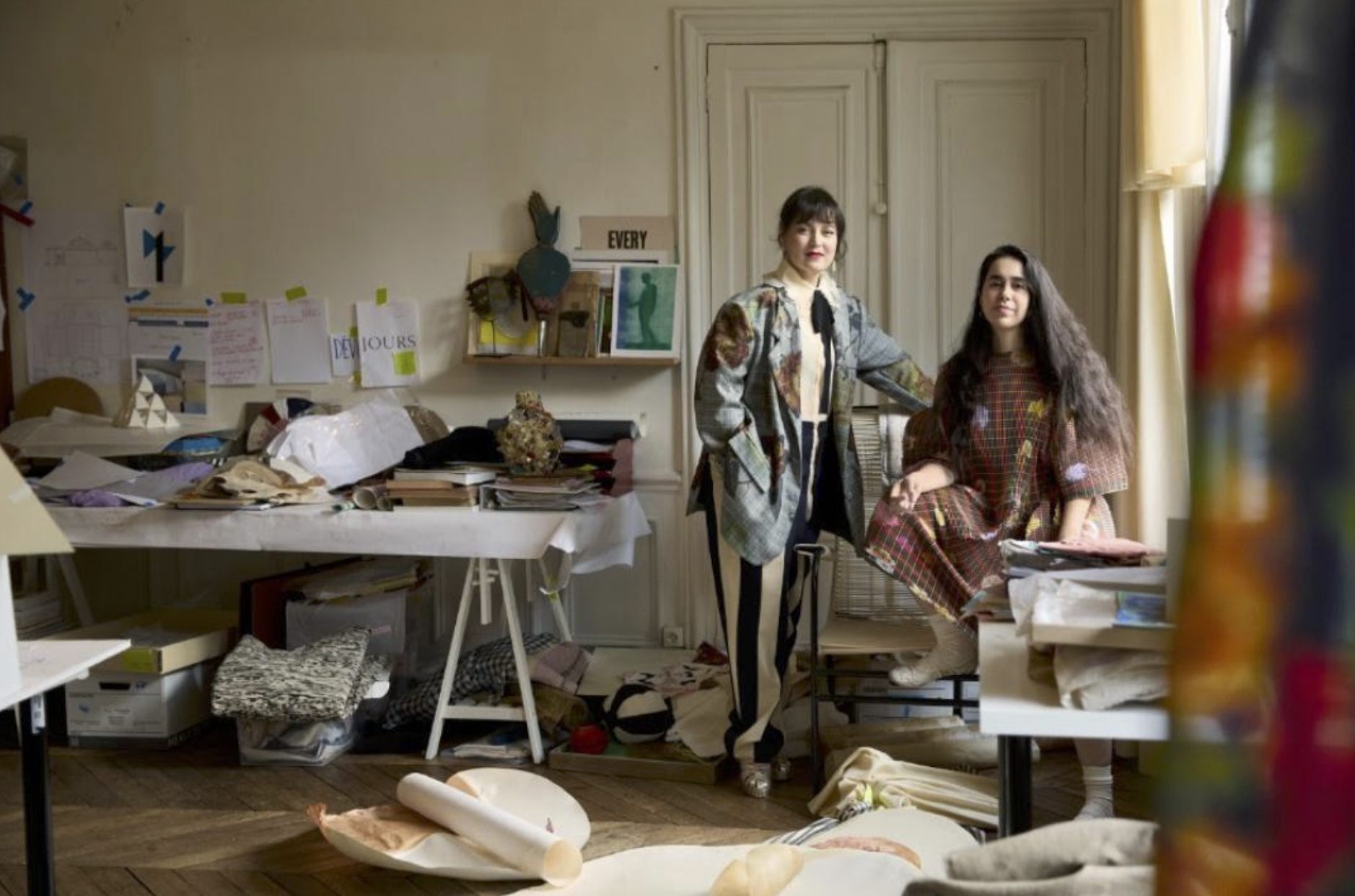
France reopens its historic pavilion at the 2026 Venice Art Biennale after restorations with artist Yto Barrada

La Francia riapre il suo storico padiglione alla Biennale Arte 2026 dopo i restauri con l’artista Yto Barrada

France will reopen its historic pavilion at the 61st Venice Biennale (May 9–November 22, 2026) after restoration, with Franco-Moroccan artist Yto Barrada (b. 1971) presenting the immersive textile-based project "Comme Saturne," curated by Myriam Ben Salah. The exhibition uses the "dévoré" technique—acid selectively corrodes fabric—as a metaphor for destruction and creation, featuring a goat-skin kite, a Room of Folds with wool drapery that fades in natural light, a Laboratory inspired by Saturnalia, and a Study Room linked to Barrada's garden of dye plants in Tangier, culminating in the Room of the Devoured where chemically attacked material fragments into an aesthetic of wear and formlessness.