
filter_list Showing 3 results for "Saudi Pavilion" close Clear
search
dashboard All 3 museum exhibitions 2rate_review review 1
date_range Range Today This Week This Month All
Subscribe

Dana Awartani on Representing Saudi Arabia at the 61st Venice Biennale

Dana Awartani, an artist based in Jeddah, will represent Saudi Arabia at the 61st Venice Biennale in 2026, with her pavilion located in the Arsenale under the theme 'Celebrating Visions.' In an interview with ArtReview, Awartani discusses her exhibition, which builds on her practice of foregrounding Arab cultural histories and preserving the region's material heritage. She connects her work to the Biennale's theme 'In Minor Keys' by focusing on repair, healing, and the quiet consequences of conflict, emphasizing craft as a form of quiet resistance against mechanization. The pavilion, she says, reflects the diversity of voices within Saudi Arabia's artistic community rather than a single national narrative.
Gabrielle Goliath Sounds a Call to Action in Venice

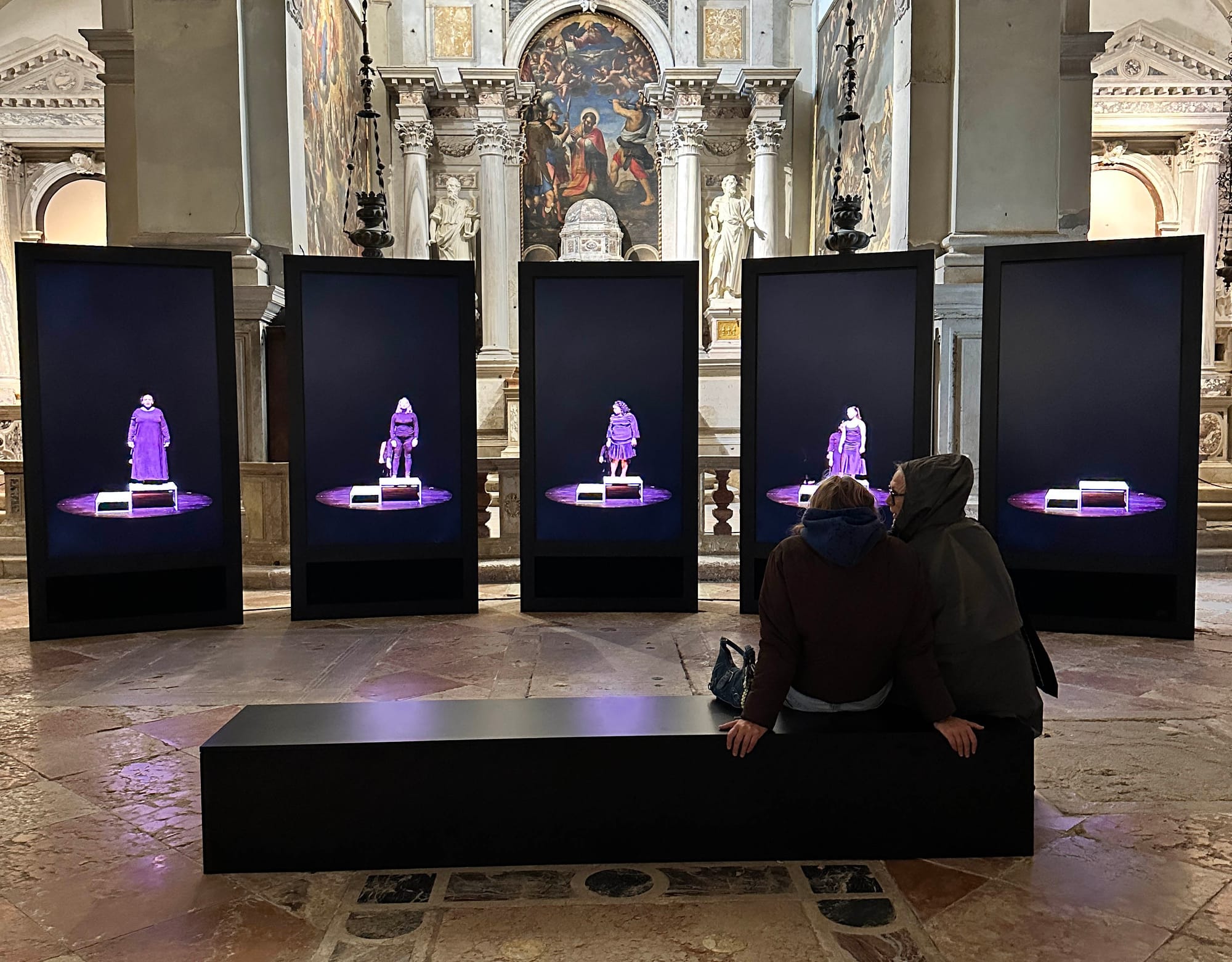
Gabrielle Goliath’s exhibition "Elegy" is presented as South Africa’s unofficial pavilion at the 61st Venice Biennale, after the country’s Culture Minister Gayton McKenzie overrode an independent committee’s selection of Goliath, citing her proposed inclusion of a memorial for Palestinians killed in Gaza. The installation features three video works in which singers sound a single note in tribute to victims of violence: a South African femicide victim, two women killed in Germany’s colonial genocide in Namibia, and Palestinian poet Heba Abunada. The show occupies the Chiesa di Sant'Antonin in Venice, curated with Ingrid Masondo, after a legal challenge against McKenzie was dismissed.

Saudi pavilion at Venice Biennale turns fractured heritage into monumental art installation

Saudi Arabia has unveiled a large-scale installation by artist Dana Awartani at the 61st Venice Biennale, held at the Arsenale. Titled "May your tears never dry, you who weep over stones," the work covers the entire floor of the Saudi national pavilion and incorporates over 29,000 sunbaked clay bricks and mosaic patterns inspired by Islamic geometric art. The installation references 23 heritage sites across the Arab world that have been damaged or destroyed by conflict, and was produced over nearly 30,000 artisan hours with 32 craftspeople at a studio outside Riyadh. Curated by Antonia Carver with assistant curator Hafsa Alkhudairi, the piece emphasizes traditional craftsmanship and collective skill-sharing.