
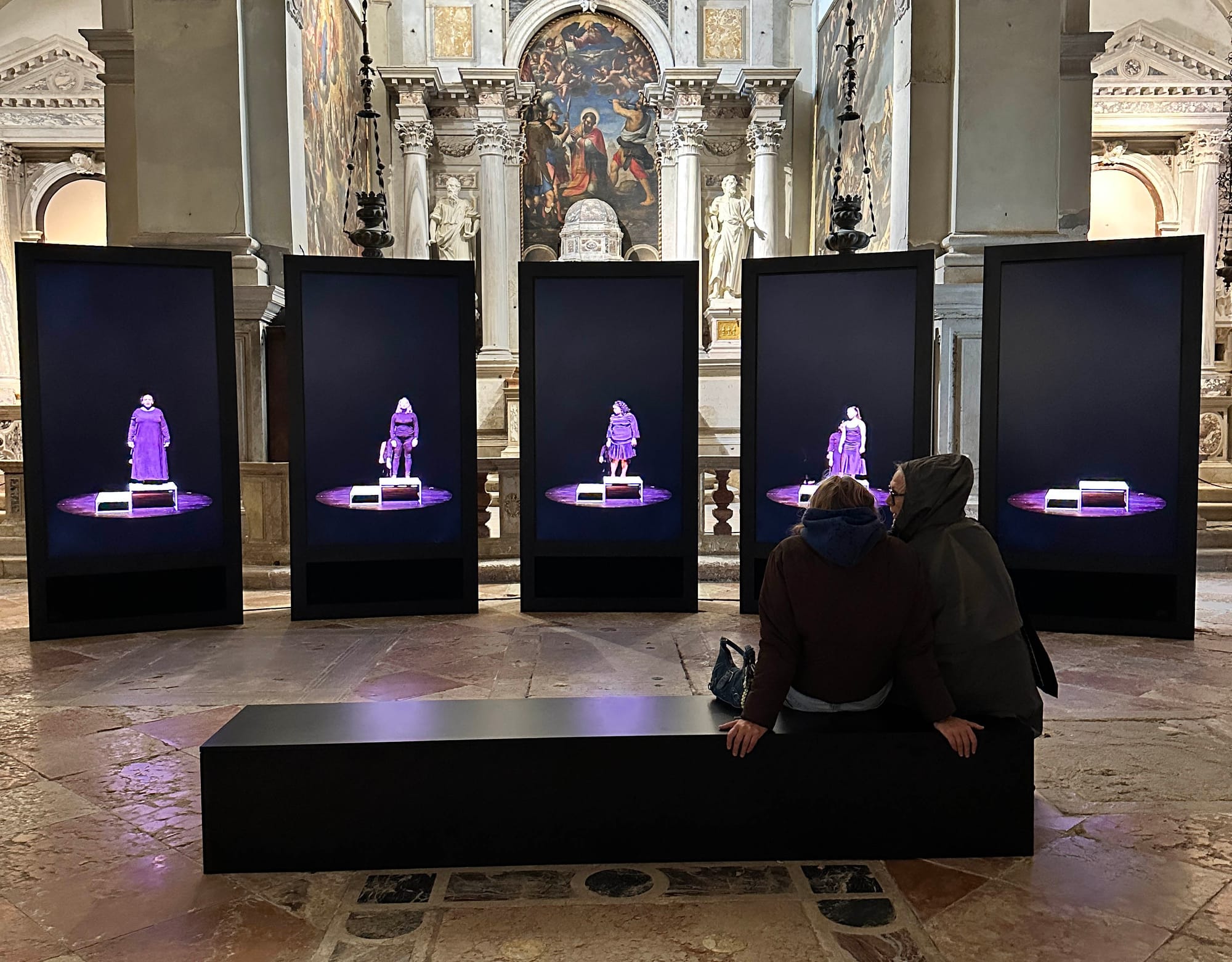
Gabrielle Goliath’s exhibition "Elegy" is presented as South Africa’s unofficial pavilion at the 61st Venice Biennale, after the country’s Culture Minister Gayton McKenzie overrode an independent committee’s selection of Goliath, citing her proposed inclusion of a memorial for Palestinians killed in Gaza. The installation features three video works in which singers sound a single note in tribute to victims of violence: a South African femicide victim, two women killed in Germany’s colonial genocide in Namibia, and Palestinian poet Heba Abunada. The show occupies the Chiesa di Sant'Antonin in Venice, curated with Ingrid Masondo, after a legal challenge against McKenzie was dismissed.
This matters because the censorship of Goliath’s work highlights tensions between state power and artistic freedom, especially regarding geopolitical issues like the Gaza conflict. The exhibition itself transforms grief into a collective, embodied experience, arguing that mourning can build solidarity across different histories of violence. It also underscores South Africa’s contradictory position—having filed a genocide case against Israel at the Hague while its government suppressed an artist’s memorialization of Palestinian deaths.