filter_list Showing 6 results for "Treatise" close Clear
dashboard All 6 article news 5museum exhibitions 1
date_range Range Today This Week This Month All
Subscribe

archeologists uncover vitruvius basilica italy 1234770292

Italian officials announced the discovery of a 2,000-year-old basilica attributed to the ancient Roman architect Vitruvius, uncovered in the town of Fano (ancient Fanum Fortunae) and completed in 19 BCE. The structure, the only known building by Vitruvius, was found using his own descriptions from the treatise *De architectura*, with archaeologists led by Andrea Pessina confirming an "absolute match" after locating columns exactly where predicted. The discovery was hailed by Italy's culture minister Alessandro Giuli as "the Tutankhamun of the 21st century."

roman basilica fano vitruvius 2738762

Archaeologists in Fano, Italy, have unearthed the remains of a 2,000-year-old Roman basilica during redevelopment work on Piazza Andrea Costa. The rectangular structure, bordered by eight columns on the long side and four on the shorter sides, matches the precise measurements and layout described by the ancient Roman architect Vitruvius in Book V of his treatise *De Architectura*. This is the first time a physical building has been attributed to Vitruvius, whose writings have long been studied but whose structures had never before been found.

The Walters Art Museum Shines a Light On the Toxic History of Medieval Manuscripts

The Walters Art Museum in Baltimore has opened "If Books Could Kill," an exhibition exploring the toxic history of medieval manuscripts. The show reveals how pigments like white lead, red mercury, and arsenic were commonly used by scribes, artists, and bookbinders, exposing them to serious health risks. Co-curated by Dr. Lynley Anne Herbert and Dr. Annette S. Ortiz Miranda, the exhibition features 24 rarely displayed manuscripts from the museum's collection, including a Thai treatise on elephants with arsenic-based yellows and a 15th-century Armenian Gospel with vermillion pigments. It also includes a conservator-led video demonstrating how portable X-ray fluorescence (pXRF) is used to identify toxic materials.

archimedes palimpsest manuscript rediscovered 1234777245

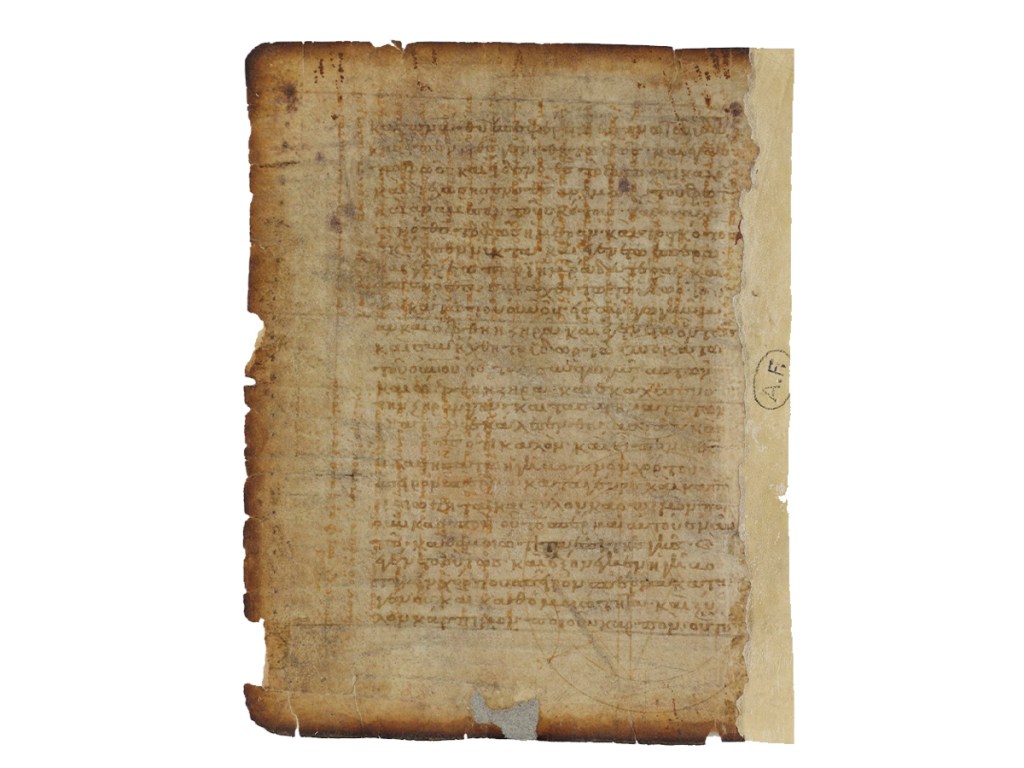
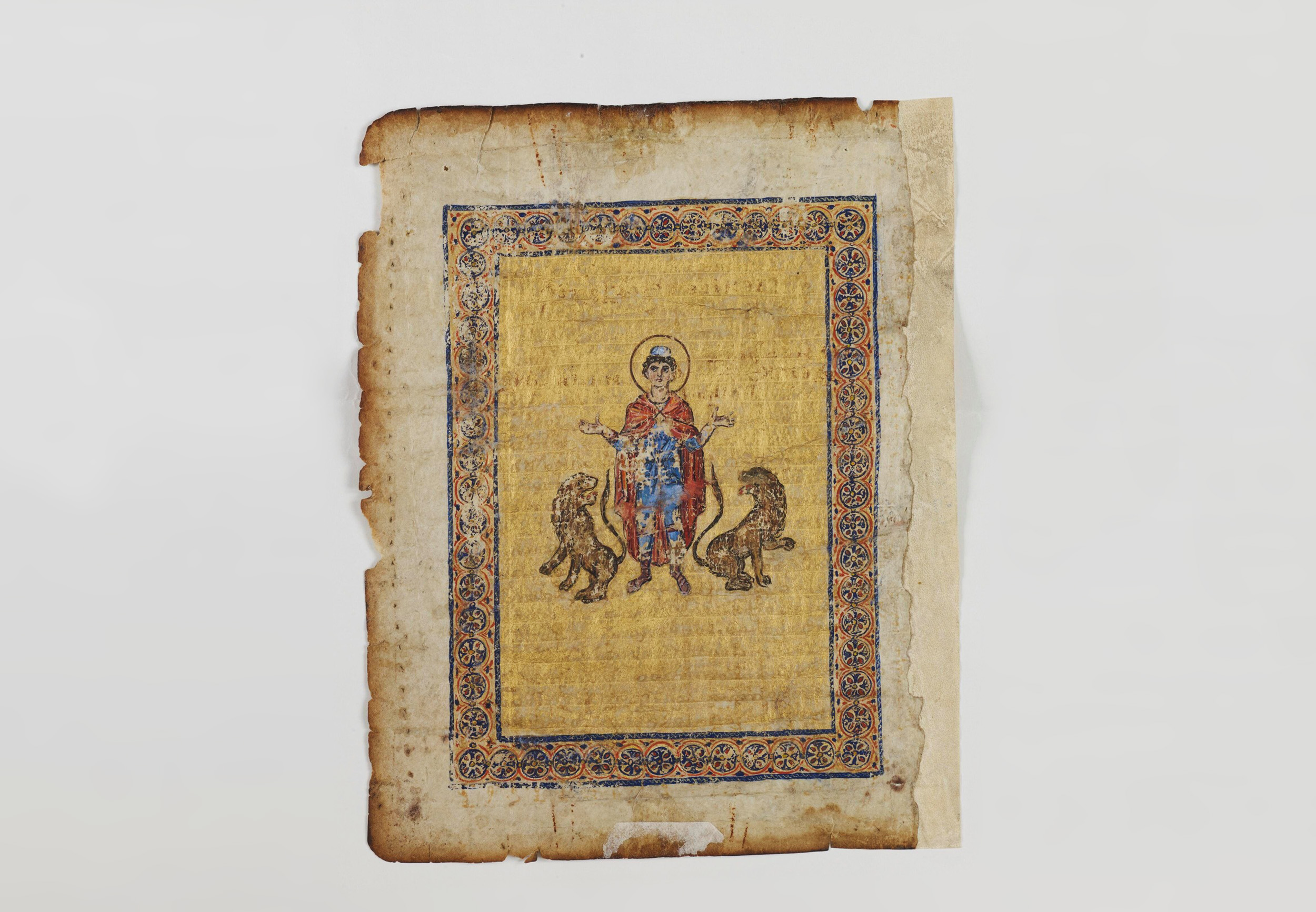
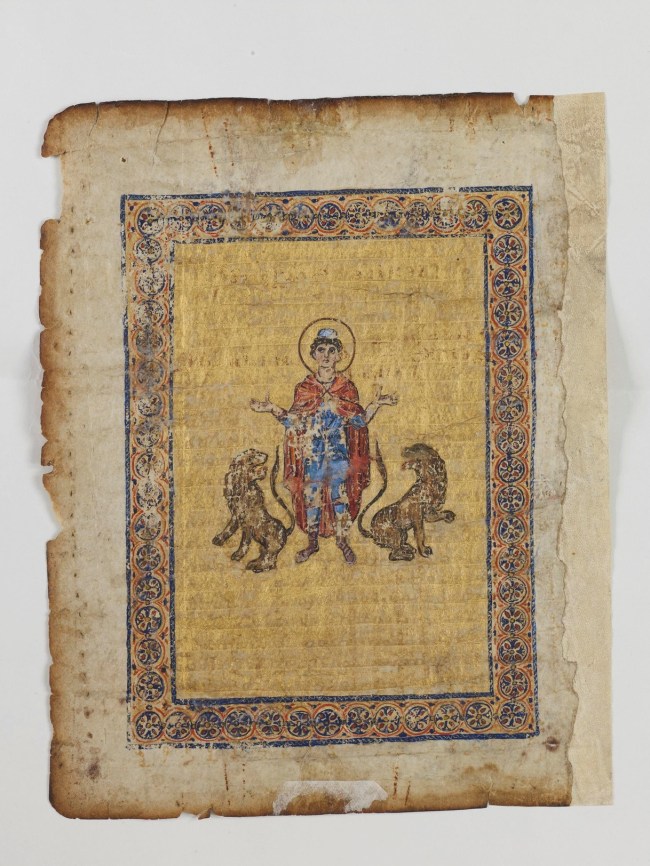
A missing page from the Archimedes Palimpsest, the oldest surviving copy of the Greek mathematician’s writings, has been rediscovered at the Museum of Fine Arts in Blois, France. The 10th-century parchment, which had been missing for 120 years, contains portions of the treatise 'On the Sphere and the Cylinder' hidden beneath 20th-century illumination. The page was identified by a researcher from the French National Center for Scientific Research (CNRS) after being unaccounted for since 1906.

Lost Page of Archimedes Palimpsest Found

lost page of archimedes palimpsest found 2753005

Researchers from France’s National Centre for Scientific Research (CNRS) have identified a missing page from the Archimedes Palimpsest at the Musée des Beaux-Arts in Blois. The leaf, identified as page 123, contains geometric diagrams and passages from the mathematician’s treatise on the sphere and the cylinder, which were scrubbed and overwritten by monks with religious texts in the 13th century. The discovery was confirmed by comparing the leaf to 1906 photographs taken by scholar Johan Ludvig Heiberg before the manuscript was broken up and partially forged by an art dealer in the 1930s.

Lost Page From Archimedes Palimpsest Reappears In French Museum

A researcher has identified a long-lost page from the Archimedes Palimpsest, a 10th-century manuscript containing copies of the Greek mathematician's treatises. The page, held at the Musée des Beaux-Arts in Blois, France, was matched to a leaf documented in 1906 photographs and contains diagrams from "On the Sphere and the Cylinder" on one side and a later-added religious illustration on the other.