
filter_list Showing 3 results for "Watteau" close Clear
dashboard All 3 museum exhibitions 2rate_review review 1
date_range Range Today This Week This Month All
Subscribe

« L’Angélus » de Millet : une notification à l’humanité hors sol ?

Beaux Arts Magazine publishes a detailed visual analysis of Jean-François Millet's painting "L'Angélus" (1857–1859), housed at the Musée d'Orsay in Paris. The article describes the scene of two peasants pausing their potato harvest to pray at dusk, examining the composition, color, and spiritual resonance of the work. It also traces Millet's biography—from his peasant origins in the Cotentin region to his training under Langlois and Paul Delaroche, and his early career painting portraits and nudes before turning to rural subjects.
Views from Behind. A Figure Without a Portrait

Vu[e]s de dos. Une figure sans portrait

The exhibition "Vu[e]s de dos. Une figure sans portrait" at Les Franciscaines in Deauville, running from February 28 to May 31, 2026, explores the artistic motif of figures seen from behind. Curated by director Annie Madet-Vache, the show was inspired by a small painting from the museum's own collection, André Hambourg's *L'Enterrement de Poincaré*. Unable to secure loans of iconic works such as those by Friedrich, Delacroix, Ingres, or Vermeer, Madet-Vache instead displays large black-and-white reproductions of these masterpieces alongside contemporary works they inspired, turning the absence of the originals into a conceptual strength.

Janet Werner Is Distorting Fashion’s Beauty Ideals Through Painting

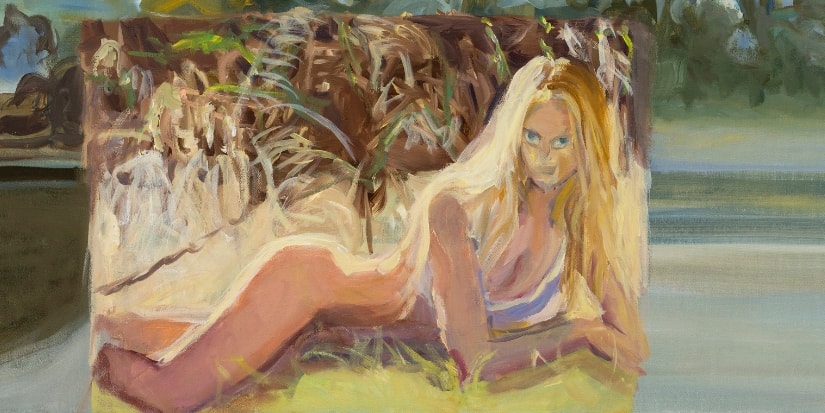
Janet Werner, an artist with a nearly four-decade career, has created a new body of work titled "Landscape with Legs" that distorts fashion imagery from Vogue archives and vintage campaigns by Marc Jacobs. Her paintings transform archetypal fashion models—thin, blonde, and emblematic of privilege—into unsettling, complex figures that expose a tension between glamor and the grotesque. The exhibition runs from May 1 to June 12, 2026, at Anat Ebgi Gallery in New York, marking her second solo show there. In an interview, Werner discusses her background as a dancer, her creative process of collaging photographic images with art historical references like Watteau and Caspar David Friedrich, and the political moment that makes the show feel urgent.