filter_list Showing 6 results for "Witness" close Clear
dashboard All 6 article culture 2gavel restitution 2museum exhibitions 1rate_review review 1
date_range Range Today This Week This Month All
Subscribe

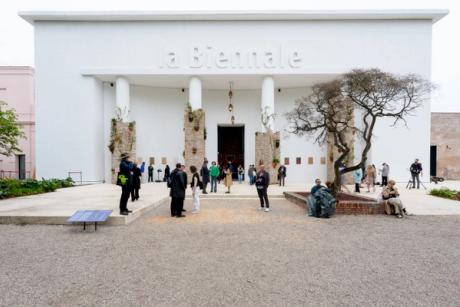
The Big Review | Venice Biennale 2026: In Minor Keys ★★★½

The Venice Biennale 2026, titled "In Minor Keys," was curated posthumously following the death of artistic director Koyo Kouoh in May 2025. A team of five curators and advisors—Gabe Beckhurst Feijoo, Marie Hélène Pereira, Rasha Salti, Siddhartha Mitter, and Rory Tsapayi—executed her vision across the Giardini and Arsenale venues. The exhibition features 110 artists, with a strong emphasis on new commissions, and is structured around themes of procession, resistance, and joy. Key works include Big Chief Demond Melancon's "Amistad Takeover" (2026), Nick Cave's "Amalgam (Origin)" (2025), and Otobong Nkanga's rewilded columns at the Central Pavilion.

‘It’s really important that the public is not just a silent witness’: Marina Abramović on her Venice Biennale exhibition

Marina Abramović is the first living female artist to have a solo exhibition at the Gallerie dell'Accademia in Venice, where her work will be installed alongside the museum's permanent collection. The show, titled *Transforming Energy*, features interactive 'transitory objects' such as stone beds and crystal-embedded structures that visitors are invited to use, as well as a juxtaposition of her 1983 photograph *Pietá (with Ulay)* with Titian's final masterpiece *Pietá* (1575-76). Abramović, who won the Golden Lion for Best Artist at the 1997 Venice Biennale, emphasizes audience participation over passive viewing, banning telephones and encouraging visitors to spend at least three hours engaging with the works.

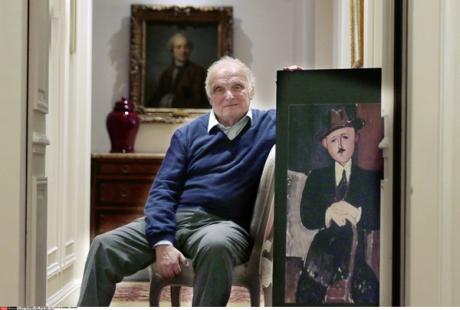
David Nahmad maintains that his Modigliani was not looted by the Nazis

David Nahmad is continuing his legal battle to prove that his Modigliani painting, *Seated Man with a Cane* (1918), was not looted by the Nazis from the Jewish dealer Oscar Stettiner. Despite a recent New York ruling against him, Nahmad’s lawyers have filed a motion to review the case based on new eyewitness testimony. Two witnesses claim the painting they saw in the Van der Klip family—which bought the Nazi-looted work in 1944—is completely different from Nahmad’s painting, lacking a seated man or a cane. Nahmad’s legal team also cites a 1946 French bailiff report and a recent catalogue raisonné by Marc Restellini to argue that Mondex, the restitution firm working for Stettiner’s heirs, misidentified the work.

Nahmad Seeks to Reopen Modigliani Restitution Case With New Witnesses

David Nahmad's lawyers are asking a New York court to reconsider its April 3 decision in the restitution case over Amedeo Modigliani's *Seated Man with a Cane* (1918), which awarded the painting to the estate of dealer Oscar Stettiner. They cite new eyewitness testimony from Frédéric Allain, who recalls a different Modigliani—smaller, darker, and without a seated man or cane—hidden by the Van der Klip family in Paris during World War II, suggesting the wrong painting may have been the focus of the case. The filing also references a 1946 report describing the missing work as a self-portrait and a new catalogue raisonné by Marc Restellini that finds no link between the painting and Stettiner. Mondex, representing Stettiner's heirs, rejects the claims, asserting that *Seated Man with a Cane* bears Stettiner's name and was in the family's possession from 1944 to 1996.

Women behind the lens: ‘After state massacres, I began burning the prints as an act of mourning’

Iranian-Canadian visual journalist and artist Parisa Azadi describes her process of creating protest photographs during the 2022 Iranian revolution from exile in Dubai. Unable to return to Iran, she used open-source protest footage from social media, isolating frames and printing them with a Fujifilm instax camera to transform ephemeral digital images into physical objects. In January 2026, after state massacres and executions, she began burning these prints as an act of mourning, scarring their surfaces to echo the violence they depict.

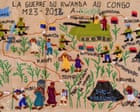
Stitches in time: the artist chronicling the DRC’s blood-soaked history in tapestry

Lucie Kamusekera, an 82-year-old artist in Goma, Democratic Republic of the Congo, creates embroidered tapestries on tobacco sacks that chronicle the country's violent history. Born in 1944 and taught sewing by Italian nuns, she began documenting contemporary conflicts after witnessing a military truck filled with corpses. Her more than 70 works depict events from the colonial Belgian Congo era to the 1961 assassination of Patrice Lumumba and the second Congo war, as well as personal tragedies including her husband's murder by rebels. Despite ongoing danger from rebel offensives, she continues to stitch from her home studio, training her children and great-granddaughter to carry on her work.