filter_list Showing 15 results for "alexander the great" close Clear
search
dashboard All 15 article news 6gavel restitution 6museum exhibitions 2article culture 1
date_range Range Today This Week This Month All
Subscribe

Ruins of ‘unique’, circular water temple discovered in Egypt

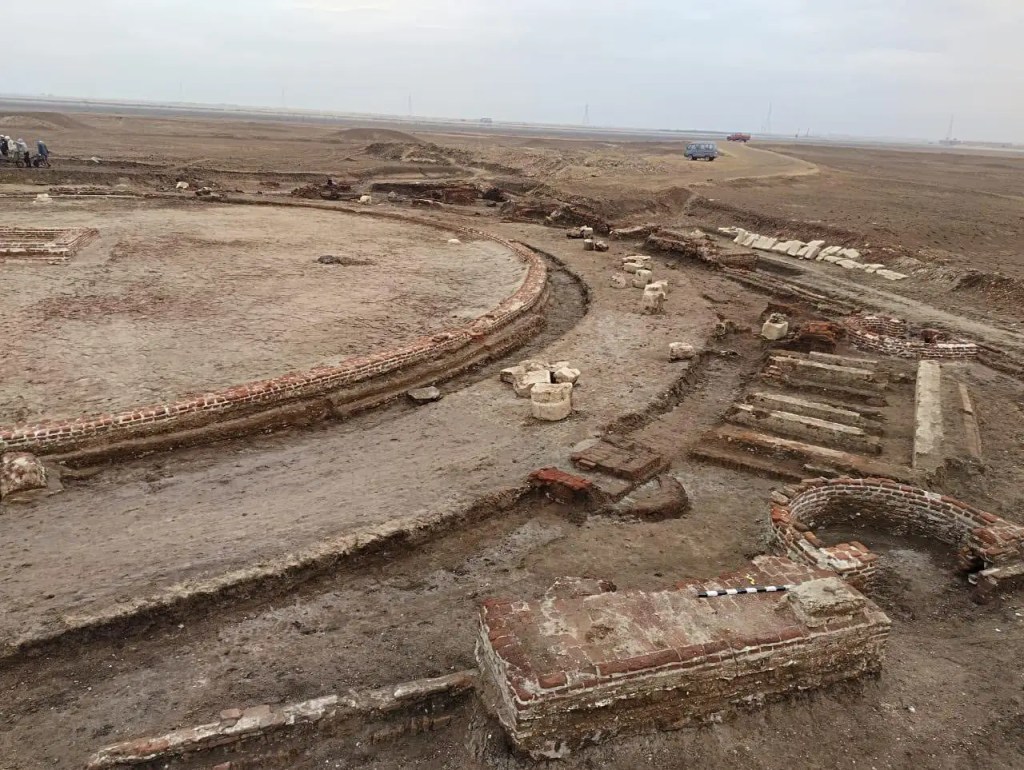
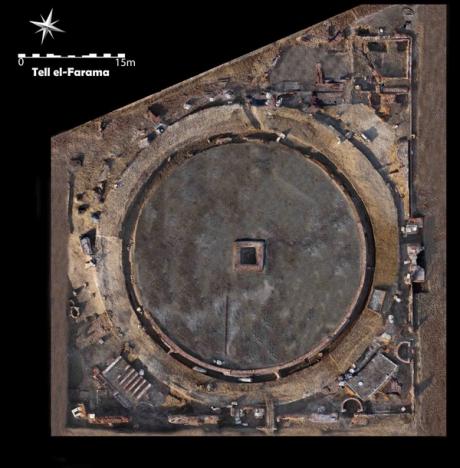
Archaeologists in northern Sinai have unearthed the ruins of a unique circular water temple at the site of ancient Pelusium, dating back to the second century. Initially mistaken for a political senate building, the structure features a 35-meter wide basin and brick walls characteristic of Roman construction, suggesting it was used for religious rituals linked to the local fertility god Pelusius.

russian archaeologist arrested poland ukraine crimea 1234775984

Alexander Butyagin, a senior archaeologist at the State Hermitage Museum in St. Petersburg, was arrested in Poland following an extradition request from Ukraine. Ukrainian authorities accuse Butyagin of conducting illegal excavations at the ancient Greek colony of Myrmekion in Crimea without the required permits following Russia's 2014 annexation. He is specifically accused of removing 30 gold coins, including rare artifacts bearing the name of Alexander the Great, while operating under Russian authority in occupied territory.

manhattan das office returns over 30 antiquities to spain italy and hungary 1234749145

The Manhattan District Attorney's Office, led by Alvin Bragg and the Antiquities Trafficking Unit under Matthew Bogdanos, has repatriated over 30 antiquities to Spain, Italy, and Hungary. The returned objects include a 1st-century CE marble head of Alexander the Great as Helios, a 1675 Jesuit manuscript stolen during World War II, and several 6th-century Visigoth pendants trafficked by Robin Symes and sold to the Metropolitan Museum of Art in 1990. The items were seized from traffickers including Giacomo Medici, Giovanni Franco Becchina, Robin Symes, Robert Hecht, Eugene Alexander, and Edoardo Almagià, who is awaiting extradition from Italy.

Alexandria Biennale—third-oldest after Venice and São Paulo—announces return following 12-year hiatus

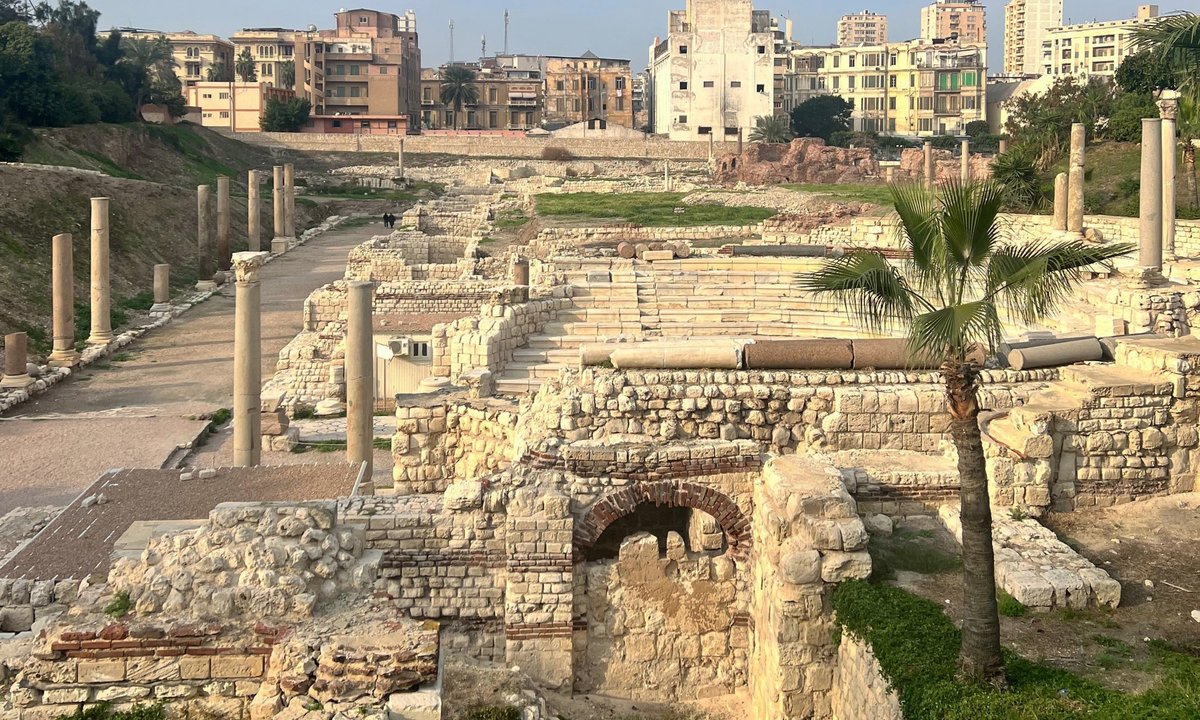
The Alexandria Biennale, the third-oldest biennial in the world after Venice and São Paulo, is relaunching in September 2026 after a 12-year hiatus. Curated by Egyptian artist Moataz Nasr under the title "This Too Shall Pass," the event will feature artists mainly from the Mediterranean basin, along with performances, music, and lectures. In a shift from its previous state-funded model, the biennial now operates as a private-public partnership, with seed money from the Egyptian and Alexandria governments and pledges from local businesses. The exhibition will take place at historic venues across Alexandria, including the Roman amphitheatre, the Alexandria Library, and the Qaitbay Citadel.

gordion royal tomb king midas 2661601

Archaeologists from the Penn Museum and Ankara Hacı Bayram Veli University have discovered an 8th-century B.C.E. royal tomb in Gordion, Turkey, containing 88 well-preserved objects including bronze cauldrons, vessels, and iron tools. The tomb, located near the famous Midas Mound, suggests a connection to the legendary King Midas or his family, and its cremation burial method predates previous evidence of elite cremation in the region by over a century.

Researchers Confirm Location of Lost City of Alexandria on the Tigris

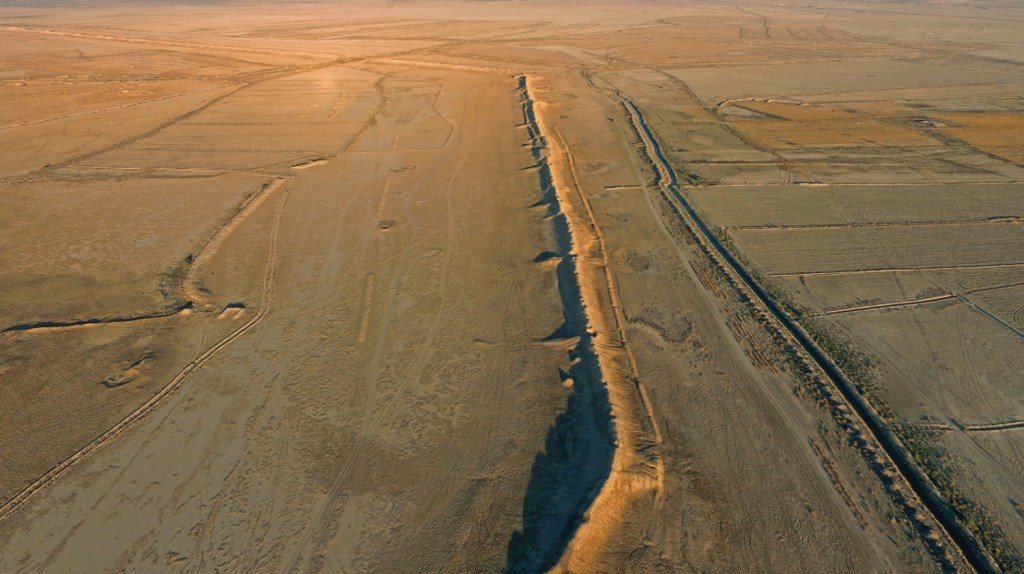
An international research team has confirmed the rediscovery of the lost city of Alexandria on the Tigris in Iraq. Founded by Alexander the Great, the city was a major trading hub until the 3rd century CE. Its location was identified through a combination of historical research, aerial photography, and recent non-invasive surveys using drones and magnetometry, which revealed the city's planned layout under difficult security conditions.

After a century in storage, an 18th-century tapestry goes on show at Blenheim Palace

A rare 18th-century tapestry, *The Battle of Arbela*, has gone on public display at Blenheim Palace in Oxfordshire, UK, after more than a century in storage. The tapestry, part of the *Story of Alexander the Great* series commissioned by the first Duke of Marlborough in 1707, was woven by Flemish weaver Judocus de Vos and designed by French artist Charles Le Brun. It depicts Alexander the Great's victory over the Persian Army at the Battle of Gaugamela in 331 BC. The piece is now exhibited in the palace's Great Hall until 26 August, following conservation work completed in the early 2000s.

U.S. Returns Hundreds of Looted Antiquities to Italy

U.S. officials formally returned 337 looted antiquities, archival materials, and artworks to Italy during a ceremony at Rome’s La Marmora barracks. The objects, spanning from the Villanovan era (900–700 B.C.E.) through the Hellenistic period (323–31 B.C.E.), include Etruscan, Greek, Italic, and Egyptian artifacts. The repatriation was coordinated by Italy’s Carabinieri Command for the Protection of Cultural Heritage, the U.S. Federal Bureau of Investigation, the Department of Homeland Security, and the office of Manhattan District Attorney Alvin Bragg Jr. Key items include a marble head of Alexander the Great, a bronze sculpture from Herculaneum, and Egyptian basalt sculptures. Some 221 objects were recovered via the Manhattan DA, while the remaining 116 were secured with help from Christie’s.

Ruins of a ‘Unique‘ Temple Complex Discovered in Northern Sinai

An Egyptian archaeological mission has unearthed a unique temple complex at Tell el-Farama, the site of the ancient city of Pelusium in northern Sinai. The discovery features a massive circular water basin, approximately 100 feet in diameter, surrounded by drainage channels and a central plinth likely intended for a statue. Initially mistaken for a civic building when first excavated in 2019, further study has revealed the site to be a sacred water installation used for religious rituals between the 2nd century BC and the 6th century AD.

huge persepolis destruction 2718329

The article recounts the Sack of Persepolis in 330 B.C.E., when Alexander the Great and his Macedonian forces pillaged and destroyed the Achaemenid capital. It describes Persepolis as a marvel of ancient architecture, including the 31-acre limestone terrace, the Apadana hall with 36 columns, and the palace of Xerxes I. Ancient sources like Diodorus of Sicily and Plutarch offer conflicting accounts of the destruction—whether it was spontaneous, premeditated, or fueled by alcohol—while modern historians view it as a political act of retribution for Xerxes' attack on Athens.

US Returns 337 Looted Objects to Italy in Repatriation Effort

The United States officially returned 337 looted antiquities to Italy at a ceremony held at La Marmora barracks in Rome. Of these, 221 objects were repatriated through the Manhattan District Attorney’s Office, while the remaining 116 were recovered on April 10, 2026, via joint efforts by the FBI, Homeland Security Investigations, the District Attorney’s Office, and Christie’s New York auction house. The objects span from the Villanovan era (900–700 BCE) to the Hellenistic period (323–31 BCE) and include a 1st-century CE marble head of Alexander the Great, a bronze sculpture from Herculaneum, and two Egyptian basalt sculptures.

Les États-Unis restituent près de 300 biens culturels à l’Italie

Italy presented 337 cultural artifacts repatriated from the United States at the Caserma "La Marmora" in Rome, following operations between December 2025 and April 2026. The objects span from the 5th century BCE to the 3rd century CE, including Roman sculptures, bronze works, pottery, jewelry, coins, and architectural fragments. Among the notable pieces is a marble head attributed to Alexander the Great, stolen from a Roman museum in 1960, and a bronze sculpture looted from Herculaneum. The recovery involved the Manhattan District Attorney's office, the FBI, Homeland Security Investigations, and Christie's New York, with 221 items seized through the DA's collaboration and 116 returned in April.

337 œuvres et objets volés récupérés : la vaste opération italienne de lutte contre le trafic de biens culturels aux États-Unis

On April 29, Italy's carabinieri dedicated to cultural heritage protection announced the recovery of 337 looted or stolen artworks and objects repatriated from the United States between December 2025 and April 2026. The haul includes archaeological artifacts, archival documents, and other artworks, such as a marble head of Alexander the Great from the 1st century AD, a bronze sculpture stolen from Herculaneum, and two Egyptian basalt sculptures. The objects were dispersed through international markets using forged provenance documents, and their return involved U.S. agencies including the FBI.

digitally rebuilding lighthouse of alexandria as 3d model 1234772703

A team of historians, architects, and programmers is digitally reconstructing the Lighthouse of Alexandria, one of the Seven Wonders of the Ancient World. The Pharos Project, led by archaeologist Isabelle Hairy, is scanning thousands of submerged granite blocks and artifacts from the seabed to create a comprehensive 3D model of the structure, which was destroyed by an earthquake in 1303.

Ancient artefacts from sunken city lifted out of Mediterranean near Alexandria

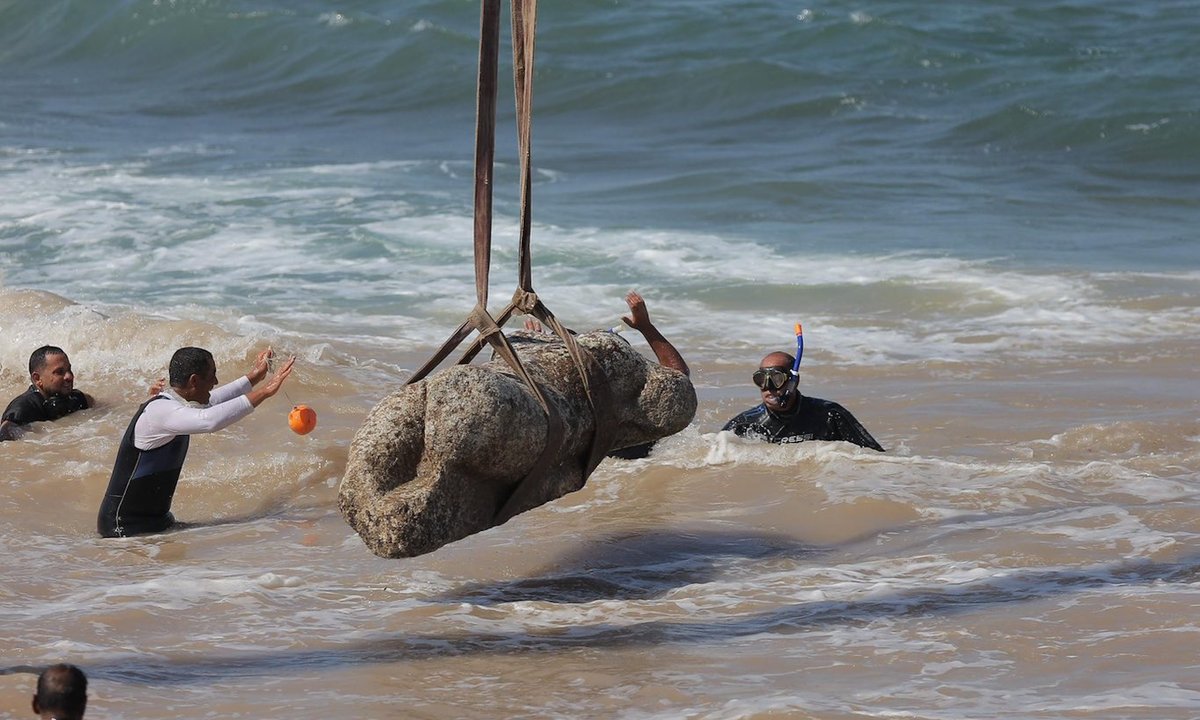
Ancient artefacts from the sunken city of Canopus, submerged off the coast of Alexandria, have been recovered for the first time in 25 years. During a three-day underwater heritage event (19-21 August), archaeologists lifted limestone structures, a quartz sphinx bearing cartouches of Ramses II, and a white marble statue of a Roman nobleman from the Mediterranean. The operation was led by the European Institute for Underwater Archaeology (IEASM) in cooperation with the Egyptian Ministry of Tourism and Antiquities, with French underwater archaeologist Franck Goddio playing a key role. The finds are now on display in the exhibition 'Secrets of the Sunken City' at the Alexandria National Museum.