filter_list Showing 4 results for "art and science collaboration" close Clear
dashboard All 4 museum exhibitions 3article culture 1
date_range Range Today This Week This Month All
Subscribe

An Artist Asks: Without Darkness, Who Are We?

Artist Jan Tichy has created a new exhibition that explores the consequences of light pollution and the disappearance of natural darkness. The project, titled "Without Darkness, Who Are We?", involved extensive research and collaboration with scientists including entomologists and neurobiologists to understand the ecological and psychological impacts of artificial light.
Book Honors for Art Museum’s Monhegan Show Publication

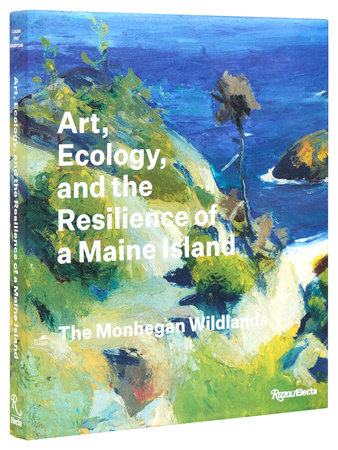
A book produced by Bowdoin College faculty, highlighting artistic portrayals of ecological change on Maine's Monhegan Island, has won the 2025 Historic New England Book Prize as one of two Honor Books. The interdisciplinary project was co-created by Frank Goodyear, codirector of the Bowdoin College Museum of Art, plant scientist Barry Logan, and Jennifer Pye, director of the Monhegan Museum of Art & History, where the accompanying exhibition ran through September 30, 2025. The book and exhibition merge art, science, and history to explore ecological events on the island—such as pastureland formation and abandonment, forest recovery, and land conservation—through visual art and historical artifacts.

Whales and the stories they carry about climate change are the subject of new art and science exhibition at the IAS - UC Santa Cruz

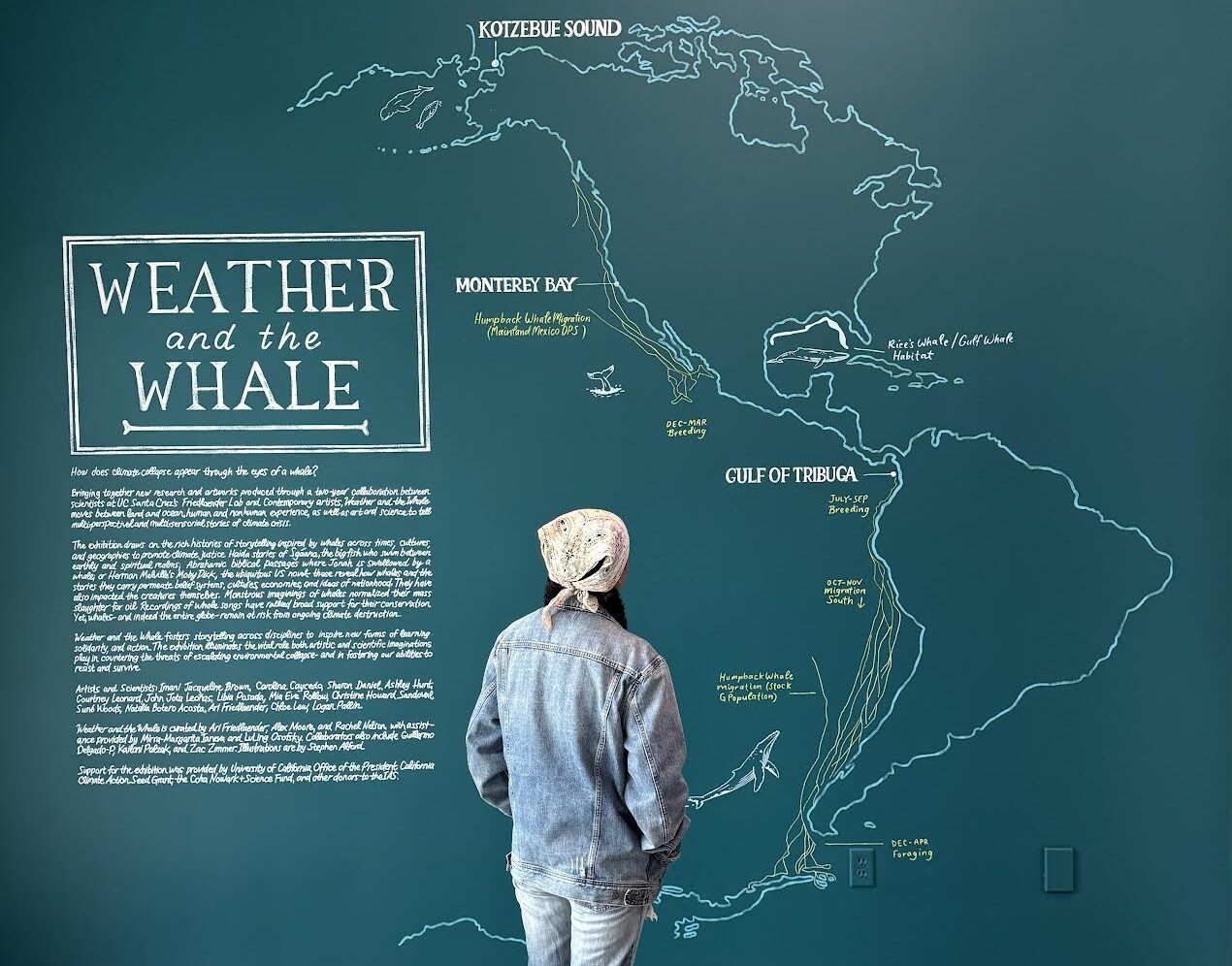
The Institute of the Arts and Sciences (IAS) at UC Santa Cruz will present "Weather and the Whale," a major art and science exhibition running from May 29, 2025, to March 8, 2026. The show features immersive displays of original scientific research from the Friedlaender Lab, alongside newly commissioned contemporary artworks by ten artists and collectives, including Carolina Caycedo. The exhibition explores how climate change affects whales and marine mammals, using video, painting, photography, sculpture, and installations to communicate ecological threats such as environmental toxins and sea ice retreat.

Comment | Art and science rely on freedom of thought—and on each other

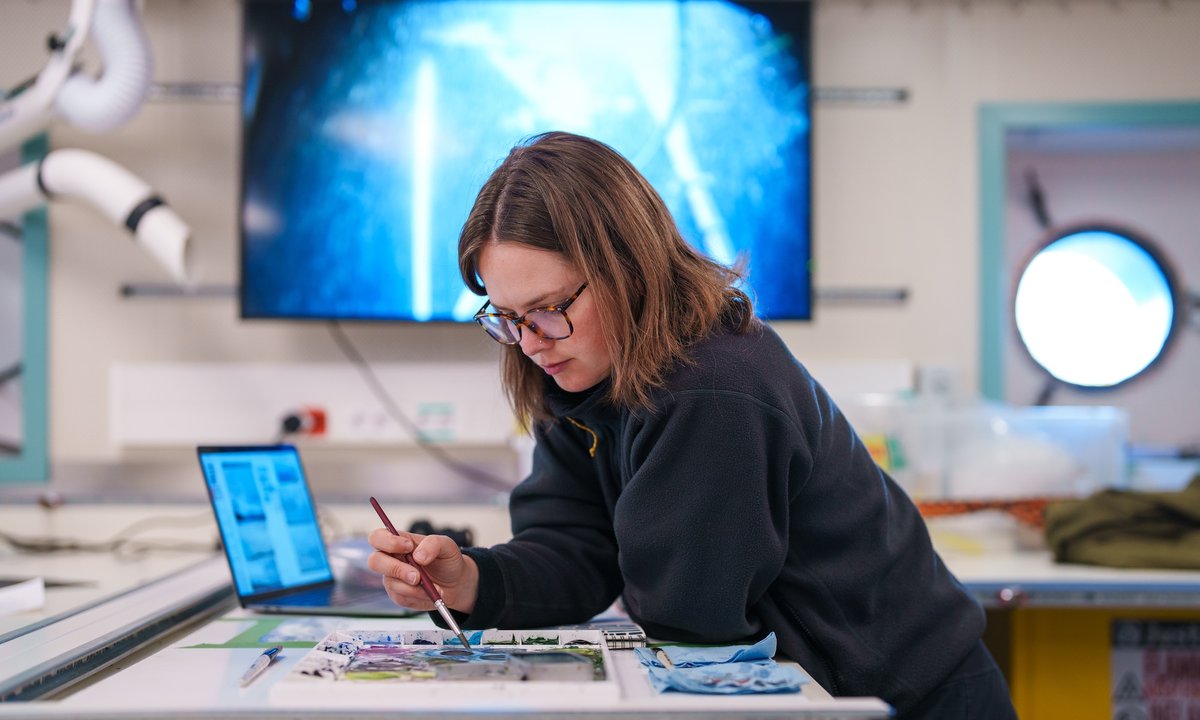
The article argues that art and science are deeply interconnected, both relying on freedom of thought and cross-disciplinary collaboration. It cites examples like birds' colorful feathers being explained by a study supported by Schmidt Sciences, which found that birds use a layer of white and black feathers to accentuate color—a technique painters have used for centuries. The piece highlights the Artist-at-Sea programme aboard the Schmidt Ocean Institute's research vessel Falkor (too), where artists like Constance Sartor and Jill Pelto collaborate with scientists to communicate marine science to broader audiences. The author, who works with scientists and is married to one, emphasizes that both disciplines pursue truth through different but complementary methods, from Leonardo da Vinci's anatomical studies to medieval Islamic tilework and Alexander von Humboldt's naturalist drawings.