filter_list Showing 9 results for "barnett newman" close Clear
search
dashboard All 9 museum exhibitions 4article culture 2trending_up market 1person people 1rate_review review 1
date_range Range Today This Week This Month All
Subscribe

Lee Ufan: ‘I try to bring together those things which are made and unmade’

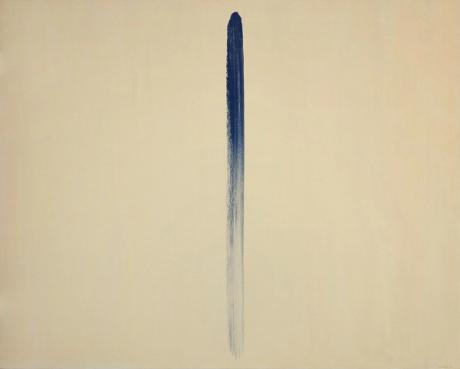
Lee Ufan, the South Korean artist and founding member of the Mono-ha movement, is being honored with a major solo exhibition at SMAC San Marco Art Centre as an official Collateral Event of the Venice Biennale, marking his 90th year. Simultaneously, a new display of his painting and sculpture opens at Dia Beacon in New York State, and his first show in Portugal opens at Casa e Parque de Serralves in July. In an interview with The Art Newspaper, Ufan discusses his artistic journey, his rejection of the artist's hand, and the influence of seeing a Barnett Newman exhibition at MoMA in 1971, which led him to develop his signature From Point and From Line paintings that use repeated marks to express the passage of time.
The $53 M. Wingate Collection Comes to Sotheby’s, Led by a $25 M. Giacometti

The collection of modern and contemporary art assembled by David and Shoshanna Wingate over seven decades will be sold at Sotheby's in New York and London on May 19 and 20. The sale, comprising over 50 works by artists like Alberto Giacometti, Mark Rothko, and Wassily Kandinsky, is estimated to fetch between $37 million and $53 million, led by Giacometti's sculpture "La Clairière (Composition avec neuf figures)" with an estimate of $18 million to $25 million.

Beer With a Painter: Keith Mayerson

Hyperallergic interviews Los Angeles-based painter Keith Mayerson, who discusses his ongoing 'My American Dream' series—a cosmology of paintings blending American identity, activism, and popular culture. The conversation covers his early influences from comics, the Muppets, and Hunter S. Thompson, his transition from cartooning to painting, and his vibratory, swirling brushwork. Mayerson's work has been featured in the 2014 Whitney Biennial and is currently on view at the Aspen Art Museum and the Pollock-Krasner House.

“Primary Structures,” Turns 60

On April 28, 1966, The New York Times published a review by conservative critic Hilton Kramer of the Jewish Museum's exhibition “Primary Structures,” organized by curator Kynaston McShine. Kramer, disdainful of contemporary art, described the 42 American and British artists as rejecting personal expression and subjective inflection, yet he acknowledged the show as the first comprehensive glimpse of a style that would define the 1960s. The exhibition featured then-little-known artists including Carl Andre, Dan Flavin, Donald Judd, Sol LeWitt, Walter De Maria, Robert Morris, Anne Truitt, John McCracken, Larry Bell, Robert Smithson, Judy Chicago, Philip King, Michael Bolus, and David Annesley, and is now recognized as the ur-survey of Minimalism—a term McShine deliberately avoided.

Exhibition | William Turnbull, 'Origins (1946–1959)' at Karma, Chelsea, New York, United States

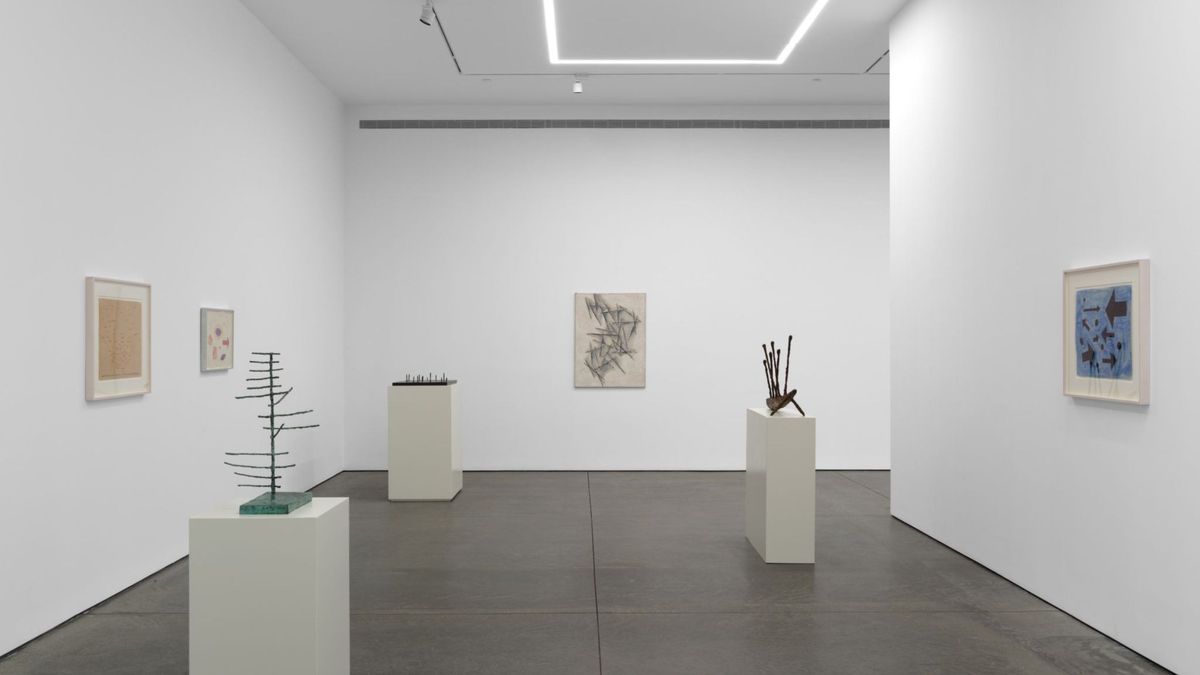
Scottish artist William Turnbull (1922–2012) is the subject of a new exhibition titled 'Origins (1946–1959)' at Karma gallery in Chelsea, New York. The show surveys Turnbull's early career, focusing on the transformative period after World War II when he moved between Surrealist Paris and Abstract Expressionist New York. It features key works such as the sculpture 'Horse' (1946), inspired by a Parthenon marble at the British Museum, and 'Playground (Game)' (1949), reflecting his interest in phenomenology and movement. The exhibition traces his evolution from an illustrator and Slade School student to a sculptor and painter who engaged elemental forms like the horse, standing figure, and human head.

Book uncovers the life of Barnett Newman, an artist who ran for New York mayor

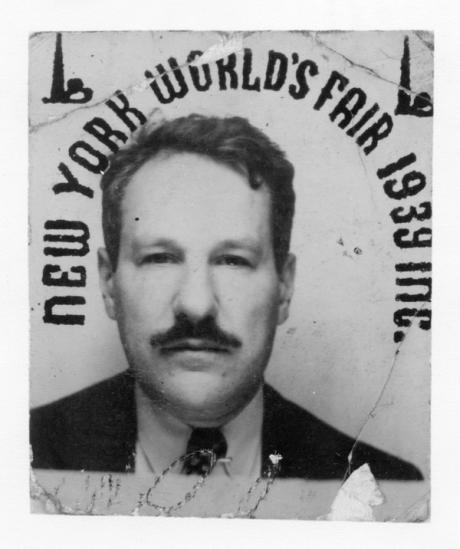
A new biography titled "Barnett Newman: Here" by Amy Newman (no relation) explores the life of Abstract Expressionist painter Barnett Newman, revealing his little-known 1933 run for mayor of New York City at age 28 under a platform of cultural and environmental reforms. The book details his upbringing as the son of Jewish immigrants in the Bronx, his philosophical studies, and his eventual reinvention as a painter who pioneered the 'zip' painting style with works like Onement I, while also chronicling his combative personality and lifelong battles against political machines and critics.

Mario Schifano, the artist who anticipated Arte Povera and beyond. What the exhibition in Rome looks like

The Palazzo delle Esposizioni in Rome has opened a major retrospective of Mario Schifano, curated by Daniela Lancioni and titled simply "Mario Schifano," running until July 12. The exhibition reconstructs the career of the Italian artist (1934–1998), who worked across painting, film, and music, and highlights his role as a precursor to Arte Povera. A centerpiece is the reconstructed dining room Schifano created for the Rome home of Marella and Gianni Agnelli in 1968, featuring 14 canvases and a planned but unrealized sand-filled room with a pyramid, a detail revealed by film producer Ettore Rosboch in a conversation with the curator.

The tiniest event can tear a hole. Sara MacKillop by Margaret Kross

Sara MacKillop's exhibition "The Cutaway View" at Good Weather in Chicago presents sculptures made from humble analog materials like blank wall calendars, empty shopping bags, and gift wrapping. The London-based artist alters these objects with minimal interventions—such as surgically cut holes in shopping bags to accommodate vinyl records—drawing attention to the ephemera and texture of retail culture. Her series "Calendar Houses" (2021–ongoing) uses archive boxes and wall calendars to create miniature modernist dwellings that critique systems of order and self-optimization.

Primitivism to Reinvent Art

Le primitivisme pour réinventer l’art

Philippe Dagen has published the third and final volume of his series on primitivism, covering the period from World War II to the late 1970s. The book traces how Western artists, from Barnett Newman and Jackson Pollock to members of the CoBrA movement and figures like Jean Dubuffet, Lucio Fontana, and Yayoi Kusama, engaged with so-called "primitive" art from Africa, Oceania, and the Americas, often as a means of rejecting or redefining modern civilization. Dagen also examines the intellectual debates surrounding primitivism, including the critiques of colonized peoples who refused the label "primitive," and the shifting attitudes of thinkers like Claude Lévi-Strauss, Michel Leiris, and Aimé Césaire.