filter_list Showing 18 results for "cultural property" close Clear
dashboard All 18 gavel restitution 13article policy 3candle obituary 1article news 1
date_range Range Today This Week This Month All
Subscribe

frances lower house unanimously backs colonial era art restitution bill trial begins in stolen golden helmet case morning links for april 14 2026 1234781147

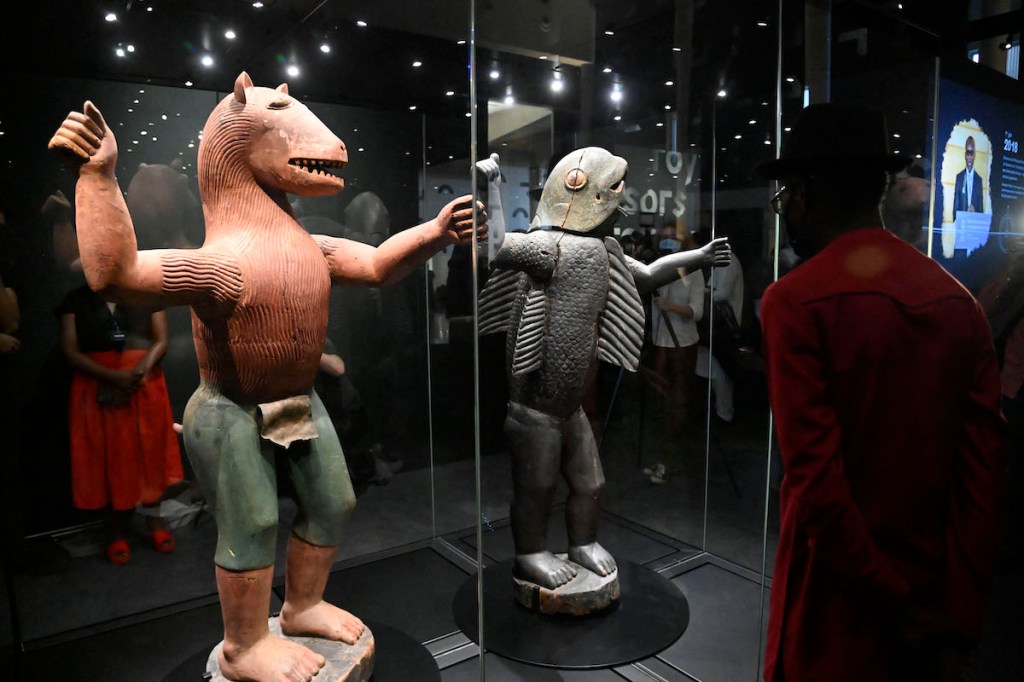
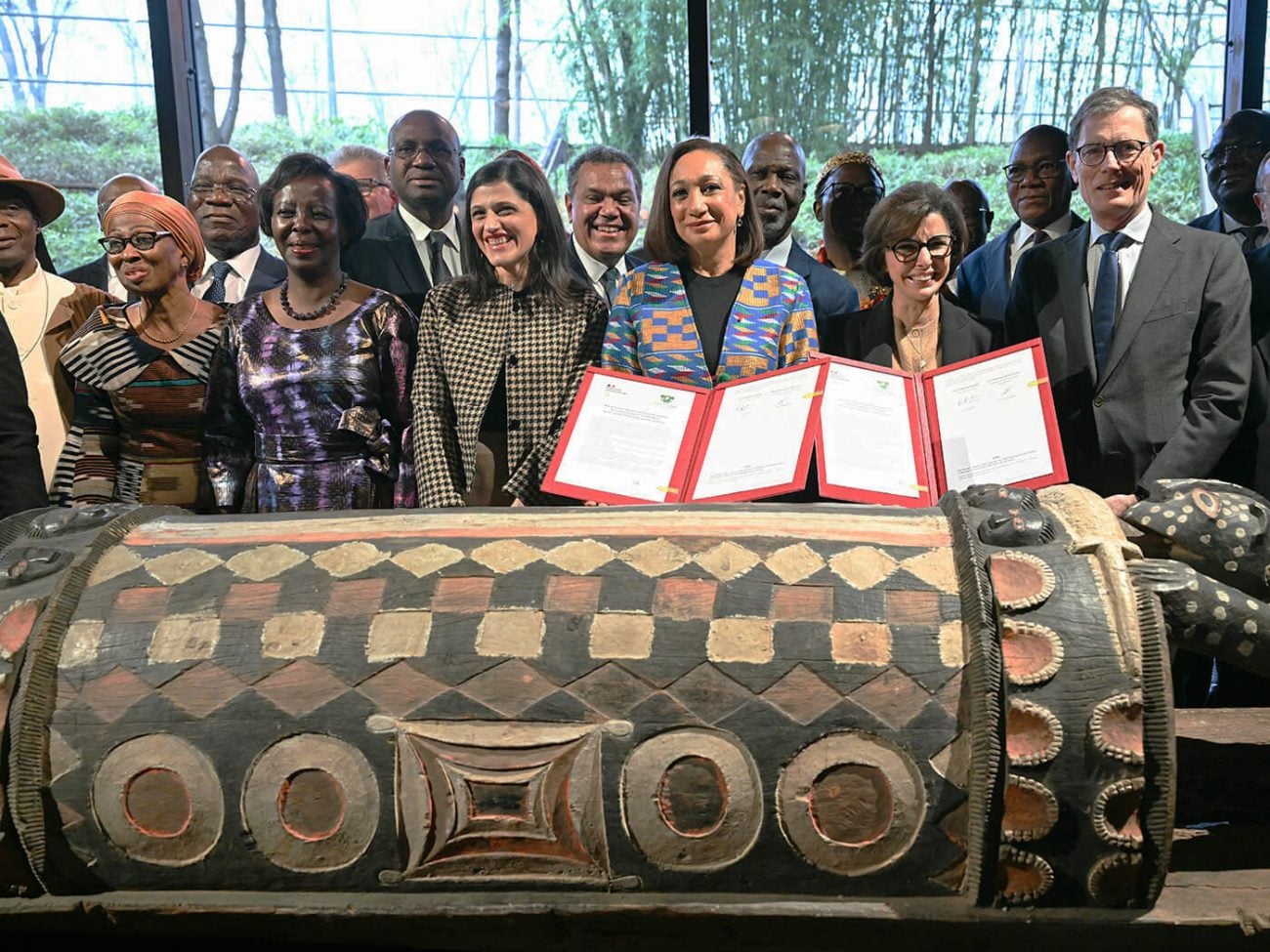
The French National Assembly has unanimously passed a landmark bill designed to streamline the restitution of cultural property looted during the colonial era between 1815 and 1972. While the legislation fulfills a long-standing promise by President Emmanuel Macron to return African heritage, the debate revealed deep political divisions; critics noted the bill avoids the word "colonialism," while conservative factions expressed concerns about depleting national museum collections.

Rare Books Stolen From Ex-MoMA President’s Home Recovered After Nearly 40 Years

Seventeen rare books, valued at over $2 million and stolen nearly 40 years ago from the Long Island estate of former Museum of Modern Art president John Hay Whitney, have been recovered and will be returned to his descendants. The trove includes a $2 million portfolio of handwritten letters from poet John Keats and first editions of works by James Joyce and Aleister Crowley.

Rare Books Stolen from Former MoMA President Are Returned

Manhattan District Attorney Alvin L. Bragg, Jr., has returned 17 rare books, collectively valued at nearly $3 million, to the heirs of John Hay and Betsey Cushing Whitney. The books were stolen from the couple's Long Island estate in the 1980s and include a bound collection of John Keats's love letters, a signed James Joyce volume, and an illustrated Brothers Grimm book. The recovery followed a tip from Manhattan book dealers in 2015, leading to search warrants executed in 2025 and 2026.

National Assembly Unanimously Votes on Law for Restitution of Looted Colonial Works, but with Restrictions

L’Assemblée vote à l’unanimité la loi sur la restitution des œuvres pillées pendant la colonisation, mais avec des restrictions

The French National Assembly has unanimously passed a landmark law establishing a permanent legal framework for the restitution of cultural property looted during the colonial era. Moving away from the previous requirement for case-by-case legislation, the new law allows the government to return artifacts via decree following consultations with scientific and parliamentary commissions. This shift fulfills a long-standing promise to simplify the return of African heritage currently held in French public collections.

Proposed Restitution Law in France Advances in National Assembly

The French National Assembly’s Cultural Affairs Committee has approved a landmark bill aimed at streamlining the restitution of cultural property looted from Africa during the colonial era. Moving away from the previous requirement for case-by-case legislation, the new framework allows restitutions to be ordered by ministerial decree, provided they fall within the 1815–1972 timeframe. This advancement follows years of debate sparked by President Emmanuel Macron’s 2017 pledge and the influential 2018 Sarr-Savoy report.

Where are the Louvre Jewels?

Wo sind die Louvre-Juwelen?

Six months after a high-profile heist at the Louvre, investigators remain in pursuit of stolen jewelry valued at approximately €88 million. While four suspects are currently in custody, the bulk of the Second Empire-era treasures remains missing, leading to fears that the pieces may have been dismantled or melted down. The investigation has shifted focus toward how the thieves obtained a sensitive 2018 security audit that detailed vulnerabilities in the museum's defenses.

US Returns 337 Looted Objects to Italy in Repatriation Effort

The United States officially returned 337 looted antiquities to Italy at a ceremony held at La Marmora barracks in Rome. Of these, 221 objects were repatriated through the Manhattan District Attorney’s Office, while the remaining 116 were recovered on April 10, 2026, via joint efforts by the FBI, Homeland Security Investigations, the District Attorney’s Office, and Christie’s New York auction house. The objects span from the Villanovan era (900–700 BCE) to the Hellenistic period (323–31 BCE) and include a 1st-century CE marble head of Alexander the Great, a bronze sculpture from Herculaneum, and two Egyptian basalt sculptures.

How the State Supports Provenance Research

Comment l’État soutient la recherche de provenance

The French Ministry of Culture has created two specialized missions to assist museums in researching the provenance of their collections, addressing looted artworks, human remains, colonial acquisitions, and illicit trafficking. The Mission for Research and Restitution of Looted Cultural Property (M2RS), established in 2019, focuses on Nazi-era spoliations (1933-1945) with a budget of €220,000 annually, while the newer Mission "Provenance," launched in 2024 under curator Catherine Chevillot, covers human remains, colonial-era objects, and illicit goods with a €450,000 budget. These missions provide expertise, funding, and coordination with institutions like the Commission for the Restitution of Property and Compensation of Victims of Anti-Semitic Spoliation (CIVS), though most museums still only initiate provenance checks during acquisitions or donations.

1815, a Key Year for the Question of Art Restitution at the Heart of an Enlightening Book

1815, année clé de la question des restitutions d’œuvres d’art au cœur d’un ouvrage éclairant

Art historian Bénédicte Savoy has released a new book, "1815, le temps du retour," which examines the massive wave of art restitutions following the collapse of the Napoleonic Empire. Between 1794 and 1811, French revolutionary and imperial forces seized thousands of artworks and cultural objects from across Europe to fill the Louvre under the guise of creating a universal museum. After Napoleon's defeat in 1815, the subsequent return of these works sparked a global debate involving intellectuals and politicians regarding national identity, cultural property, and the legal status of looted heritage.

Hermitage Museum Director and Putin Ally Mikhail Piotrovsky Sanctioned by European Union

The European Union has sanctioned Mikhail Piotrovsky, the longtime director of the State Hermitage Museum in St. Petersburg, for his close association with Vladimir Putin and his active support of Russia's war against Ukraine. Announced on April 23, the sanctions are part of a broader package targeting over a hundred individuals and entities, including other cultural figures like Sergei Obryvalin, Igor Solonin, and Andrey Polyakov, for their roles in the seizure of Ukrainian cultural property and the spread of Russian propaganda in occupied regions.

Greece Introduces New Law to Combat Art Forgery and Vandalism

Greece has enacted a landmark legislative framework specifically designed to combat art forgery, vandalism, and the trade of counterfeit cultural property. The new law introduces stringent criminal penalties, including prison sentences of up to ten years and fines reaching €300,000, while mandating the destruction of works confirmed as fakes. Key provisions include the creation of an independent registry of forgery experts under the culture ministry and the expansion of legal protections to include historically significant cinemas.

france national assembly vote bill looted artifacts 1234781166

The French National Assembly has unanimously passed a landmark bill designed to streamline the restitution of cultural artifacts looted during the colonial era between 1815 and 1972. This legislative framework aims to replace the previous requirement for individual laws for every return, fulfilling a long-standing pledge by President Emmanuel Macron to restore African heritage. While the vote was unanimous, the debate was contentious, with critics arguing over the omission of the word "colonialism" to avoid far-right backlash regarding national "repentance."

Lebanon appeals to Unesco to intervene amid fears protected citadel has been destroyed

Lebanon’s Ministry of Culture has filed an urgent complaint with Unesco following reports that Israeli military forces destroyed the 12th-century Chama’ Citadel in southern Lebanon. The site, a Crusader-era fortress, had recently been granted "enhanced protection" status under the 1954 Hague Convention, a designation intended to shield it from military targeting. Lebanese authorities are currently unable to access the site due to ongoing military occupation and have requested that Unesco utilize satellite imagery to verify the extent of the demolition.

U.S. Returns Hundreds of Looted Antiquities to Italy

U.S. officials formally returned 337 looted antiquities, archival materials, and artworks to Italy during a ceremony at Rome’s La Marmora barracks. The objects, spanning from the Villanovan era (900–700 B.C.E.) through the Hellenistic period (323–31 B.C.E.), include Etruscan, Greek, Italic, and Egyptian artifacts. The repatriation was coordinated by Italy’s Carabinieri Command for the Protection of Cultural Heritage, the U.S. Federal Bureau of Investigation, the Department of Homeland Security, and the office of Manhattan District Attorney Alvin Bragg Jr. Key items include a marble head of Alexander the Great, a bronze sculpture from Herculaneum, and Egyptian basalt sculptures. Some 221 objects were recovered via the Manhattan DA, while the remaining 116 were secured with help from Christie’s.

Dr Kurt A. Gitter, Japanese Art Collector, 89

Dr. Kurt A. Gitter, a pioneering retinal surgeon and world-renowned collector of Japanese art, has passed away at the age of 89 in New Orleans. Born in Vienna and having escaped the Holocaust as an infant, Gitter discovered his passion for Japanese culture while serving as a U.S. Air Force flight surgeon in the 1960s. Over several decades, he and his wife Alice Yelen Gitter amassed one of the most significant private collections of Edo-period paintings and self-taught American art in the Western world.

Mexico faces sales of pre-Columbian art

Le Mexique face aux ventes d’art précolombien

The Mexican government is facing ongoing legal and diplomatic hurdles in its attempts to halt the sale of pre-Columbian artifacts in Paris. Despite formal protests from the Mexican embassy citing national heritage laws from 1827, auction houses like Millon continue to proceed with sales, generating millions in revenue. French authorities and legal experts maintain that Mexican national laws do not supersede French jurisdiction, which largely adheres to the 1970 UNESCO Convention regarding the illicit import and export of cultural property.

U.S. and Italy Honor Alliance to Curb Art Looting, Amid Broader Tensions

Officials from the United States and Italy gathered near dozens of repatriated artifacts to celebrate their ongoing alliance against art looting, which has resulted in the return of thousands of artworks to Italy. The event highlighted collaborative efforts between the two nations to curb the illegal trafficking of cultural property, even as broader diplomatic tensions persist.

"Restitutions": Parliament Ready to Give Everything Up

« Restitutions » : le Parlement prêt à tout lâcher

The French Parliament is moving forward with an accelerated legislative process to pass a framework law governing the restitution of cultural property to foreign states. This bill aims to streamline the return of artworks and artifacts deemed to have been illicitly acquired, fulfilling a long-standing promise made by President Emmanuel Macron to address colonial-era acquisitions and other contested heritage.