filter_list Showing 24 results for "geopolitical tensions" close Clear
dashboard All 24 article news 10museum exhibitions 8trending_up market 4article culture 1article policy 1
date_range Range Today This Week This Month All
Subscribe

A Smaller Art Brussels Represents a Shift in the Fair Ecosystem Toward a ‘Quality-First’ Approach

Art Brussels, now in its 42nd edition (April 23–26), has downsized from 164 to 138 participating galleries, a 15% reduction that allows the fair to fit entirely within one hall of Brussels Expo. Director Nele Verhaeren openly acknowledged the shift, framing it as a deliberate move toward a 'quality-first' approach that prioritizes visitor experience over sheer scale. The fair introduces a new section called Horizons, curated by Devrim Bayar of the upcoming Kanal-Pompidou museum, featuring seven large-scale works in the freed-up space. Dealers like Xavier Hufkens and Nadja Vilenne support the strategy, noting that galleries must now carefully choose which fairs to attend amid rising costs and geopolitical tensions.
Is Dubai’s loss Palma's gain? Newly revived Mallorca fair offers ’sun, sand and safety’ for wealthy Germans

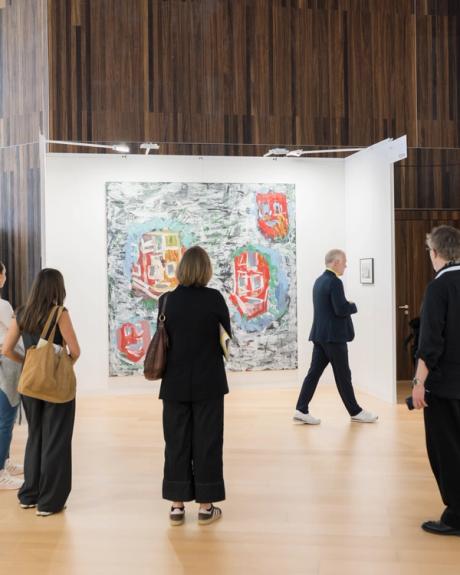
The Art Cologne Palma Mallorca fair has been successfully revived at the Palau de Congressos, attracting 88 exhibitors with a heavy concentration of Spanish and German galleries. The event capitalizes on Mallorca's status as a premier second-home destination for wealthy Europeans, particularly Germans, and benefits from significant local government backing of €500,000. Early sales reports indicate strong performance in the lower and mid-market price brackets, with artists like Neo Rauch and Brian Eno finding quick buyers, though seven-figure works by Anselm Kiefer and Georg Baselitz moved more slowly.

Art Fair Report: Stress Test

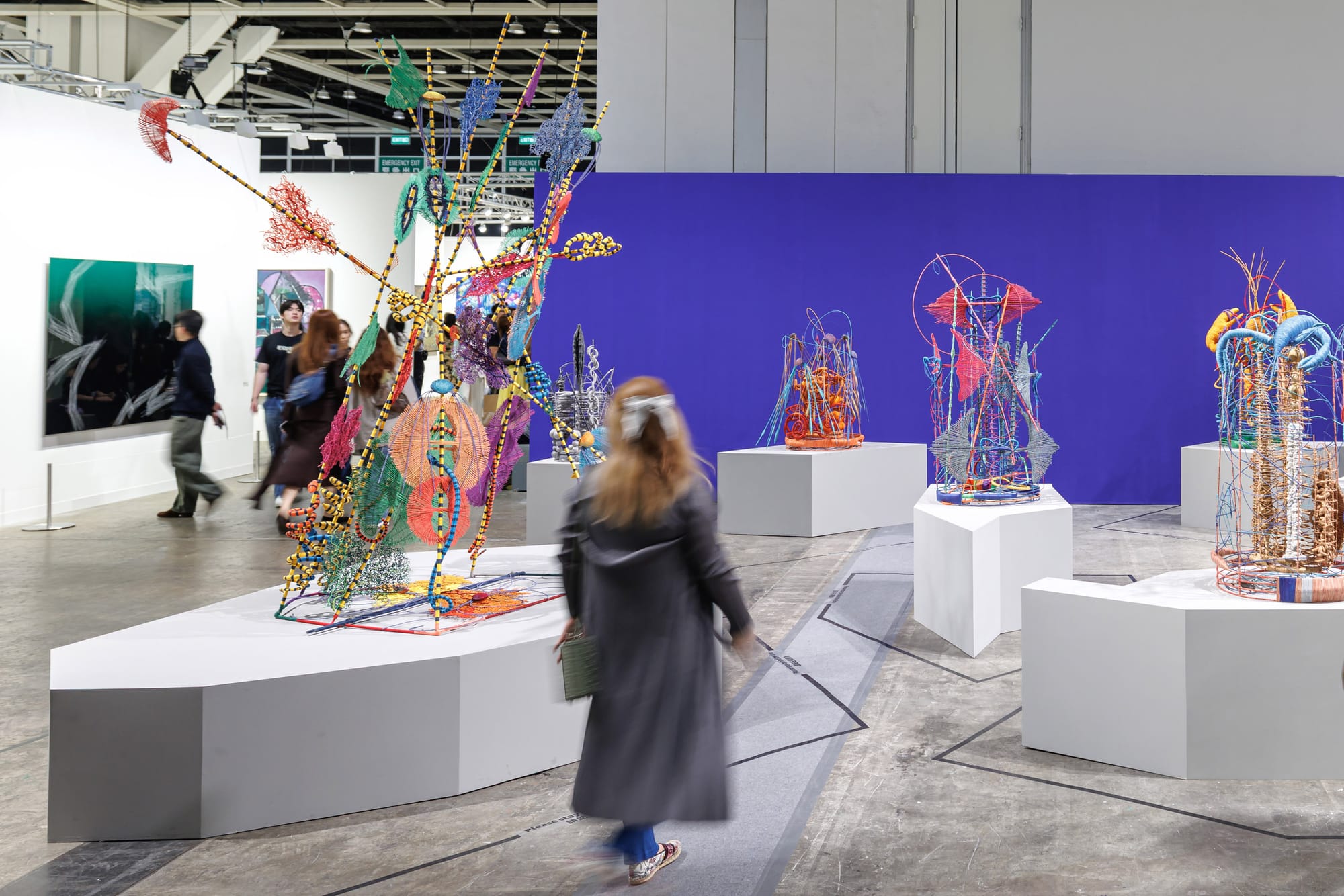
Art Basel Hong Kong 2026 drew 91,500 visitors and featured 240 galleries at the Convention and Exhibition Centre, alongside over 100 galleries at Art Central, three new boutique fairs, four new art spaces, multiple auction previews, and dozens of institutional shows and gallery openings. Despite a challenging 2025 that saw mega-galleries Pace and Perrotin close their Hong Kong spaces and auction results hit an eight-year low, blue-chip galleries reported strong sales, including David Zwirner’s USD 3.8 million sale of Liu Ye’s "Snow White" (2006) and Hauser & Wirth’s USD 2.95 million sale of a Louise Bourgeois work. The prevailing sentiment among collectors and gallerists was cautious optimism, with the phrase "Are you surviving?" overheard frequently.

The Dallas Art Fair: A Balance Of Growth And Consistency

The Dallas Art Fair (DAF), founded in 2009 by developer John T. Sughrue and curator Chris Byrne, concluded its eighteenth edition this past weekend. Director Kelly Cornell, who started as an intern and became director in 2016, has strengthened partnerships with the Dallas Museum of Art, Nasher Sculpture Center, and Dallas Contemporary, while securing sponsors like Bank of America. The fair has grown from 35 to over 90 galleries, though it still lacks mega-galleries like Gagosian, Hauser & Wirth, David Zwirner, and Pace. International participation this year included about 20 galleries, with notable names such as Perrotin, Anat Egbi, and Hesse Flatow, while galleries from Germany and China were absent.

What It Takes to Build the Venice Biennale

Three weeks before the Venice Biennale opens on May 5, the city remains a construction site, with the Giardini closed and parts of the Arsenale requiring special access. Artist Faustin Linyekula rehearses his performance *The Galeazze Project* in a 16th-century roofless complex, working with the existing gravel, natural light, and lagoon acoustics rather than imposing a structure. Geopolitical conflicts, supply chain disruptions, and the sudden resignation of the Biennale’s international jury via Instagram add pressure to the already challenging logistics of mounting the global exhibition.

The art of politics: how global conflicts are playing out in this year's Venice Biennale

Israel is making a controversial return to the 2025 Venice Art Biennale after its pavilion was locked in 2024 with a note demanding a ceasefire in Gaza. The artist representing Israel, Belu-Simion Fainaru, will present his project "Rose of Nothingness" in the Arsenale, while Russia also returns to the Biennale after its Giardini pavilion was reassigned to Bolivia in 2024. The Art Not Genocide Alliance (ANGA) has renewed calls for a boycott and is organizing strike action to disrupt the event, accusing Israel of genocide.

"We are among those in the crowd who are overjoyed"

"Wir gehören zu denjenigen in der Menge, die überglücklich sind"

The Hungarian art scene is celebrating a major political shift following Péter Magyar’s electoral victory over Viktor Orbán, ending 16 years of restrictive cultural policies. Local figures, including gallerist Margit Valkó and artist János Sugár, express immense relief and hope for a future defined by institutional autonomy and international engagement after years of state-led hostility toward contemporary art.

A Pavilion of Ruins: Germany Reconsiders Its Past in Venice

The German Pavilion at the 61st Venice Biennale features a dual presentation exploring the country's layered political history. Artist Sung Tieu has cloaked the pavilion's fascist-era facade with a mosaic reconstruction of a GDR housing estate for Vietnamese contract workers, where she lived as a child. Inside, the late Henrike Naumann's immersive installation 'The Home Front' uses furniture and design to stage a confrontation between East and West German domestic and political ideologies. Naumann died in February 2025 at age 41, but her fully realized concept was completed collaboratively by her partner and curator Kathleen Reinhardt.

Anish Kapoor Condemns Inclusion of US in Venice Biennale

Anish Kapoor has publicly condemned the inclusion of the United States in the upcoming 61st Venice Biennale, calling for its exclusion due to what he describes as the country's 'abhorrent politics of hate and its incessant warmongering.' In an interview with The Guardian, Kapoor praised the five-person jury that resigned en masse after refusing to consider Israel and Russia for the event's top prize, both nations having been accused by the International Criminal Court of crimes against humanity. Kapoor's remarks come amid the ongoing US war with Iran under the Trump administration, and he previously threatened to sue the Trump administration over a photo taken at his Cloud Gate sculpture in Chicago.

Full extent of Stephen Friedman Gallery's £7.8m debt revealed in filings

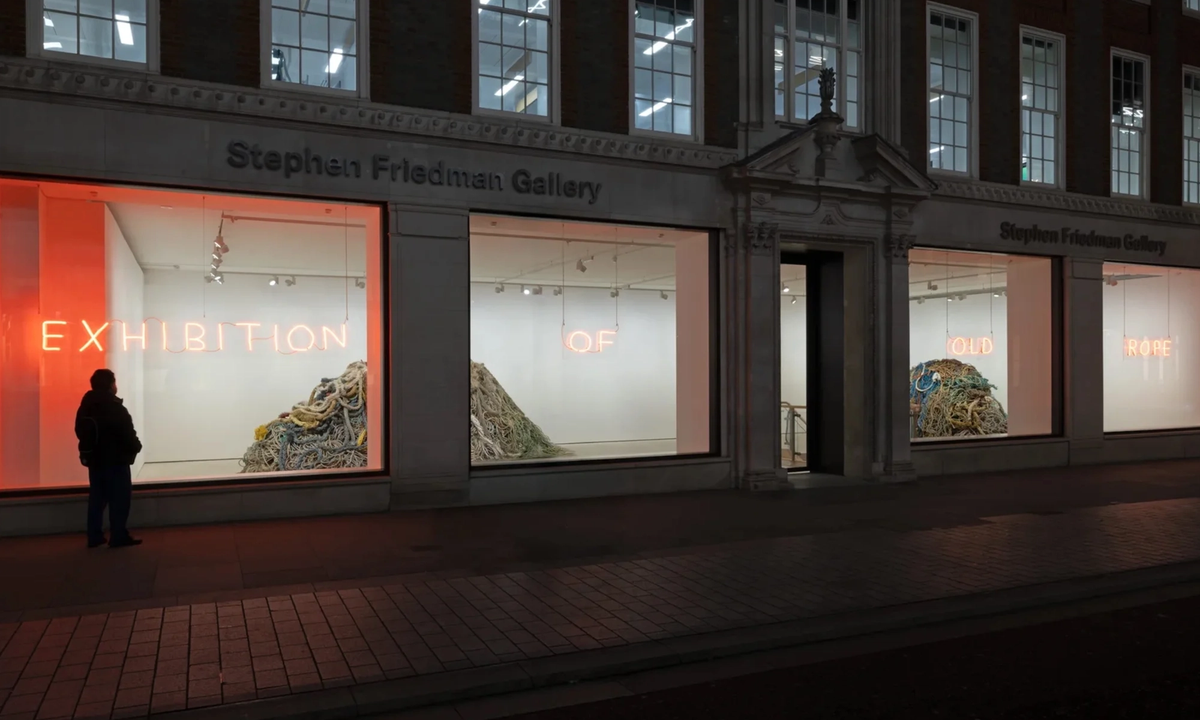
Administrators' filings for Stephen Friedman Gallery reveal a total debt of £7.8 million following its closure in February. Three prominent artists—Alexandre Diop, Deborah Roberts, and Kehinde Wiley—are among the unsecured creditors owed a combined £795,000, expected to recover only eight to nine pence per pound. The largest secured creditor is Coutts & Company, owed £3.1 million, followed by Pentland Group with £1.4 million outstanding. The gallery also owes £505,113 to the Pollen Estate for its Cork Street lease, £550,000 to HMRC, and significant sums to shipping and storage firms, including Crozier (£256,470) and Gander & White (£86,772). Art fairs Frieze and Art Basel Qatar are owed £71,227 and £18,763 respectively.

Seen in Venice, Bought in Venice

"In Venedig gesehen, in Venedig gekauft"

The article reports on multiple developments surrounding the Venice Biennale. Iran has withdrawn from the Biennale, citing political and economic crises, with logistical challenges such as no flights or postal service making participation nearly impossible. Artist Anish Kapoor has called for the exclusion of the United States from the Biennale, criticizing its "abhorrent policy of hate" and "ongoing warmongering." A memorial installation by Derrick Adams for the late curator Koyo Kouoh, who was set to lead the main exhibition, will be displayed near the Arsenale. Additionally, the Biennale faces a funding cut from the EU due to Russia's continued participation despite the Ukraine war, leading to the resignation of the jury and the culture minister's withdrawal.

Choreography Instead of Cartography

Choreografie statt Kartografie

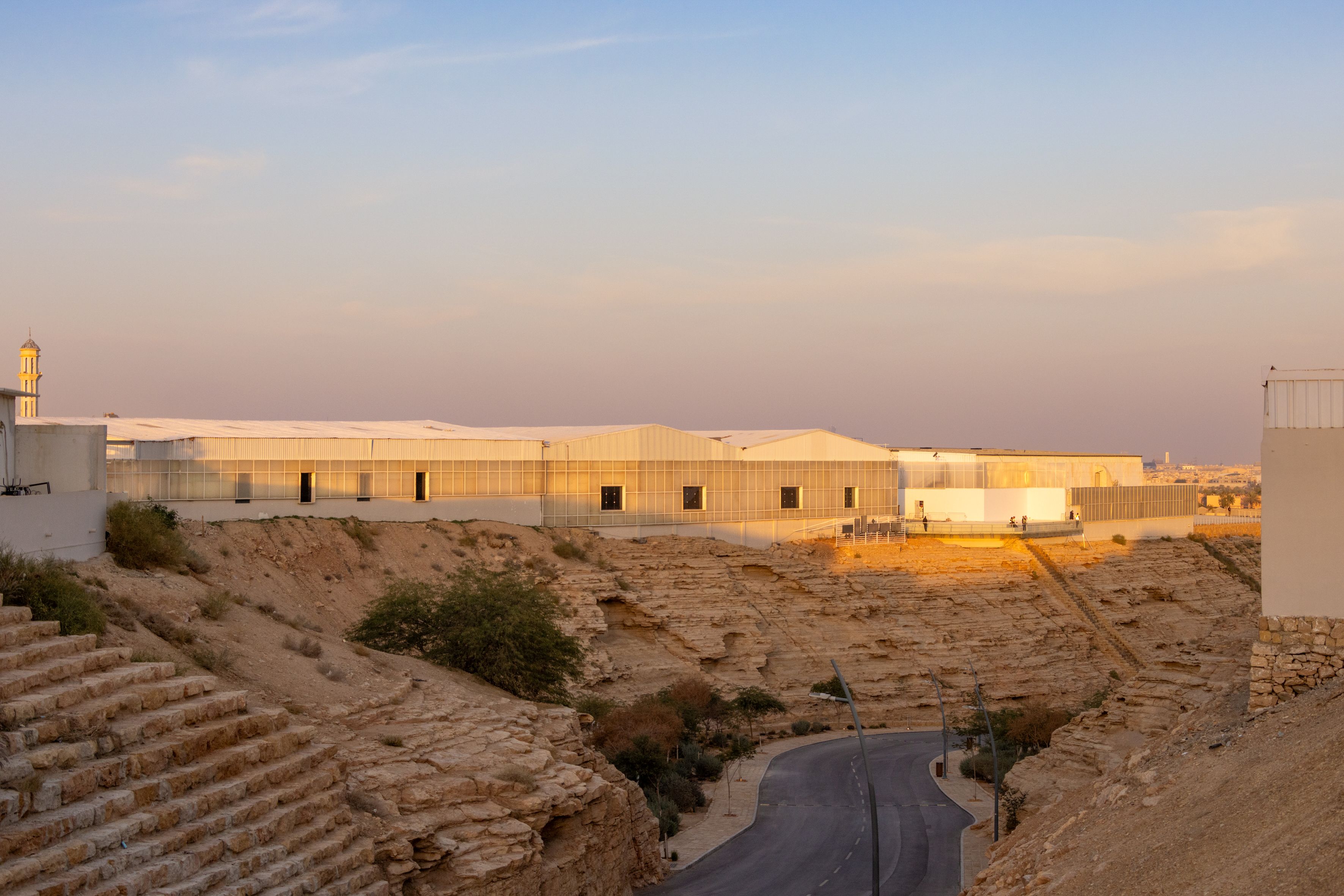
The third edition of the Diriyah Contemporary Art Biennale, titled "In Interludes and Transitions," has opened in the JAX District of Diriyah, Saudi Arabia. Featuring works by approximately 70 artists across five converted warehouses, the exhibition is curated by Nora Razian and Sabih Ahmed with a scenography designed by Formafantasma. Despite regional geopolitical tensions, the event showcases major installations by international artists such as Petrit Halilaj and Thao Nguyen Phan, emphasizing a "choreographic" rather than cartographic approach to global art.

Venice Biennale, no prize for Russia or Israel

Biennale de Venise, pas de prix pour la Russie ou Israël

The Venice Biennale has announced that neither Russia nor Israel will receive awards at this year's edition. The decision reflects ongoing geopolitical tensions and controversies surrounding the participation of these nations in the prestigious international art exhibition.

From Minor Keys to Uproar: The Crisis of the Venice Biennale

DE LAS MINOR KEYS AL ESTRUENDO: LA CRISIS DE LA BIENAL DE VENECIA

The 61st Venice Biennale is engulfed in a structural crisis, marked by geopolitical tensions over the inclusion of Russia (amid its invasion of Ukraine) and Israel (amid the Gaza genocide). The Biennale Foundation, led by Pietrangelo Buttafuoco, defended their participation on legalistic grounds, sparking outrage from over 200 artists, curators, and cultural workers who demanded Israel's exclusion, aligning with Art Not Genocide Alliance (ANGA). The international jury, chaired by Solange Farkas and including Zoe Butt, Elvira Dyangani Ose, Marta Kuzma, and Giovanna Zapperi, resigned collectively on April 30 after deciding not to award prizes to countries whose leaders face International Criminal Court arrest warrants. This led to the cancellation of the traditional Golden and Silver Lions, replaced by audience-voted "Visitor Lions," with awards deferred until November. The European Commission suspended a €2 million subsidy over Russia's participation, and Italian Culture Minister Alessandro Giuli notably skipped the May 9 opening.

‘It’s a huge, futuristic space with massive skylights’: Ali Zolghadri’s best phone picture

Ali Zolghadri, a Tehran-born fine art photographer, captured a composite image of the central atrium of the Iran Mall in Tehran—the world's largest shopping mall—which was shortlisted in the creative category of the 2026 Sony World Photography Awards. The photograph, taken four months before the US and Israel launched their war on Iran, depicts the mall's futuristic architecture with sweeping curved lines, metallic surfaces, and massive skylights, and includes a lone passerby to emphasize scale. Zolghadri emphasizes that his process involves manual editing in Photoshop without AI, blending three frames and removing unnecessary elements to construct meaning.

10 Must-See Shows During the Venice Biennale 2026

The 2026 Venice Biennale is embroiled in multiple controversies, including the cancellation and reinstatement of Australia's representative artist Khaled Sabsabi, ongoing calls to bar Israel from participating, criticism over allowing Russia to participate, and mounting voices to exclude the U.S. in response to President Donald Trump's actions in Iran. Despite these disputes, the article highlights that many of the city's most exciting shows will take place away from the main Biennale venues.

At Maya Gallery, a Benefit Sale Becomes a Map of Israeli Contemporary Art

Maya Gallery in New York is hosting a benefit sale that features works by over 50 Israeli contemporary artists, including prominent names like Michal Rovner and Sigalit Landau. The sale aims to raise funds for the gallery's programming and to support Israeli artists amid ongoing geopolitical tensions.

The Biennale Must Remain Open – Also for Russia

Die Biennale muss offen bleiben – auch für Russland

The article argues against calls to exclude Russia from the Venice Biennale, focusing on the controversy surrounding the Russian pavilion's planned exhibition titled "Der Baum ist im Himmel verwurzelt" (The Tree Is Rooted in Heaven). The pavilion is set to feature musicians from Russia, Argentina, Mali, and Mexico, and its theme revolves around the idea that politics is time-bound. The author contends that while the demand to exclude Russia is understandable given the geopolitical context, it is dangerous because once a biennial begins disinviting states, it undermines the very concept of the international exhibition.

With Free Vodka, and a Few Protests, Russia Returns to the Venice Biennale

Russia has reopened its national pavilion at the Venice Biennale for the first time since its full-scale invasion of Ukraine in 2022. The pavilion’s opening featured free vodka and drew a few protests, while Ukraine’s own exhibition is located nearby, highlighting the stark geopolitical tensions playing out at the prestigious art event.

The Venice Biennale and Its Many Flashpoints: An Explainer

The Venice Biennale, often described as the Olympics of the art world, is set to begin previews on Tuesday amid several controversies. Key flashpoints include the sudden death of a curator, Russia's surprise participation despite ongoing geopolitical tensions, and an unconventional entry from the United States. These developments have intensified scrutiny and debate around the prestigious international exhibition.

Endangered Species? Venice Biennale Ditches Golden, Silver Lions for 2026 Edition

The Venice Biennale has announced it will eliminate the Golden and Silver Lions for the 2026 edition, replacing them with Visitor Lions chosen by popular vote. The prizes, traditionally awarded on opening day (May 9), will now be presented at the closing ceremony (November 22). Russia and Israel, previously barred from consideration by the prize jury due to ICC charges against their leaders, will be eligible for the new Visitor Lions. The decision follows the mass resignation of the original prize jury after they excluded those nations and faced pressure to also ban the US.

The Craziest Venice Biennale Ever: One Week Before Opening, the Jury Resigns (The Public Will Decide the Lions!)

La Biennale di Venezia più pazza di sempre: a una settimana dall’apertura si dimette la giuria (I Leoni li deciderà il pubblico!)

The entire international jury of the 61st Venice Biennale has resigned en masse just one week before the opening. The jury, chaired by Solange Oliveira Farkas and including Zoe Butt, Elvira Dyangani Ose, Marta Kuzma, and Giovanna Zapperi, had publicly announced they would not consider countries whose leaders are accused of crimes against humanity by the International Criminal Court—effectively excluding Russia and Israel from the Golden Lion competition. This decision came amid ongoing tensions between Italian Culture Minister Alessandro Giuli and Biennale President Pietrangelo Buttafuoco over Russia's participation, as well as controversy surrounding Israel's presence. After a meeting with Buttafuoco, the jury resigned, leaving the Biennale without a key body to award its top prizes.

Iran will not participate in the Biennale

Iran nimmt nicht an Biennale teil

Iran has withdrawn from the Venice Biennale, according to an announcement by the Biennale organization reported in Italian media. No reasons were given for the decision. The withdrawal comes amid significant turmoil at the Biennale just days before its official opening on Saturday: the entire jury resigned over disputes regarding the treatment of Russia and Israel, the opening ceremony was canceled, and the traditional awarding of Golden Lions at the start has been postponed to the final day in November, with winners now to be decided by visitor vote rather than a jury.

The recovery of the art market, collecting trends, and other analyses in the newly published report

La ripresa del mercato dell’arte, i trend del collezionismo e altre analisi nel nuovo report appena pubblicato

The global art market has returned to growth in 2025, recording a 4% increase compared to the previous year despite geopolitical tensions and financial uncertainty. According to the fourth edition of the "Collectors and the Value of Art in Italy 2026" report by Intesa Sanpaolo Private Banking, buyers are increasingly shunning speculative assets like NFTs and ultra-contemporary art in favor of established categories. Significant growth was noted in Modern art, Impressionism, and Old Masters, signaling a flight to quality and historical stability.