
filter_list Showing 2 results for "israel pavilion" close Clear
search
dashboard All 2 museum exhibitions 1article news 1
date_range Range Today This Week This Month All
Subscribe

The art of chaos

The 61st Venice International Art Biennale has opened in Venice, running until November, amid unprecedented turmoil. The main exhibition, "In Minor Keys," was curated by Koyo Kouoh, who died of cancer shortly after presenting her vision featuring 111 artists including Carsten Höller, Alvaro Barrington, and Laurie Anderson. Her death has eliminated the Lifetime Achievement Award this year. Additionally, the Biennale faces a funding crisis as the EU threatens to withdraw its €2 million subsidy over Russia's participation with 38 artists following the invasion of Ukraine. Iran, Nigeria, and Israel are absent from their pavilions, while the US Pavilion, now organized by the American Arts Conservancy under inexperienced leadership, features self-taught artist Alma Allen.
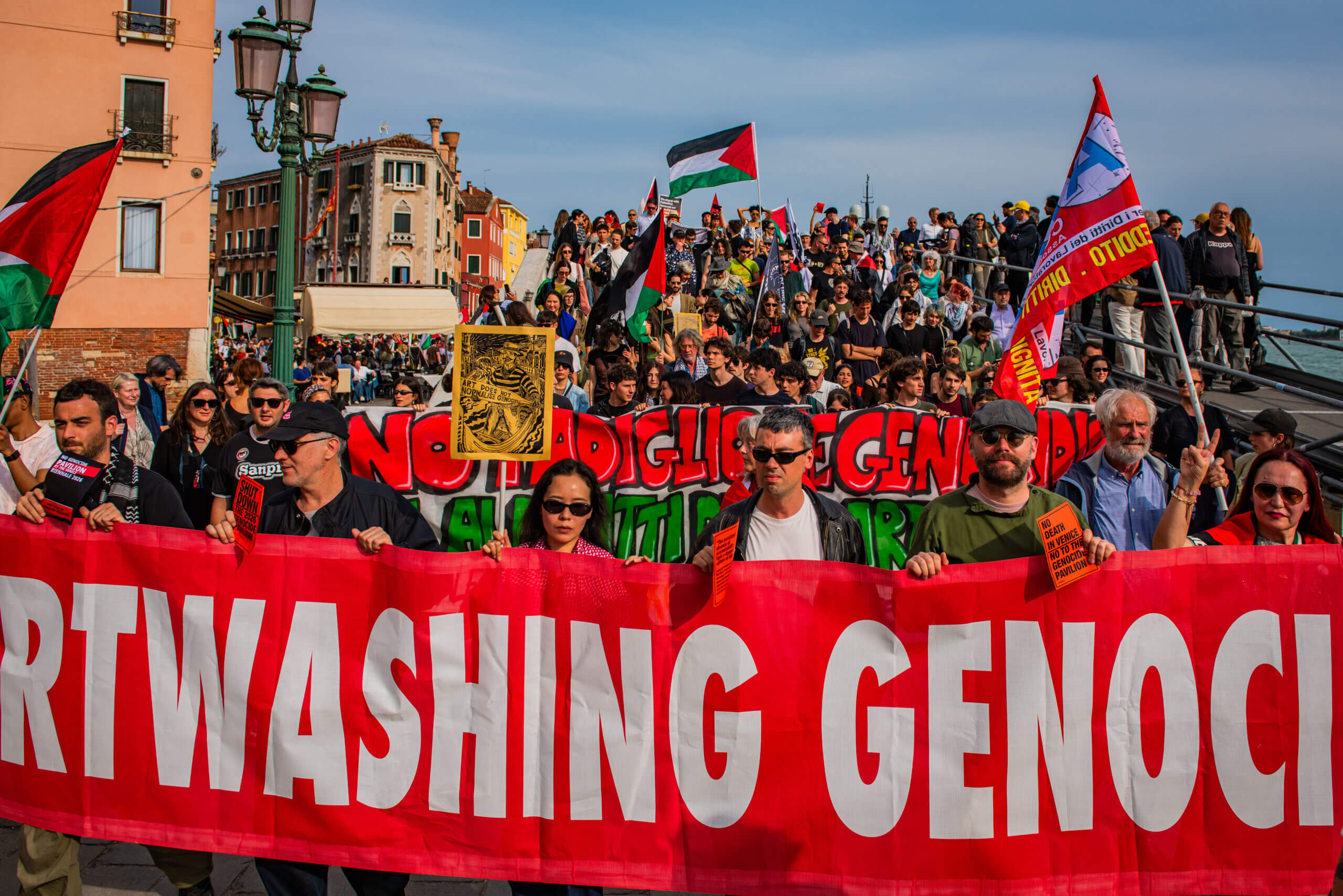
At the Venice Biennale, protests, self-mutilation and rage against Israel and Russia. Is anyone left to talk about the art?

At the 61st Venice Biennale, protests and controversies have overshadowed the art itself. The Art Not Genocide Alliance (ANGA) demonstrated against the inclusion of Israel and Russia, while the Israeli Pavilion became a flashpoint. Artist Belu-Simion Fainaru, presenting his installation "Rose of Nothingness" in a temporary space, complained that he was forced to defend his art's right to exist amid questions about politics rather than his work. The Biennale also saw barricades, strikes, the resignation of the Golden Lion jury, Iran's last-minute withdrawal, and anger directed at the American pavilion over Trump administration policies. The central exhibition, "In Minor Keys," curated by the late Koyo Kouoh, was eclipsed by these events.