
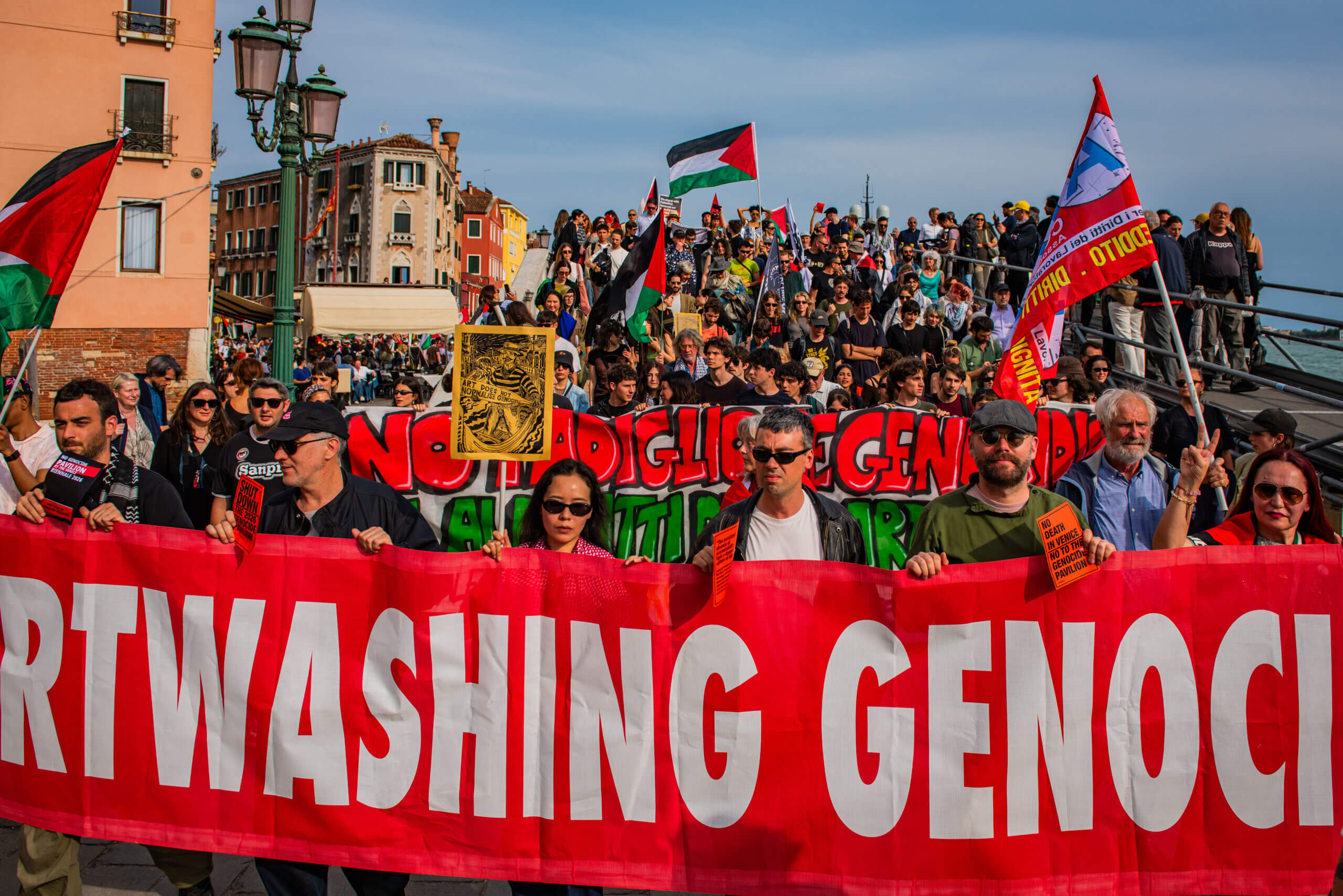
At the 61st Venice Biennale, protests and controversies have overshadowed the art itself. The Art Not Genocide Alliance (ANGA) demonstrated against the inclusion of Israel and Russia, while the Israeli Pavilion became a flashpoint. Artist Belu-Simion Fainaru, presenting his installation "Rose of Nothingness" in a temporary space, complained that he was forced to defend his art's right to exist amid questions about politics rather than his work. The Biennale also saw barricades, strikes, the resignation of the Golden Lion jury, Iran's last-minute withdrawal, and anger directed at the American pavilion over Trump administration policies. The central exhibition, "In Minor Keys," curated by the late Koyo Kouoh, was eclipsed by these events.
This matters because the Venice Biennale is the world's most prestigious international contemporary art exhibition, and its national pavilion system—a relic of 19th-century world's fairs—is being tested by geopolitical tensions. The politicization of art, as Fainaru warned, risks turning the art world into a "very violent arena" where the work itself is secondary to political statements. The controversies reflect broader global conflicts over Israel, Russia, and U.S. foreign policy, raising questions about whether art can remain a space for aesthetic and intellectual exploration or will be consumed by activism and protest.