filter_list Showing 8 results for "konstantin akinsha" close Clear
search
dashboard All 8 article news 5article policy 3
date_range Range Today This Week This Month All
Subscribe

top ukrainian art historian believes italian museum holds 14 fake russian and ukrainian modernist works

Konstantin Akinsha, a prominent curator and art historian of Russian and Ukrainian art, has identified 14 artworks in the collection of the Palazzo de Nordis museum in Cividale del Friuli, Italy, as likely forgeries. In a Substack post and interview with ARTnews, Akinsha scrutinized the De Martiis Collection, donated in 2015 by the late collector Giancarlo De Martiis, which includes works attributed to Russian and Ukrainian modernist painters. He points to suspicious provenances involving Jean Chauvelin, a disgraced French art dealer, and Boris Gribanov, a convicted forger. A specific still life attributed to Olga Rozanova (1915-17) is nearly identical to a 1999 painting by contemporary Russian artist Andrei Saratov, who confirmed he did not paint the museum's version. Elisabetta Gottardo, the municipal head of culture, acknowledged Akinsha's authority and pledged further investigation.

kazimir malevich mnac bucharest yaniv cohen dispute

Yaniv Cohen, a Bucharest-based Israeli businessman, is threatening to sue the art publication e-flux and Ukrainian American art historian Konstantin Akinsha for defamation over an article questioning the authenticity of three paintings attributed to Kazimir Malevich. The works—'Suprematist Composition in Color' (ca. 1915), 'Cubo-Futurist Composition' (ca. 1912–13), and 'Linear Suprematism' (ca. 1916)—are currently on view at the National Museum of Contemporary Art (MNAC) in Bucharest as part of the exhibition 'Kazimir Malevich: Outliving History.' Akinsha accused MNAC of lacking expertise and challenged the provenance of the previously unseen works, prompting Cohen to demand the article's removal and an apology via a letter from the Tel Aviv–based law firm Rosen-Ben Gal.

eu sanctions russian museum crimea

The European Union has sanctioned the “Tauric Chersonese” State Museum-Preserve in Crimea, marking the first time the EU has targeted a Russian museum. The museum and its director, Elena Morozova, were included in the latest round of sanctions for allegedly undermining Ukrainian cultural heritage by promoting pro-Russian narratives and supporting Russia's invasion of Ukraine. The site, a UNESCO World Heritage Site, has been accused of transforming into a historical park under Russian control since Crimea's annexation in 2014.

Open Letter on Auction of “Tributes” to the Russian Avant-Garde

An open letter signed by art historians, curators, and researchers protests an upcoming auction at Stanley's Auction House in Zaventem, Belgium, scheduled for April 23, titled “Tributes to the Russian Avant-Garde & Constructivists.” The second sale is organized in cooperation with Drouot, a major French auction platform, and offers approximately one hundred works from the so-called Toporovsky collection, which has been linked to a scandal involving forged Russian modernist paintings at the Museum of Fine Arts Ghent. The alleged suppliers, Igor Toporovsky and Olga Toporovsky, face criminal charges including the sale of 171 forged works for about €20 million, with court proceedings beginning in May in Ghent. The signatories argue that the auction, with works priced around €300 each, is deeply troubling given the pending legal case and the undisclosed consignor identity.

ukraine russia icom expulsion open letter

A group of arts professionals, including art historian Konstantin Akinsha and Francesca Thyssen Bornemisza, has published an open letter in Le Monde calling for the International Council of Museums (ICOM) to expel Russia for violating its code of ethics. The group threatens to take ICOM to court in France if it fails to act, citing Russia's systematic erasure of Ukraine's cultural identity since the 2022 invasion, including looting of museum collections and destruction of cultural sites documented by UNESCO. Signatories demand the exclusion of ICOM Russia and Russian museum staff involved in looting, and seek either negotiation or legal proceedings in a French court.

Are These Lost Malevich Masterpieces—or $190 Million Fakes?

An exhibition at the National Museum of Contemporary Art in Bucharest (MNAC) features three purportedly long-lost paintings by Kazimir Malevich, valued between $160 million and $190 million. The works, loaned by Israeli businessman Yaniv Cohen, were allegedly stored under the mattress of his grandmother-in-law, Eva Levando, for decades. However, Ukrainian-American art historian Konstantin Akinsha has publicly questioned their authenticity, citing incomplete provenance and a lack of consensus from international experts. The museum has faced criticism for including the paintings without additional scholarly analysis in the show "Kazimir Malevich: Outliving History," curated by Mariana Dragu and sponsored by a dental clinic owned by Cohen.

At the Venice Biennale, protests, self-mutilation and rage against Israel and Russia. Is anyone left to talk about the art?

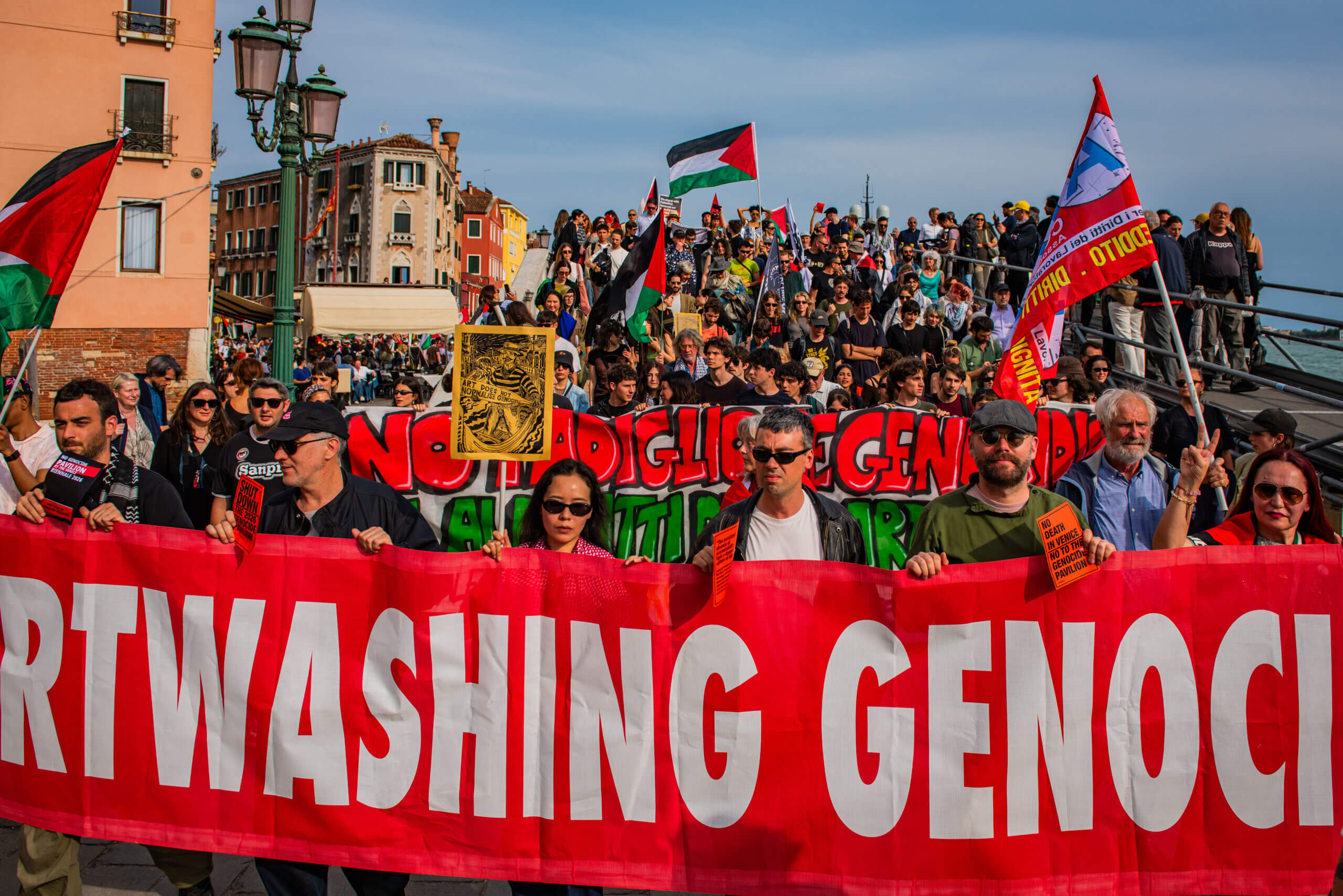
At the 61st Venice Biennale, protests and controversies have overshadowed the art itself. The Art Not Genocide Alliance (ANGA) demonstrated against the inclusion of Israel and Russia, while the Israeli Pavilion became a flashpoint. Artist Belu-Simion Fainaru, presenting his installation "Rose of Nothingness" in a temporary space, complained that he was forced to defend his art's right to exist amid questions about politics rather than his work. The Biennale also saw barricades, strikes, the resignation of the Golden Lion jury, Iran's last-minute withdrawal, and anger directed at the American pavilion over Trump administration policies. The central exhibition, "In Minor Keys," curated by the late Koyo Kouoh, was eclipsed by these events.

icom russia president slams calls to eject russia from icom for violating code of ethics as political libel

ICOM Russia president Vasilij Pankratov has denounced calls for Russia's expulsion from the International Council of Museums (ICOM) as "political libel." The controversy follows an open letter published in Le Monde on May 5, in which a group of art experts—including art historian Konstantin Akinsha, Francesca Thyssen Bornemisza, and Vitalit Tytych—accused Russia of systematically erasing Ukraine's cultural identity since the 2022 invasion. The signatories threatened to take ICOM to court in France if it failed to oust Russia for violating the organization's code of ethics. Pankratov dismissed the accusations as unfounded, arguing that Russian museum workers operate within the country's constitution and local ethical criteria, and denied claims that Ukrainian cultural property has been appropriated by Russian museums.