
filter_list Showing 5 results for "political repression" close Clear
search
dashboard All 5 museum exhibitions 3candle obituary 1article policy 1
date_range Range Today This Week This Month All
Subscribe

At MAXXI L'Aquila, exhibition dedicated to Ai Weiwei recounts catastrophes and memory

From April 29 to September 6, 2026, MAXXI L'Aquila presents "AI WEIWEI: Aftershock," an exhibition curated by Tim Marlow featuring approximately seventy works by Chinese artist, architect, and activist Ai Weiwei. The show spans his entire career, focusing on themes of earthquakes, wars, political repression, and memory. The centerpiece is the installation "Straight" (2009–2012), made from 150 tons of steel rods recovered from schools that collapsed in the 2008 Sichuan earthquake, displayed across three rooms. The exhibition is held at Palazzo Ardinghelli, a Baroque building that houses MAXXI L'Aquila and was itself restored after the 2009 L'Aquila earthquake, creating a dialogue between the works and the building's history of recovery.
Georg Baselitz ist tot

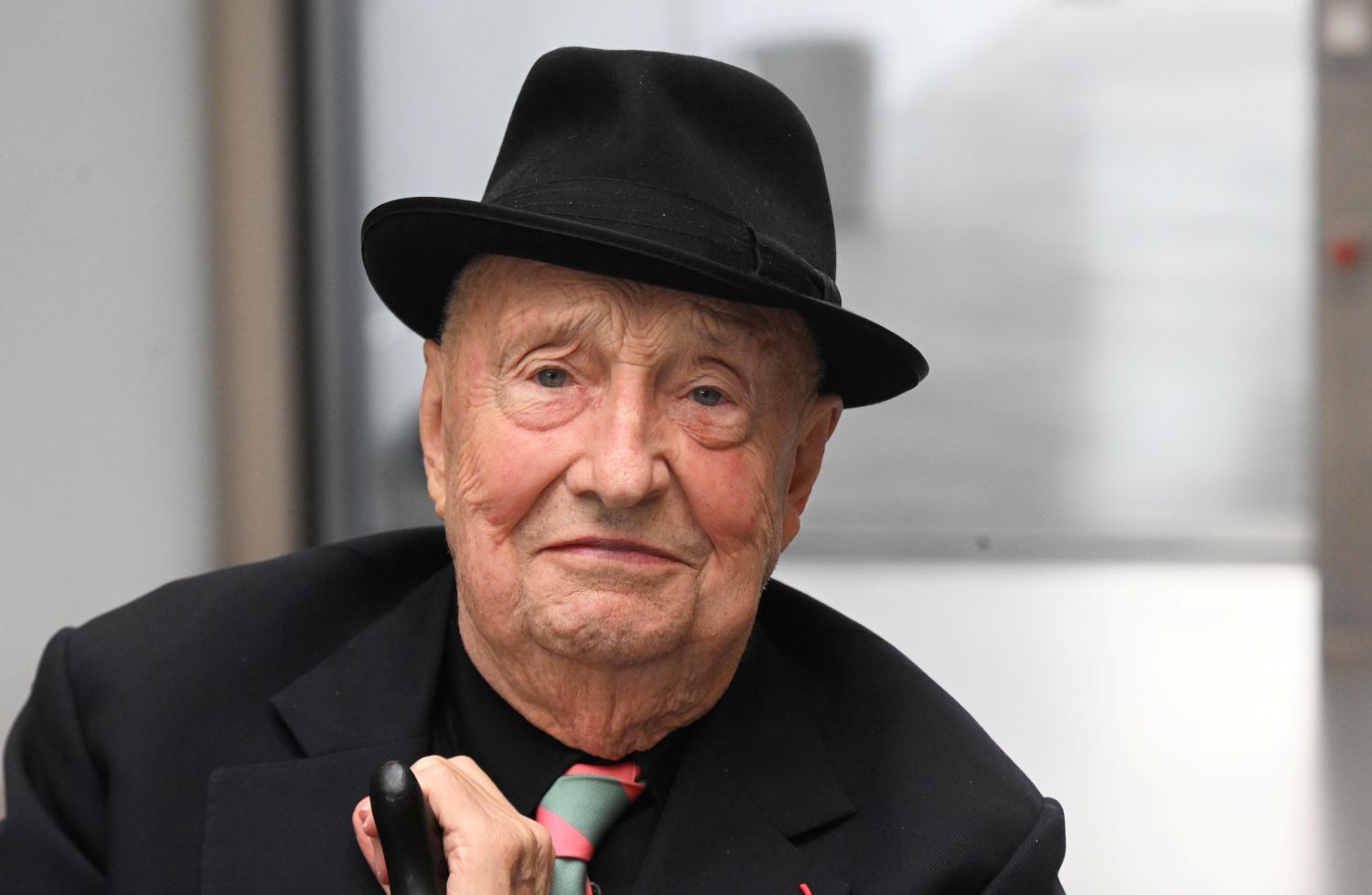
German artist Georg Baselitz has died at the age of 88. According to Galerie Thaddeus Ropac, he passed away peacefully on Thursday. Born Hans-Georg Bruno Kern in 1938 in Deutschbaselitz, Saxony, Baselitz fled East Germany in 1957 after political repression and academic conflicts. His first solo exhibition in West Berlin in 1963 was shut down due to scandal, and works were confiscated. He became internationally known in the late 1960s for his radical upside-down painting, a signature inversion that destabilized pictorial logic. He also created an extensive sculptural body of work. Key career milestones include representing Germany at the Venice Biennale in 1980 alongside Anselm Kiefer, multiple Documenta appearances, the Praemium Imperiale in 2004, and election to the Académie des Beaux-Arts in Paris in 2019. Major late-career exhibitions included "Nackte Meister" at the Kunsthistorisches Museum in Vienna in 2023.

Gulag Museum rebrand marks latest phase in Kremlin’s assault on free speech

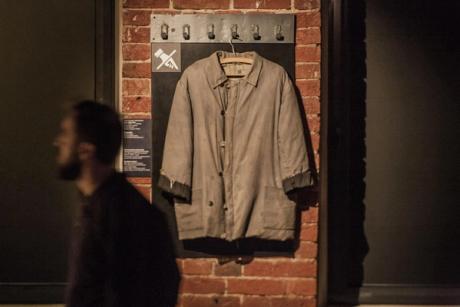
The Kremlin is systematically erasing the memory of Soviet repression under Joseph Stalin from Russian museums. The Gulag Museum in Moscow, which documented Stalin-era crimes, has been rebranded as a "Museum of Memory" focused on Nazi war crimes, with its entire website replaced and exhibitions packed up. Simultaneously, Russia's supreme court banned Memorial, a human rights organization founded to document Stalin-era atrocities, labeling it an "anti-Russian" extremist group. The Yeltsin Presidential Center in Yekaterinburg has also removed references to Memorial from its walls, and the Sakharov Center in Moscow was disbanded and evicted from its facilities.

Oleg Prokofiev’s Lost Trove of Paintings Comes to Light After Decades in Hiding

A trove of abstract paintings and sculptures by Russian artist Oleg Prokofiev, hidden for decades in Moscow after he fled the Soviet Union, has been rediscovered and is now on public display for the first time. Prokofiev concealed the works in the 1950s and 1960s to avoid state persecution—abstract art was banned in the USSR, and his relationship with British scholar Camilla Gray made marriage impossible until 1969. After Gray's death and his move to England, the artworks remained safely stored in Moscow, where he found them intact after the Soviet collapse. The collection, including paintings, sculptures, sketchbooks, and letters, is now exhibited at the newly founded Prokofiev Studio in Hackney, London, established by his four children and curator Anzhela Popova.

Kiss Me, Beneath the Milky Twilight

The article reviews the exhibition "Ahhh! Beije-me" (Ahhh! Kiss me) at Martins & Montero gallery in São Paulo, featuring the late Brazilian artist Hudinilson Jr. (1957-2013). The show presents works from the 1970s and 1980s, including photocopies, stencils, paintings, and personal objects from the artist's apartment, which was closed by his family for twelve years after his death. Highlights include a billboard artwork "Zona de tensão," newly discovered gouache and pastel works on photocopies of Michelangelo's "David," and stencil matrices made from laundry detergent boxes used in street graffiti. The exhibition also incorporates furniture, decorative objects, and photographs by Mauro Restiffe documenting the apartment before its dismantling.