filter_list Showing 7 results for "russia return" close Clear
dashboard All 7 article news 6museum exhibitions 1
date_range Range Today This Week This Month All
Subscribe

There Has Never Been an Apolitical Venice Biennale

"Es hat niemals eine unpolitische Venedig-Biennale gegeben"

The Venice Biennale is embroiled in political controversy, with the US Pavilion's selection process criticized for bypassing traditional curatorial expertise in favor of a politically connected outsider. Simultaneously, a collective of artists and academics is protesting Russia's return to the Biennale, arguing it uses art as a political instrument to normalize its actions amid the war in Ukraine. An analysis in ArtReview contends the Biennale has never been apolitical, serving as a stage for geopolitical power plays since its inception.

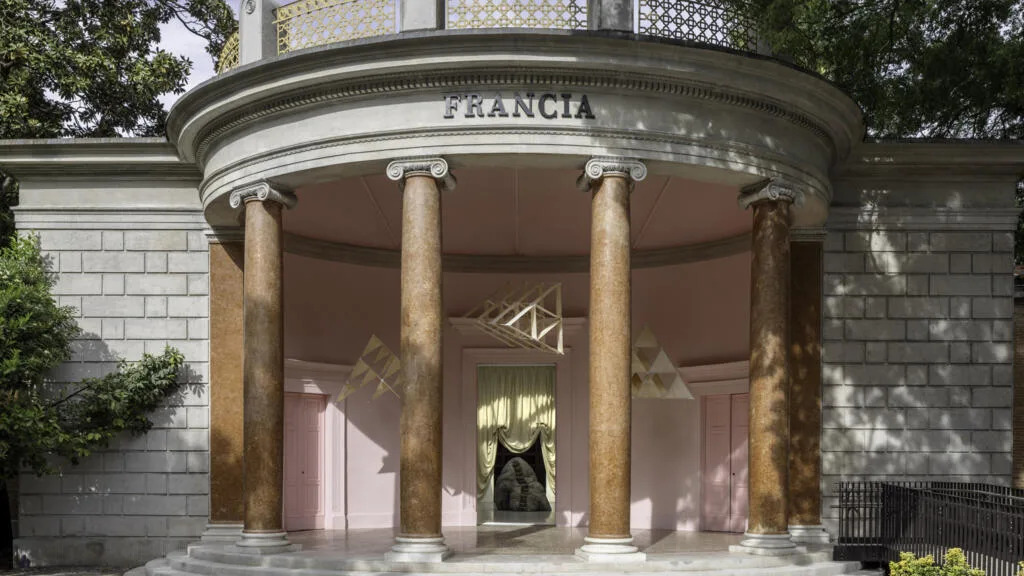
What You Need to Know About the Venice Biennale’s Russian Pavilion Controversy

The Russian pavilion is set to return to the Venice Biennale for the first time since the 2022 invasion of Ukraine, presenting an exhibition titled 'The tree is rooted in the sky.' This has sparked significant controversy, with artists, curators, and politicians from Ukraine and several European nations calling for the pavilion's exclusion, citing the ongoing war and sanctions. The Biennale organizers have refused to remove Russia, stating they lack the authority to exclude a state recognized by Italy and emphasizing the event's role as a neutral space for cultural dialogue.

Venice Biennale Jury Bars Israel and Russia from Official Prizes

The international jury of the 61st Venice Biennale announced on April 23 that it will not consider the Israeli and Russian pavilions for official prizes, including the Golden Lion for national participation. The five-member, all-women panel—comprising Solange Farkas, Zoe Butt, Elvira Dyangani Ose, Marta Kuzma, and Giovanna Zapperi—said it would exclude countries whose leaders are currently charged with crimes against humanity by the International Criminal Court, a criterion that applies to Israel and Russia due to ICC arrest warrants for Benjamin Netanyahu and Vladimir Putin. The decision comes amid mounting controversy over the Biennale's decision to host both pavilions, with Russia returning after its artists withdrew in 2022 over the Ukraine invasion and Israel reopening after its 2024 pavilion remained closed pending a Gaza ceasefire. The European Commission had also threatened to suspend a €2 million grant over the Russian pavilion's reopening.

Venice Biennale Jury Says It Won’t Consider Countries Charged with Crimes Against Humanity, Including Israel and Russia

The Venice Biennale's jury announced it will not consider nations whose leaders are charged with crimes against humanity by the International Criminal Court, effectively excluding Israel and Russia from competing for top honors. The jury, led by Videobrasil founder Solange Farkas, stated this decision aligns with curator Koyo Kouoh's vision and the Biennale's historical role as a platform connecting art to urgent issues. The ICC has issued arrest warrants for Israeli Prime Minister Benjamin Netanyahu and Russian President Vladimir Putin, while other indicted leaders like Sudan's Omar al-Bashir and Afghan officials lack Biennale pavilions.

Row Over Russia’s Return to the Venice Biennale Deepens

Newly leaked emails reveal that the Venice Biennale has been secretly coordinating with Russia since last summer to facilitate its return to the 2025 edition, despite ongoing international sanctions. The correspondence, published by Italian outlets Open and La Repubblica, shows Biennale president Pietrangelo Buttafuoco, director Andrea Del Mercato, and Russian commissioner Anastasia Karneeva working together on visa issues, pavilion logistics, and a legal strategy to bypass E.U. sanctions prohibiting collaboration with state-backed Russian entities. Russia's pavilion will be open during preview days with performers activating the space, while footage will play for the public from a closed pavilion thereafter.

Venice Biennale opens under shadow of protests over Russia and Israel

The 61st Venice Biennale opened under heavy protest as Russia returns to the event for the first time since its 2022 invasion of Ukraine. Ukrainian feminist collective Femen and Russian punk band Pussy Riot demonstrated outside the Russian pavilion, with activists accusing Russia of using art as a weapon in a hybrid war. Meanwhile, pro-Palestinian protesters gathered outside Israel's pavilion, holding banners reading 'No artwashing genocide' and demanding Israel's exclusion over the war in Gaza. The Biennale's international jury resigned last month, refusing to award prizes to countries led by figures subject to ICC arrest warrants, namely Vladimir Putin and Benjamin Netanyahu. EU foreign policy chief Kaja Kallas called Russia's participation 'morally wrong' and threatened to cut €2 million in funding, while culture ministers from 22 European countries urged organizers to reconsider.

With Free Vodka, and a Few Protests, Russia Returns to the Venice Biennale

Russia has reopened its national pavilion at the Venice Biennale for the first time since its full-scale invasion of Ukraine in 2022. The pavilion’s opening featured free vodka and drew a few protests, while Ukraine’s own exhibition is located nearby, highlighting the stark geopolitical tensions playing out at the prestigious art event.