filter_list Showing 6 results for "vesuvius eruption" close Clear
dashboard All 6 article news 5museum exhibitions 1
date_range Range Today This Week This Month All
Subscribe

villa de poppea frescoes 2733430

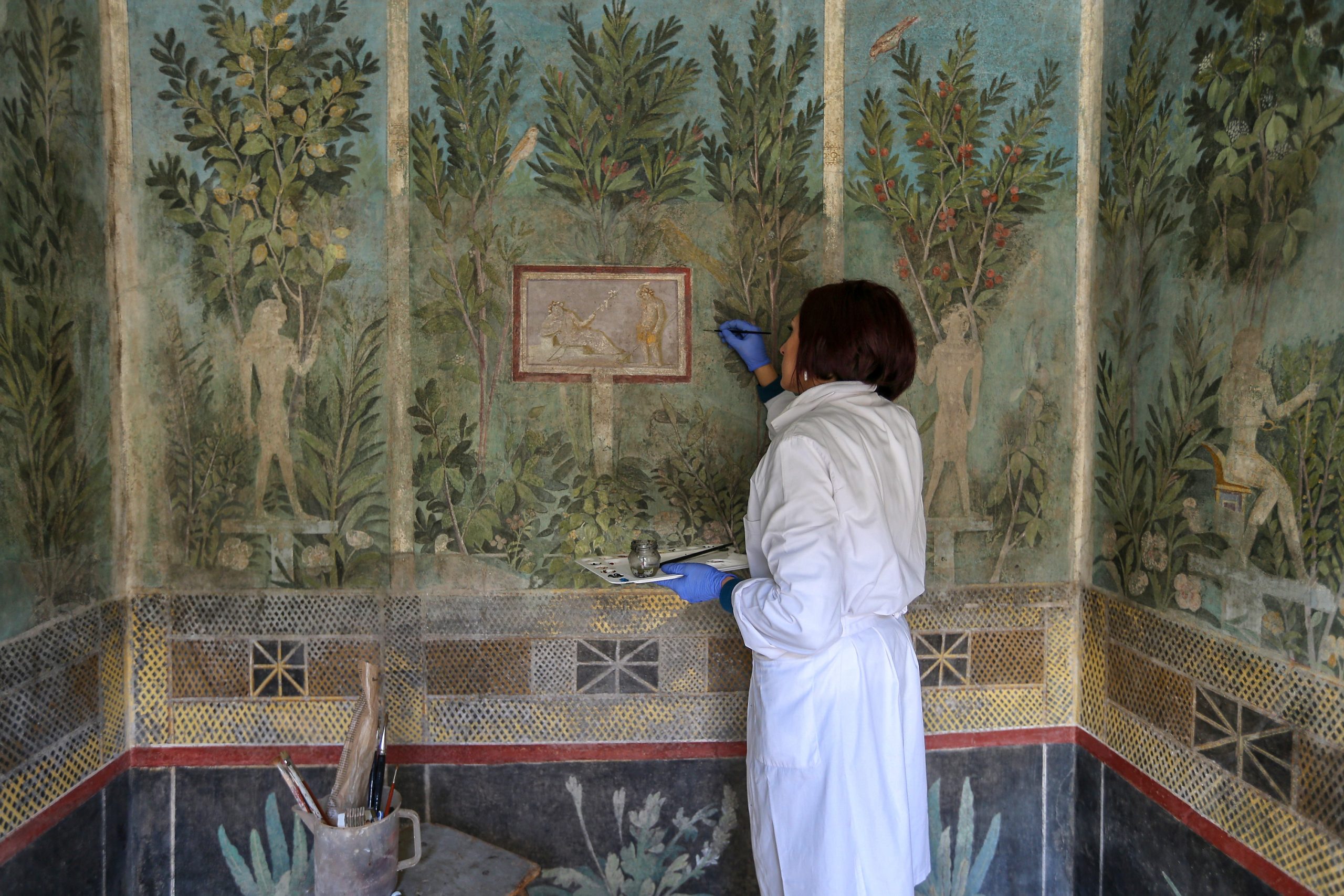
Several vivid frescoes have been uncovered during the ongoing excavation of Villa di Poppea, an ancient Roman villa in Oplontis near Naples that was buried by the eruption of Vesuvius in 79 A.D. The newly revealed decorations include an intact peacock fresco and fragments of a mask linked to the comedic character Pappus from the Atellan Farce. The discoveries were made in a room now called the Hall of the Peacock, part of the villa's western section, which is being excavated as part of a conservation project. Other finds include four new rooms, tree root casts showing an ornamental garden layout, and two richly decorated cubicula currently undergoing restoration.
pompeii discoveries 2638433

Archaeologists have uncovered a series of remarkable discoveries at Pompeii, the ancient Roman city buried by Mount Vesuvius in 79 C.E. Recent finds include life-sized statues of a priestess and a man from a tomb, frescoes depicting Dionysian rituals and mythological scenes, an extravagantly decorated 'tiny house' called the House of Phaedra, and evidence of aspirational interior design. These artifacts, unearthed in suburban villas and tombs, range from a bejeweled priestess statue to children's gladiator doodles and ancient fast-food counters, revealing new details about daily life in the Roman Republic.

archeologists uncover frescoes villa di poppea 1234768549

Archeologists have uncovered frescoes in the Hall of the Mask and the Peacock at the Villa di Poppaea in Oplontis, near Naples, as part of an ongoing excavation and renovation project led by the Archaeological Park of Pompeii. The newly revealed Second Style frescoes feature vibrant peacocks and masks, including a complete peahen and a stage mask from Atellan Comedy, and have clarified the hall's true dimensions and decorative richness. The team also identified the locations of garden trees using a casting technique and discovered four new rooms, bringing the villa's total to 103 rooms.

pompeii multilevel buildings digital reconstructions 1234758104

A new study published in the Pompeii Archaeological Park's online journal reveals that the ancient Roman city featured multilevel buildings far more impressive than previously understood. Using digital technology, the Pompeii Reset project—a collaboration between the Pompeii Archaeological Park and Humboldt University of Berlin—created 3D reconstructions of structures encased in ash during the 79 CE eruption of Mount Vesuvius. The case study focused on the House of Thiasus in Regio IX, where a 39-foot-tall tower with two levels, including a dining room with city views, was reconstructed. Researchers employed laser scanners, structured-light scanning, and photography to build digital models, then virtually added missing architectural elements like staircases and windows, testing them for structural plausibility.

house of helle and phrixus pompeii family death 1234740845

A new study published in the Pompeii Excavations online journal reveals the final moments of a family during the 79 CE eruption of Mount Vesuvius. At the House of Helle and Phrixus in Pompeii, archaeologists found that the family attempted to barricade a bedroom door with a bed to survive the eruption, but perished. The remains of at least four individuals, including a child, were identified, along with a bronze amulet worn by the child and bronze kitchenware in the pantry.

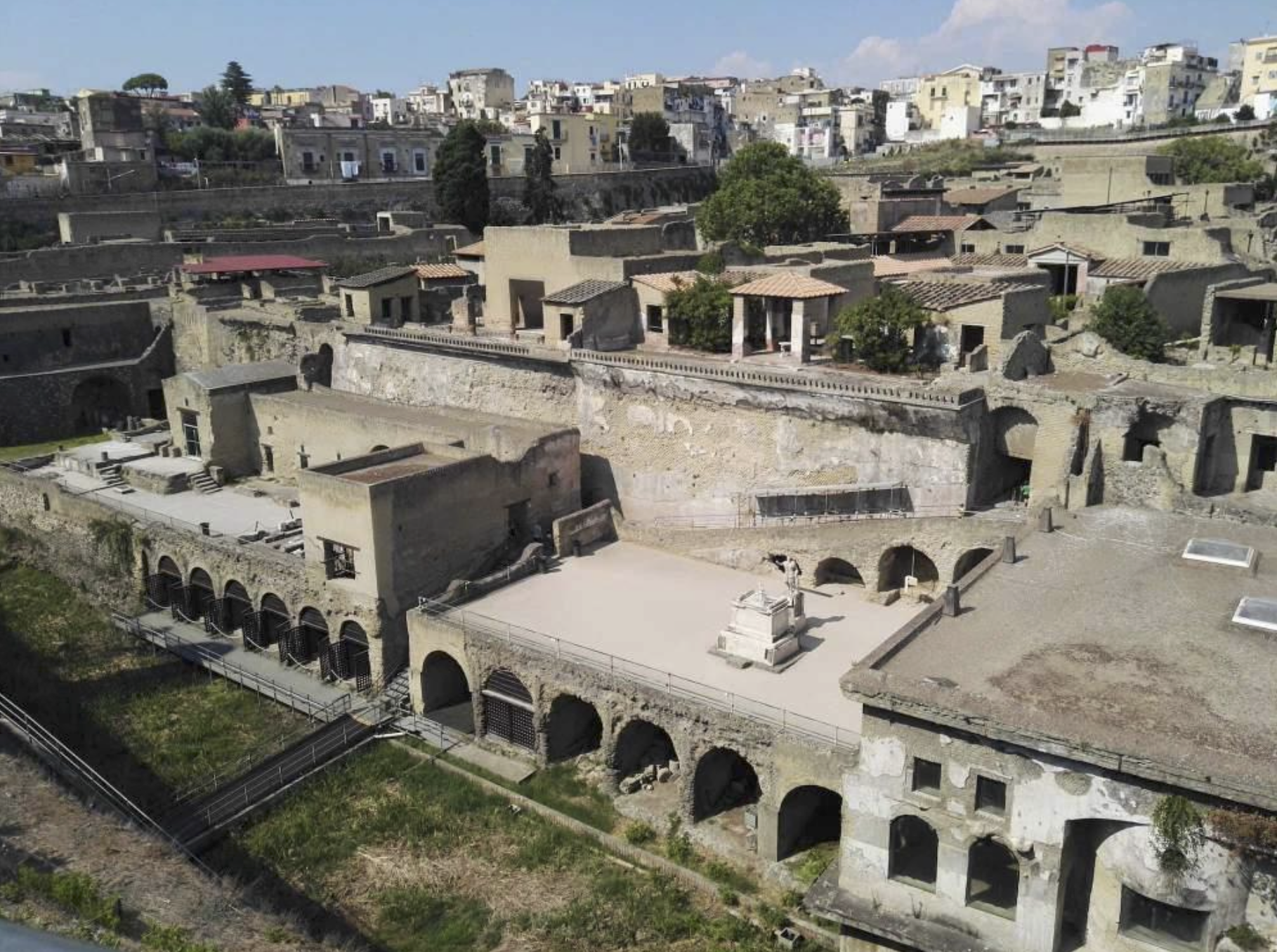
Bread, Wine, and Fish: How the Archaeology of Food Tells the Story of Life in Herculaneum

Pane, vino e pesce. Tutta l’archeologia del cibo racconta che vita si faceva a Ercolano: l’itinerario gratuito

The Herculaneum Archaeological Park has launched a new thematic itinerary titled "I luoghi del cibo a Ercolano" (The Places of Food in Herculaneum), offering visitors a deep dive into the gastronomic culture of the Roman city buried by Vesuvius in 79 AD. The guided path leads through ancient street food stalls known as thermopolia, specialized wine shops, and the bakery of Sextus Patulcius Felix, where stone mills and ovens remain intact. The experience extends to the Casa dei Cervi to illustrate the social rituals of elite banqueting and includes a supplementary exhibition at Villa Campolieto featuring organic remains preserved by the eruption.