
arrow_back Back to all stories

person Jean-Christophe Castelain

newspaper Le Journal des Arts article 13 articles

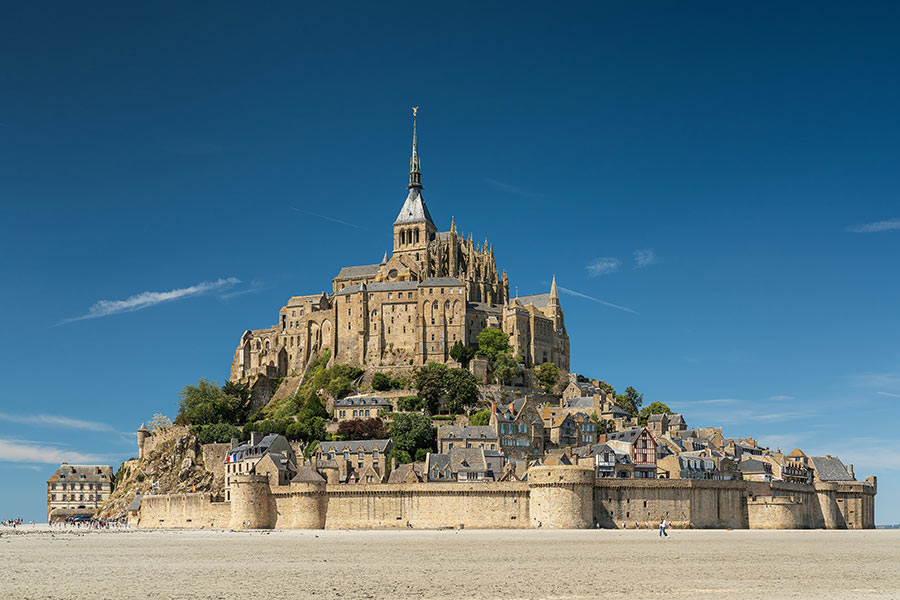
Marie Lavandier défend le CMN face au risque d’un divorce avec le Mont-Saint-Michel

Marie Lavandier, president of the Centre des monuments nationaux (CMN), appeared before the French Senate's Culture Committee on May 27, 2026, to present her "CMN 2030" roadmap focused on visitor services, preventive monument maintenance, and citizen engagement. However, the hearing was dominated by the future of Mont-Saint-Michel abbey, as the Établissement public industriel et commercial (Epic) du Mont-Saint-Michel—created in 2019 to manage access and infrastructure—seeks expanded governance, supported by Norman elected officials and the Cour des comptes. Lavandier did not confirm an imminent state arbitration but noted the CMN-Epic convention was extended to June 30, signaling a pending high-level decision.
A report on museum security full of biases

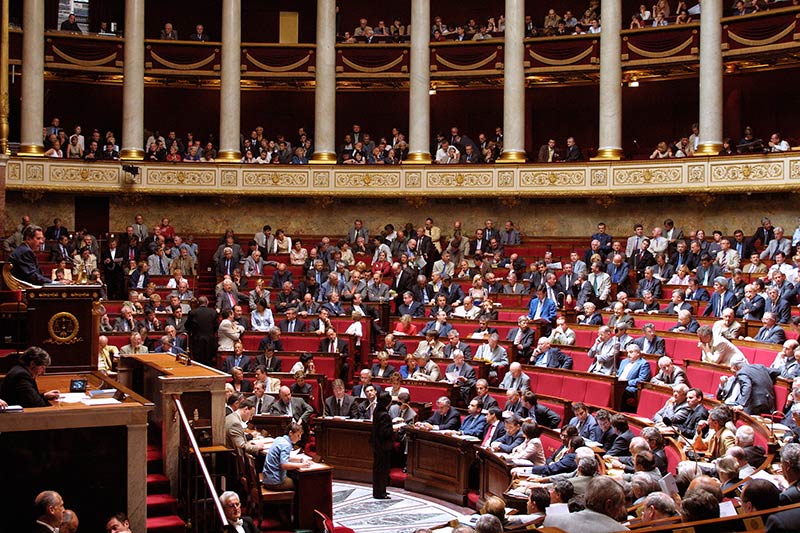
Un rapport sur la sécurité des musées plein de partis pris

A French parliamentary report on museum security, authored by deputy Alexis Corbière of La France Insoumise, has been criticized for ideological bias. The report, titled "Des musées plus sûrs. Pour protéger le patrimoine de ceux qui n’en ont pas," argues for direct public administration of regional museums, opposes differentiated pricing for non-European visitors, and accuses the Louvre of prioritizing spectacle over security. It specifically targets Louvre president Laurence des Cars and her predecessor Jean-Luc Martinez, with testimony from Louvre curator Côme Fabre fueling the critique. The report also contrasts the Louvre's handling of security with that of the City of Paris, which was praised for its crisis management after the 2010 theft at the Musée d'Art Moderne de Paris, despite a subsequent theft at Musée Cognacq-Jay in 2024.

The Return of the 'Mortar'

Le retour du « mortar »

The article discusses a cultural shift back towards physical, tangible experiences in the art world, reversing the early 2000s trend of digital dominance. It notes that art books are thriving as collectible objects, museums are moving away from interactive screens toward sensory, screen-free exhibitions, and the public increasingly seeks real-world social interactions over digital content. The failures of NFTs and the metaverse are cited as evidence of this digital fatigue.

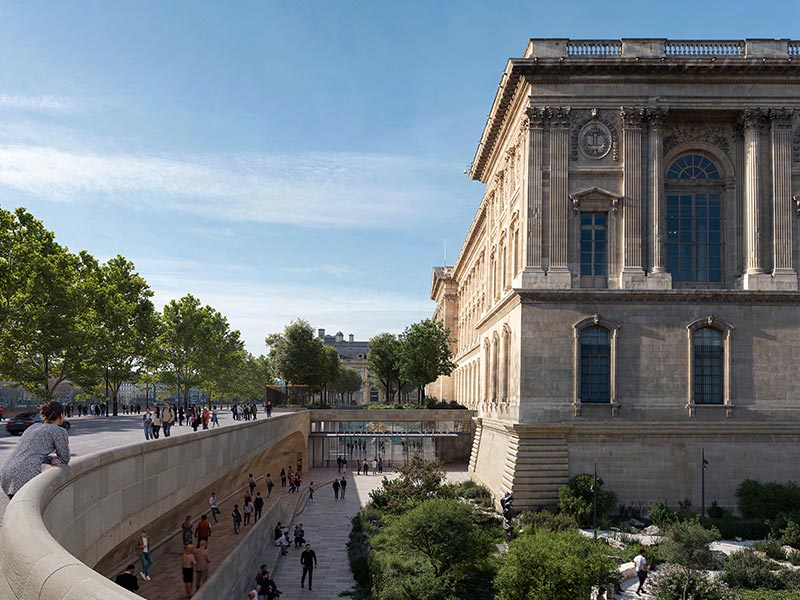
Le Louvre choisit son entrée côté colonnade

Le Louvre has selected a joint proposal by Studios Architecture Paris and Selldorf Architects for its new entrance via the Perrault colonnade, part of the 'Louvre Nouvelle Renaissance' plan. The project, announced by Emmanuel Macron on January 28, 2025, aims to create a new eastern access to relieve overcrowding at the Pyramid, with two underground entrances, vegetated moats, new services, and a dedicated space for the Mona Lisa. The selection was announced by Culture Minister Catherine Pégard on May 18, despite controversies over funding, heritage constraints, a theft in the Galerie d'Apollon on October 19, 2025, and the departure of museum president Laurence des Cars.

La loi sur les restitutions des biens culturels pillés pendant la colonisation définitivement adoptée

The French Parliament has definitively adopted a permanent law on the restitution of cultural property looted during colonization, replacing the previous case-by-case legislative approach. The Senate unanimously approved the final text on May 7, 2026, following agreement in a joint committee on April 30, and the National Assembly had approved it the day before. The law creates a general derogation from the principle of inalienability of public collections, establishing a bilateral scientific committee to examine provenance, with final decisions made by decree of the Council of State. Key amendments from the National Assembly—including binding parliamentary votes on restitution and conditions on conservation and public access—were removed by the joint committee to avoid perceptions of neocolonial tutelage.

La loi-cadre sur les restitutions définitivement adoptée par le Parlement

The French Parliament has definitively adopted a framework law on the restitution of cultural property that was illicitly acquired. The Senate unanimously approved the conclusions of the joint committee on May 7, following the National Assembly's approval on May 6, after an agreement was reached on April 30. The law establishes a general mechanism for returning objects from French public collections without requiring a specific law for each case, covering items acquired through looting, theft, forced sale, or other illicit means before the 1970 UNESCO Convention. It creates a permanent national commission and a bilateral scientific committee to assess claims, with restitution ultimately decided by government decree subject to legal review by the Council of State.

Pablo Diaz, directeur de Sciences Po Rennes : « L’acte II de l’INSEAC de Guingamp »

Pablo Diaz, director of Sciences Po Rennes, announces that the Institut national supérieur de l'éducation artistique et culturelle (INSEAC) in Guingamp has been transferred from the Conservatoire national des arts et métiers (Cnam) to Sciences Po Rennes as of January 1, 2026. The institute, which opened in 2021 and focuses on training, research, and resources for arts and cultural education, will now operate under public-sector governance with oversight from the French ministries of Culture, Education, and Higher Education. Diaz outlines plans to appoint a dedicated site director in Guingamp and establish a strategic orientation committee chaired by interministerial delegate Emmanuel Ethis, aiming to resolve past management and governance issues.

Outsourcing Museum Reception: A Booming Model

Externaliser l’accueil dans les musées, un modèle en plein essor

French museums are increasingly outsourcing front-of-house services, including ticketing, reception, and crowd management, to specialized private firms. This trend, which gained momentum with the opening of the Musée du quai Branly in 2006, allows public institutions to focus internal resources on core missions like conservation and curation while utilizing flexible, external labor for high-traffic operations. The market for these cultural services in France is projected to reach approximately €50 million by 2025.

A young but already highly competitive profession

Un métier jeune mais déjà très concurrentiel

The museum visitor services sector in France is undergoing rapid professionalization as specialized outsourcing firms compete for lucrative contracts. Companies like Marianne International, Pénélope, and City One—originally rooted in corporate reception and event management—are now managing front-of-house operations for major institutions including the Palais de Tokyo, MuCEM, and the Musée d'Orsay. This shift reflects a broader trend of museums treating visitors as customers and seeking the high-volume staffing expertise found in the corporate world.

Outsourcing a service is not prohibited, but managing the provider's employees is

Externaliser un service n’est pas interdit, diriger les salariés du prestataire l’est

A wave of legal complaints has been filed against several major French cultural institutions, including the Louvre, the Pinault Collection, and the MuCEM, alleging illegal labor practices. Labor unions Sud-Culture, SUD-PTT, and Solidaires claim these museums are engaging in "illicit lending of labor" and "bargaining" by exercising direct authority over outsourced staff from third-party agencies like Marianne International and Pénélope. While outsourcing services like ticketing and reception is legal in France, the lawsuits argue that museums are illegally managing these external employees' daily schedules, rotations, and disciplinary actions as if they were their own staff.

What Future for Art Centers?

Quel avenir pour les centres d’art ?

The article examines the uncertain future of contemporary art centers in France, a category that encompasses vastly different institutions from major venues like the Palais de Tokyo to smaller regional spaces. These non-collecting institutions, dedicated to exhibiting emerging artists and experimentation, face fragility due to heavy reliance on local government funding and difficulty proving their utility to elected officials. Their core mission is further challenged by more robust regional contemporary art funds (Fracs), which have greater resources for similar goals of exhibiting ultra-contemporary art and cultural democratization.

The Château de Breteuil upgrades its offering

Le château de Breteuil monte en gamme

François and Pauline de Breteuil, the son and daughter-in-law of the 10th Marquis de Breteuil, have initiated a strategic shift for the centuries-old Château de Breteuil in the Chevreuse Valley, one year after taking over the family estate. They are moving the château's positioning away from its previous focus on family tourism and Perrault's fairy tales toward a more museum-like and prestigious experience. This 'upgrading' includes the opening of a new on-site restaurant, the Café d'Achille, and the redecoration of four rooms by interior designer Jacques Garcia, creating period rooms dedicated to the 18th century, Marie Antoinette, and the Empire style.

Amandine Blier: 'Aura is the new name of Edeis Culture'

Amandine Blier : « Aura est le nouveau nom d’Edeis Culture »

Trévise Participations, the holding company of the Noisiez family, has consolidated its cultural activities by granting autonomy to its subsidiary Edeis Culture and rebranding it as Aura. Amandine Blier, a seasoned communications professional with experience at the City of Versailles and the opening of Citéco, has been confirmed as the head of the new entity, which manages eight cultural sites including venues in Nîmes and the recently won concession for the Villa Kérylos.