arrow_back Back to all stories

person Martin Bailey

newspaper The Art Newspaper article 18 articles

A century ago, Tate borrowed five Van Goghs to inaugurate its new “modern foreign” galleries

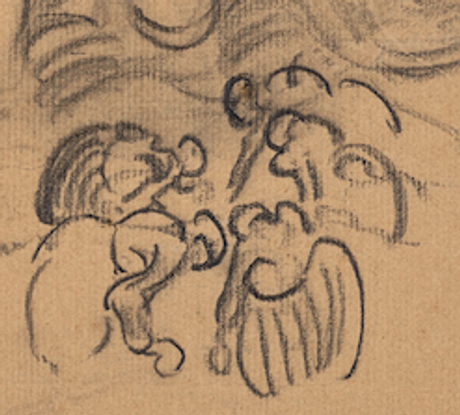
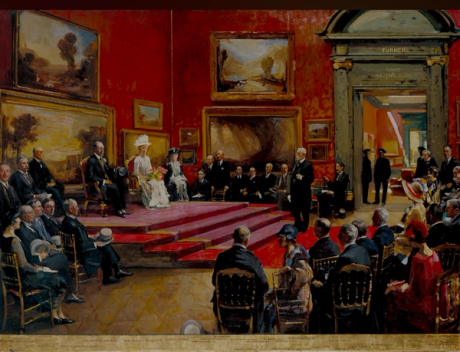
In June 1926, London's Tate Gallery opened its first rooms dedicated to modern foreign art, an event presided over by King George V and Queen Mary. To celebrate, the gallery mounted a massive loan exhibition of over 250 works, as its own collection of international art was too small. Among the loans were five works by Vincent van Gogh—four paintings and one drawing—all lent by British collectors. The article traces the provenance of each work, including Oleanders (now at the Met), Interior of a Restaurant (still in a private collection), Stairway at Auvers (now at the Saint Louis Art Museum), and a lost drawing titled The Hut. It also highlights the role of early female collectors Elizabeth Workman and Esther Sutro.
Why did Van Gogh sign his paintings as ‘Vincent’?

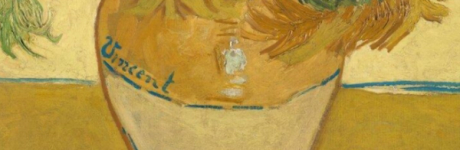
Art historian Julia Engelmayer has published a study titled 'Simply ‘Vincent’: An Overview of Van Gogh’s Signed Paintings' on the Van Gogh Museum's website, analyzing why and how Vincent van Gogh signed his works. The research reveals that only 133 of his 840 surviving paintings bear a signature (16%), an unusually low proportion for a 19th-century artist. Van Gogh signed with only his first name due to strained family relations and the difficulty non-Dutch speakers had pronouncing his surname. The study also highlights his predominant use of red signatures (on 75 works), angled signatures on over half of his signed pieces, and a distinctive horseshoe-shaped 'V' used during his Arles period.

A tale of two Annas: Van Gogh’s favourite Whistler painting stars in Tate Britain show

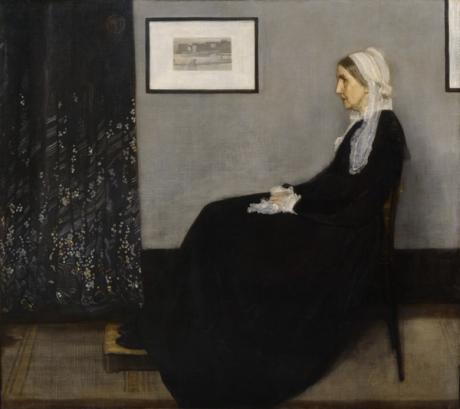
Tate Britain will open a major exhibition titled *James McNeill Whistler* on 21 May, running through 27 September, before traveling to the Van Gogh Museum in Amsterdam (16 October–10 January 2027) under the subtitle *Dandy and Disrupter*. The show’s centerpiece is Whistler’s iconic *Arrangement in Grey and Black no. 1* (commonly known as *Portrait of the Painter's Mother*), on loan from the Musée d’Orsay in Paris and displayed in its original frame designed by the artist. The article explores Vincent van Gogh’s admiration for the painting—he wrote to his sister Wil in 1889 that it reminded him of their own mother—and traces the work’s connections to the Goupil gallery (later Boussod & Valadon), where both Vincent and his brother Theo worked.

London's Wellcome Collection returns 2,000 manuscripts to the Jain community

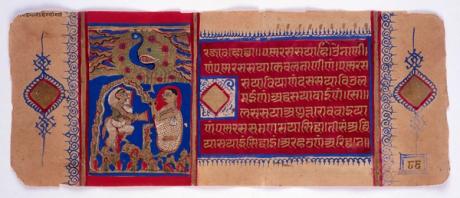
London's Wellcome Collection is returning 2,000 Jain manuscripts to the Jain community, the largest such collection outside South Asia. Acquired in 1919 at a low price from a Jain temple in what is now Pakistan, the manuscripts will be transferred to the UK-based Institute of Jainology and deposited at the University of Birmingham. A Memorandum of Understanding is being signed at the House of Commons. The restitution bypasses the country of origin because the Jain community in Pakistan was displaced after the 1947 partition, leaving no suitable depository there.

Famous Cranach painting spotted in rare photograph of Hitler’s apartment

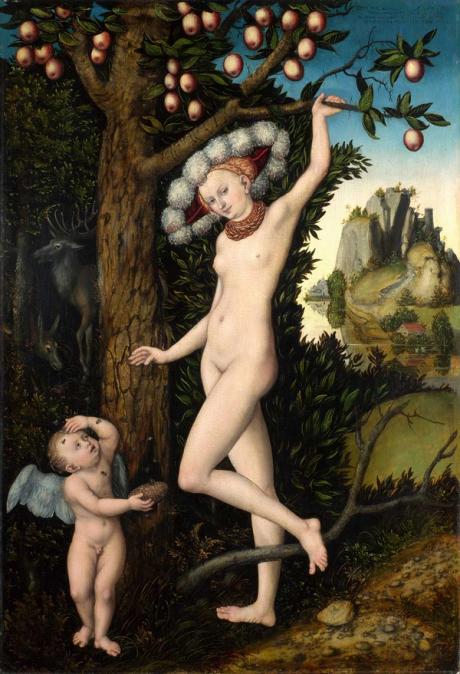
A rare photograph from the early 1940s reveals that Lucas Cranach the Elder's painting *Cupid complaining to Venus* (1526-27), now a masterpiece in the National Gallery, London, once hung in Adolf Hitler's private Munich apartment. The image, previously published in Germany by provenance expert Birgit Schwarz, appears for the first time in an English-language publication. The painting was acquired by the National Gallery in 1963 from E. and A. Silberman Galleries in New York, which provided a false provenance. It had been taken from a warehouse of recovered art in 1945 by American journalist Patricia Lochridge, who smuggled it into the United States.

One of Van Gogh’s greatest watercolours could achieve a record price

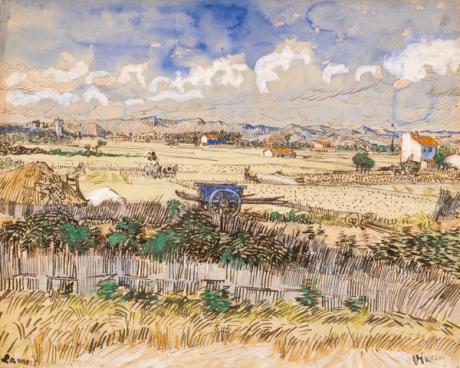
Sotheby's New York will auction Vincent van Gogh's watercolor *The Harvest in Provence* (June 1888) on May 19, with an estimate of $25–35 million. The work, larger and more elaborate than a related watercolor at Harvard, was created just days before van Gogh's celebrated oil painting of the same scene. It is signed and titled, suggesting the artist considered it a finished piece rather than a mere study, and he sent it to his brother Theo before completing the oil version.

Rare early photographs reveal lost sites featured in Van Gogh’s paintings

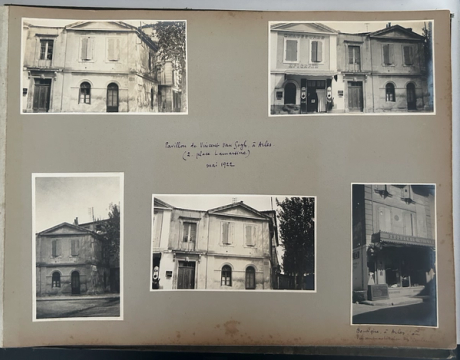
Two rare photographic albums taken by art critic Gustave Coquiot in 1922 have been acquired by the newly established Van Gogh Academy in Auvers-sur-Oise, France, and are now on display. The images capture many of the sites in Arles that Vincent van Gogh painted in the late 1880s, including the Yellow House, the Langlois Bridge, and the Rhône riverbank. Several of these locations were later destroyed during World War II or by modernization, making Coquiot's photographs valuable historical records of Van Gogh's original subjects.

Ittai Gradel, gems expert who uncovered British Museum thefts, dies aged 61

Ittai Gradel, a Danish classical gems specialist, has died at age 61. His investigations revealed that hundreds of objects had been stolen from the British Museum, leading to the resignation of director Hartwig Fischer in 2023. Gradel first alerted the museum in 2021 after finding proof that precious objects were being sold on eBay, naming senior curator Peter Higgs as the suspected seller. After initial concerns were ignored, Gradel wrote again in 2022, eventually prompting a police investigation. Higgs was dismissed in July 2023, and Fischer resigned the following month. Of the 2,000 items affected, 626 have been recovered, many bought in good faith by Gradel and returned. Earlier this month, Gradel received a special British Museum award from current director Nicholas Cullinan.

The village where Van Gogh spent his final days celebrates its most distinguished visitor

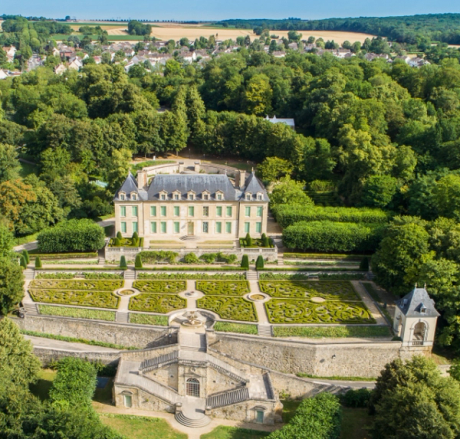
An exhibition titled "Van Gogh, Influencer: Legacies in Motion" has opened at the Château of Auvers-sur-Oise, the village near Paris where Vincent van Gogh spent his final 70 days and died by suicide in July 1890. The show, running until 3 January 2027, features nearly a hundred works by artists influenced by Van Gogh, including Léonide Bourges, Charles-François Daubigny, and Léo Gausson, though no original Van Gogh paintings are included. Curated by Wouter van der Veen, the exhibition explores visual parallels and stylistic contrasts between Van Gogh’s iconic works—such as *Church at Auvers* and *Wheatfield with Crows*—and those of his contemporaries and followers.

Zurich’s controversial Bührle Collection is rehung, including five paintings by Van Gogh—plus one forgery

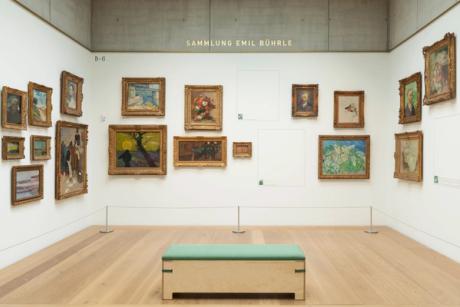
The Kunsthaus Zurich has unveiled a comprehensive new display of the Emil Bührle Collection, featuring 205 works including five significant paintings by Vincent van Gogh and one acknowledged forgery. This reinstallation marks a shift from previous thematic displays focused on provenance research to a denser presentation of the collection's breadth. Notable works on view include a 1887 self-portrait and the masterpiece 'The Sower at Sunset,' though one Van Gogh remains in conservation and another has been withdrawn due to Nazi-era ownership complications.

How did a 16th-century European basin end up as a sacred object in West Africa?

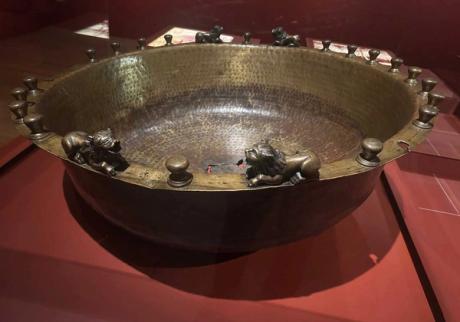
The Aya Kese, a massive 16th-century northern European brass basin, is currently on display at the British Museum while its complex history remains under scrutiny. Looted by British officer Robert Baden-Powell in 1896 from the Asante kingdom’s royal mausoleum in present-day Ghana, the object was long sensationalized by colonial accounts as a vessel for human sacrifice. Recent scholarship and historical records from Asante King Prempeh I contest these claims, asserting the basin’s sacred role as a spiritual repository for the souls of the Asante people.

UK National Gallery to recoup £2m a year after completing voluntary redundancy process

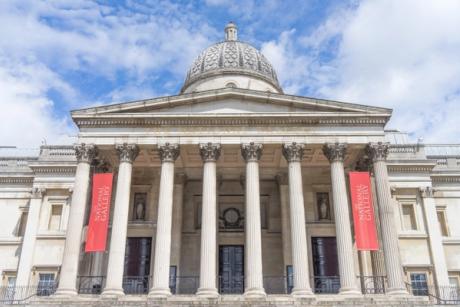
The National Gallery in London has successfully reached a target of £2 million in annual savings following a voluntary redundancy program and a recruitment freeze. Initiated in February to address a projected £8.2 million deficit, the voluntary exit scheme allowed the institution to avoid compulsory redundancies among its nearly 500 employees. While the gallery has met its initial savings goal, it must still find ways to bridge a remaining multi-million pound shortfall through non-staff cost reductions.

A Dutch museum has just put its fake Van Gogh on show

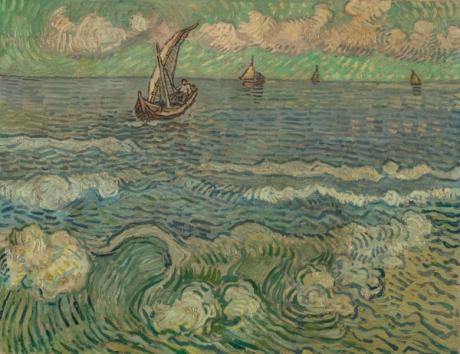
The Kröller-Müller Museum in Otterlo has broken traditional museum protocol by placing a known forgery, "Seascape at Saintes-Maries-de-la-Mer," on public display. Acquired in 1928 by museum founder Helene Kröller-Müller from the notorious Berlin dealer Otto Wacker, the painting was eventually exposed as a fake created by Wacker’s brother, Leonhard. The exhibition, which runs until June 21, coincides with a new podcast detailing the history of the acquisition and the subsequent fraud trial that rocked the art world in the 1930s.

London’s National Gallery announces architects for new £350m wing

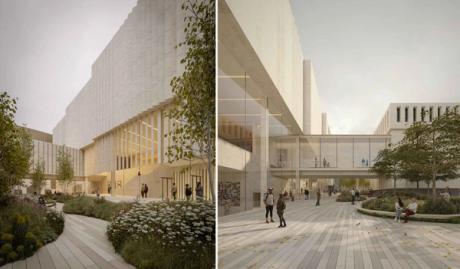
The National Gallery in London has selected Japanese architecture firm Kengo Kuma and Associates to design a new £350m wing, scheduled to open in the early 2030s. Chosen from a shortlist of six finalists, Kuma’s design features a Portland stone exterior and will be constructed on the site of the soon-to-be-demolished St Vincent House. The extension will provide nearly double the space for temporary exhibitions and an additional 1,500 square meters for the permanent collection, connected via bridges to the existing Sainsbury Wing and Wilkins building.

Christie’s to sell an almost unknown Van Gogh double-sided drawing

A previously obscure double-sided drawing by Vincent van Gogh, created in the final weeks of his life, will be auctioned by Christie's in Paris. The sheet features a study of female pea pickers on one side and a landscape on the other, complete with color notations indicating Van Gogh's intention to develop them into paintings. The work has been authenticated by the Van Gogh Museum and carries an estimate of €100,000-€150,000.

Revealed: the amazing frame once created for Van Gogh’s Sunflowers

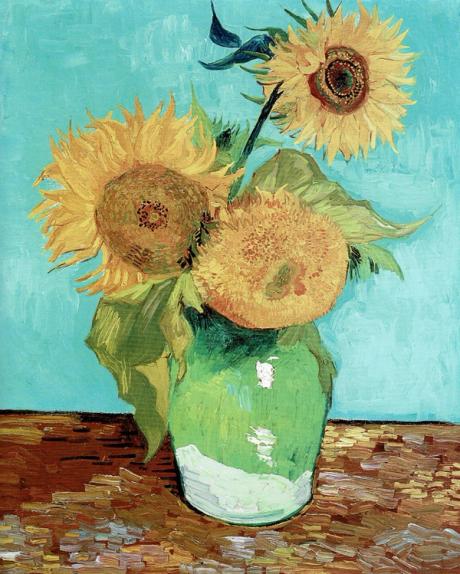
A long-lost, custom-designed Art Deco frame for Vincent van Gogh's painting "Three Sunflowers" has been identified through archival research. The frame, which featured a dark lacquer finish, randomly placed gold circles, and angled outer edges, was commissioned by the Parisian couturier and collector Jacques Doucet shortly after he acquired the painting in 1912. Its existence was pieced together from a 1930s interior photograph, a 1967 family snapshot, and a frame sold at Sotheby's in 1989, allowing for a digital reconstruction of the complete artwork.

Van Gogh goes to China, with a more affordable early painting

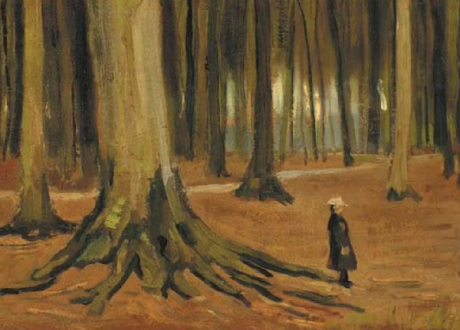
Christie's is auctioning Vincent van Gogh's early painting 'A Girl in a Wood' in Hong Kong on March 27, with an estimate of $1.3m-$2.6m. The work, recently redated to August 1883, is being offered directly in Asia, bypassing major Western previews, to target Chinese collectors.

The story behind Iran’s only Van Gogh: ‘At Eternity’s Gate'

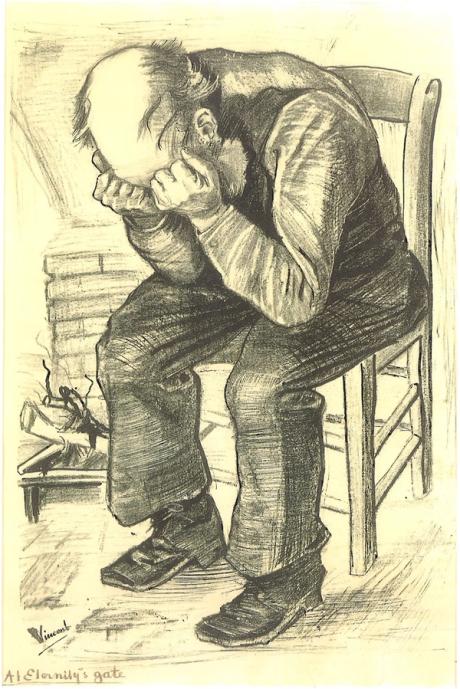
A rare, inscribed lithograph by Vincent van Gogh, 'At Eternity's Gate,' resides in the collection of the Tehran Museum of Contemporary Art. The work, one of only seven surviving examples, was acquired in 1975 by Farah Pahlavi, the wife of the Shah of Iran, for the museum. It passed through notable hands, including those of US Vice President Nelson Rockefeller, before arriving in Tehran just before the 1979 Iranian Revolution.