arrow_back Back to all stories

person Sarvy Geranpayeh

newspaper The Art Newspaper article 10 articles

Still in 'war mode': Tehran Museum of Contemporary Art reopens with exhibitions about conflict

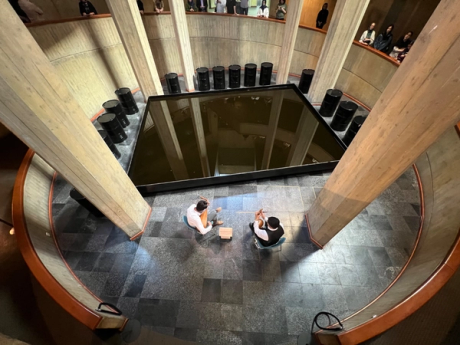
The Tehran Museum of Contemporary Art (TMoCA) has reopened with a weekly rotating post-ceasefire program called 'Art and War,' following weeks of bombardment that forced its closure and prompted emergency efforts to protect its collection. The program began with works by American Pop artists James Rosenquist, Roy Lichtenstein, and Robert Indiana, and this week features three works from Pablo Picasso's Weeping Woman series, focusing on Spain. Museum director Reza Dabirinezhad described the challenges of safeguarding the collection during US-Israeli strikes, including removing 80% of the oil from Noriyuki Haraguchi's installation 'Matter and Mind' (1977) to prevent fire risk, and protecting outdoor sculptures by Henry Moore, René Magritte, and Max Bill.
Iran has not withdrawn from 2026 Venice Biennale, pavilion commissioner says

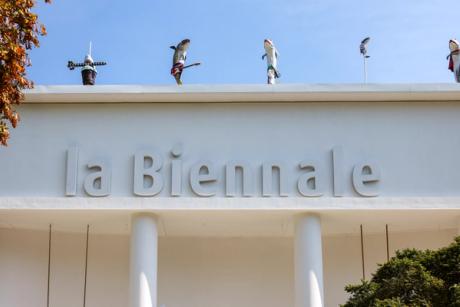
Iran has denied withdrawing from the 2026 Venice Biennale, despite the Biennale's announcement that the country would not participate. Aydin Mahdizadeh Tehrani, director-general of visual arts at Iran's ministry of culture and Islamic guidance and the country's pavilion commissioner, stated that Iran requested more time rather than submitting a withdrawal. He cited the US-Israel war with Iran, political and economic challenges, and a sharp currency devaluation that tripled projected costs as reasons for the delay. Iran proposed a shorter two-to-three-month participation, which was rejected, but has since sent a letter insisting on opening its pavilion even after the opening. The foreign ministry has intervened to support Iran's participation, and a final response from the Biennale is expected soon.

‘This is an opportunity that will never happen again’: Syrian artist Sara Shamma on rebuilding her country

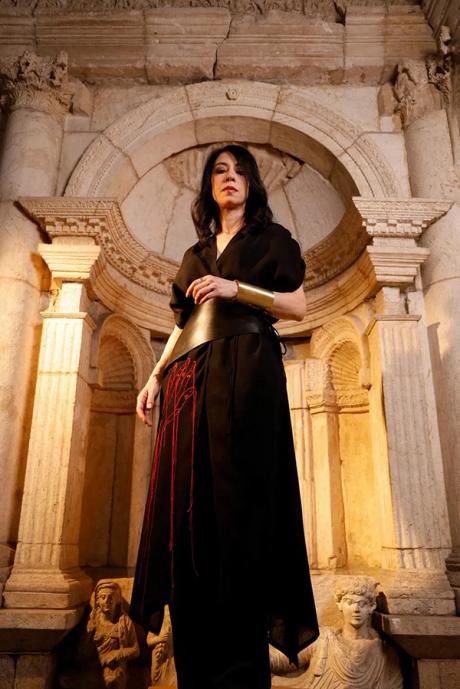
Syrian artist Sara Shamma has been selected to represent Syria at the 2026 Venice Biennale, marking the country's return to the event with a single-artist national pavilion for the first time. Her immersive installation, 'The Tower Tomb of Palmyra,' curated by Yuko Hasegawa and commissioned by Syria's ministry of culture, combines painting, architecture, light, sound, and scent. It draws on the ancient funerary towers of Palmyra destroyed by Islamic State in 2015, addressing cultural loss and the possibility of reconstruction. Shamma, who returned to Syria in September 2024 after eight years abroad, describes living through the fall of the Assad regime and the country's rebirth as a transformative personal and national moment.

Iran Will Not Participate in Venice Biennale, Organizers Say

Iran will not participate in the 61st Venice Biennale, which opens for previews this week, the Biennale Foundation announced on May 4. The decision comes two months after the United States and Israel launched strikes across Iran, and amid renewed tensions along the Strait of Hormuz. The Iranian pavilion was to be commissioned by Aydin Mehdizadeh Tehrani, director general of the visual arts office in the Iranian Ministry of Culture. Iran has had inconsistent attendance at the Biennale since 1958, with a long absence between the 1960s and 2003, but has participated semi-consistently over the last two decades, most recently in 2024.

Lebanon appeals to Unesco to intervene amid fears protected citadel has been destroyed

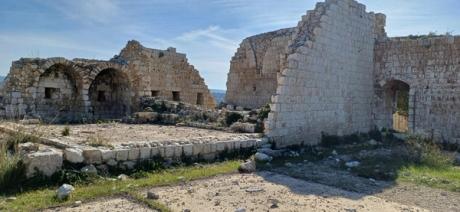
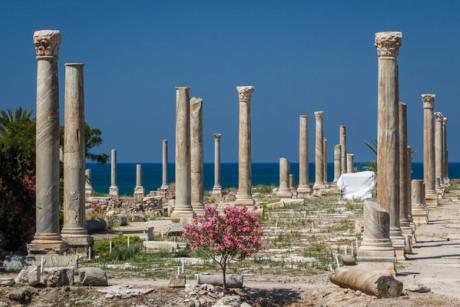
Lebanon’s Ministry of Culture has filed an urgent complaint with Unesco following reports that Israeli military forces destroyed the 12th-century Chama’ Citadel in southern Lebanon. The site, a Crusader-era fortress, had recently been granted "enhanced protection" status under the 1954 Hague Convention, a designation intended to shield it from military targeting. Lebanese authorities are currently unable to access the site due to ongoing military occupation and have requested that Unesco utilize satellite imagery to verify the extent of the demolition.

More than 200 cultural figures sign statement criticising international response to destruction of Iran’s heritage

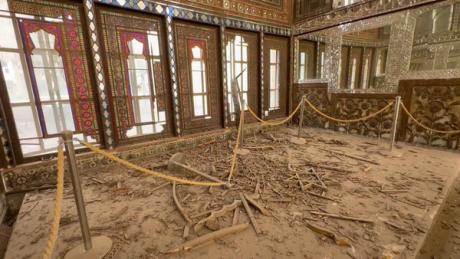
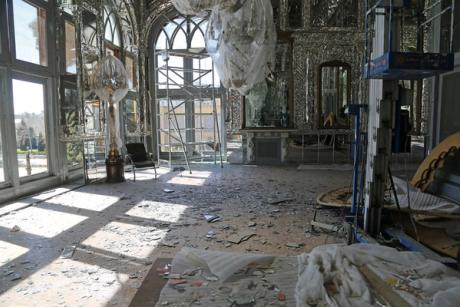
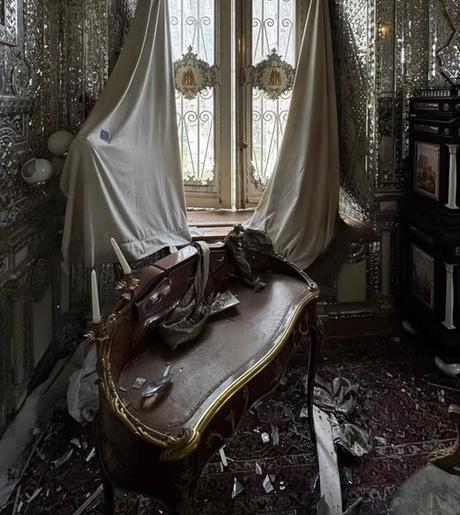
More than 200 international scholars and cultural heritage professionals have signed a joint statement condemning the United States and Israel for inflicting "irreversible damage" on Iran’s cultural heritage. The group, which includes academics from leading global institutions, alleges that recent military strikes have damaged over 130 UNESCO-registered monuments and museums, including the Senate Palace in Tehran and sites in Isfahan. They argue these actions violate the 1954 Hague Convention and criticize international bodies like UNESCO for failing to issue a sufficiently forceful response.

A new Istanbul gallery is offering an outlet for Iran’s artists

Shiva Zahed Gallery has opened in Istanbul’s Pera district, specifically dedicated to showcasing Iranian contemporary art. The gallery's inaugural exhibition, "Echoes," features works by the influential artist Fereydoun Ave and installation artist Shaqayeq Arabi. The opening was significantly delayed and reconfigured after civil unrest in Iran and a communication blackout prevented the founder from coordinating with the 20 emerging artists originally scheduled for the debut.

Unesco grants enhanced protection to 39 Lebanese heritage sites as war escalates

UNESCO has granted enhanced protection to 39 cultural heritage sites in Lebanon during an extraordinary session of its Committee for the Protection of Cultural Property. This designation, which prohibits targeting or military use of the sites, also unlocks over $100,000 in emergency funding for on-the-ground operations. The protected sites include the ancient Bekka Temple, the Lebanese National Library, and Barsbay Tower.

Iran’s arts community and heritage suffer as US-Israeli attacks continue

The US-Israeli bombardment of Iran, beginning in late February, has severely disrupted the country's cultural life and art scene. The typically busy Nowruz (Persian New Year) period was marked by fear, travel restrictions, and internet blackouts, leading to the evacuation of museum collections, the closure of galleries, and artists being unable to work in their studios.

‘We are trying to preserve the memory of our people’: archaeologists create map tracking damage to Iran heritage sites

Iranian archaeologists Sepideh Maziar and Mehrnoush Soroush have launched an interactive online map to document and geolocate cultural heritage sites in Iran damaged by military strikes. The map, hosted by the University of Chicago's CAMEL Lab, currently lists 69 verified sites, including the historic Sa'dabad Palace complex in Tehran, and is updated as new information becomes available.

Open Letter Published by Activist Group Calling for Venice Biennale to Eject Israel Signed by Nearly 200 Participating Artists and Curators

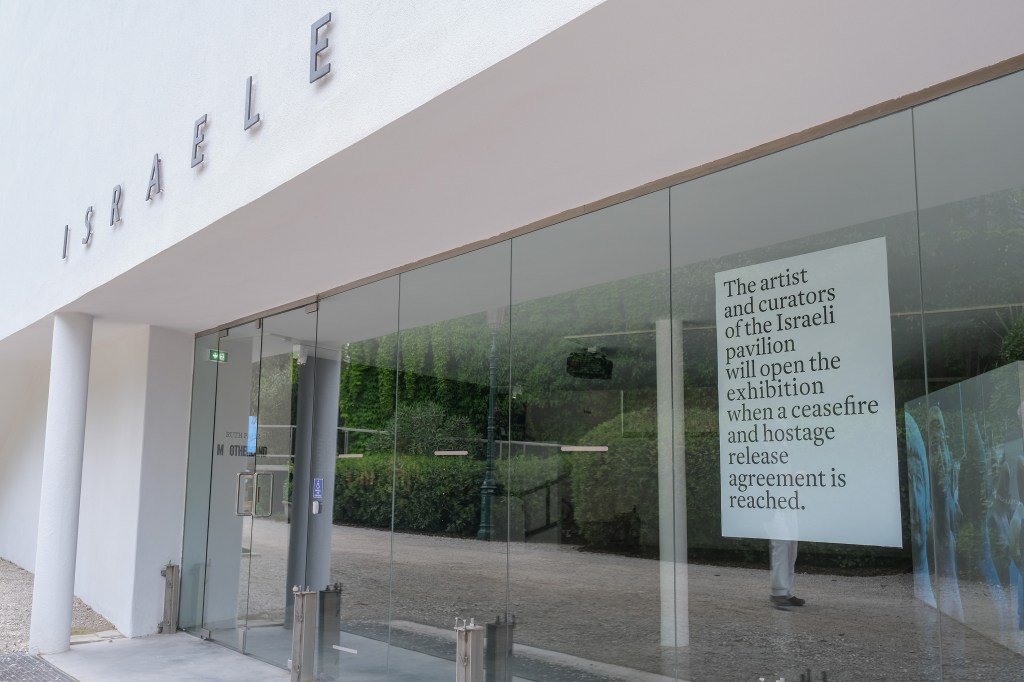
An activist group called Art Not Genocide Alliance has published an open letter demanding the Venice Biennale eject Israel from this year's exhibition. The letter has been signed by nearly 200 artists, curators, and arts workers participating in the 2026 Biennale, including members of the main exhibition's curatorial team and contributors to several national pavilions. The letter accuses Israel of genocide and apartheid, and references the 2024 Biennale where Israel's pavilion remained closed due to similar protests.