
MASP CONTESTED NARRATIVES BETWEEN REPLICA AND WEAVING
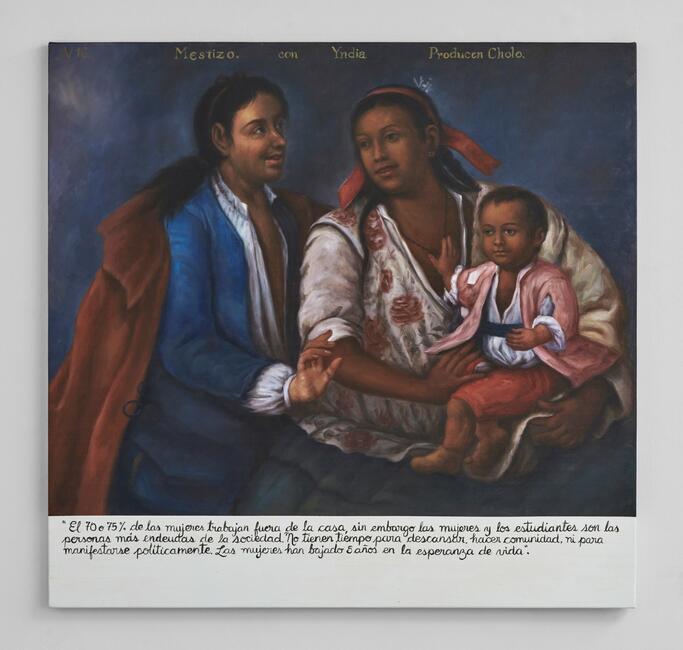
The Museu de Arte de São Paulo (MASP) has opened two simultaneous exhibitions that critically examine how narratives in Latin American art are formed. 'Réplica (Replica)' is a retrospective of Peruvian artist Sandra Gamarra Heshiki, featuring over 70 works that appropriate and alter historical pieces to expose the exclusionary mechanisms of museums. 'Vivir, tejer (Living, Weaving)' presents the collaborative textile work of Claudia Alarcón and the Silät collective, a group of over one hundred Wichí women weavers, foregrounding ancestral knowledge and collective creation.
These exhibitions matter because they offer complementary and powerful critiques of institutional and cultural power structures from distinct vantage points. Gamarra's institutional critique, embodied in her fictional LiMac museum, challenges the neutrality of art history and its canonical timelines. In contrast, the Silät collective's work asserts the vitality of Indigenous knowledge systems and collaborative practices, proposing alternative models of authorship and cultural production rooted in community and territory.