
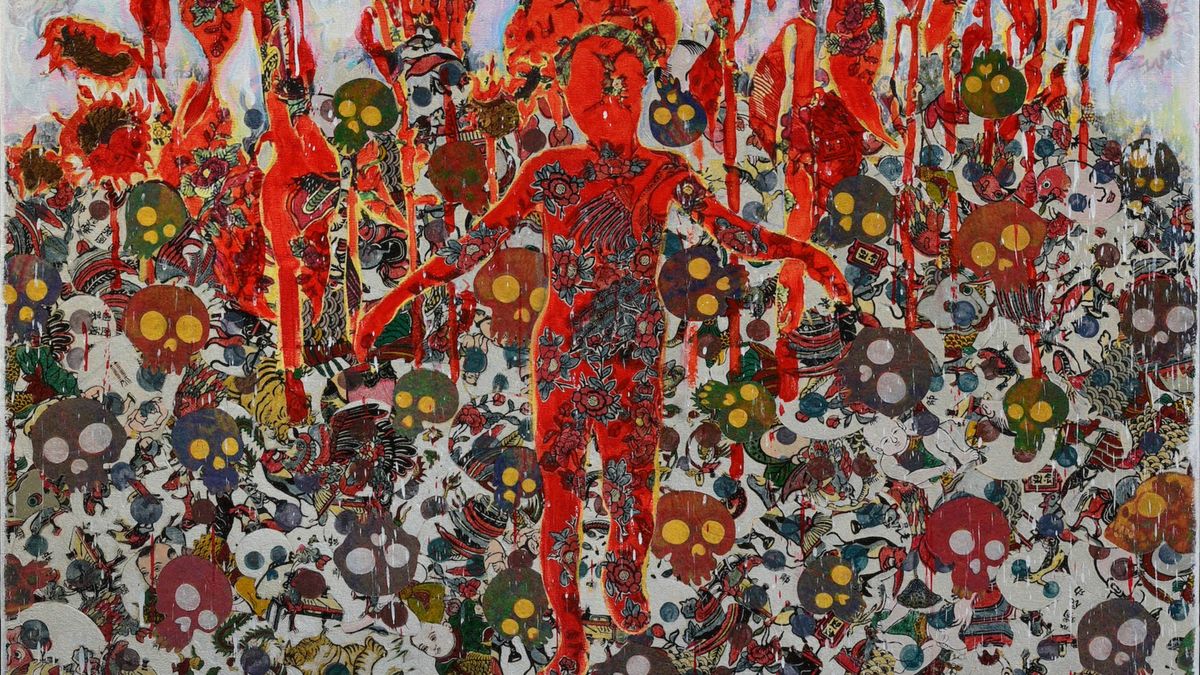
Eli Klein Gallery in New York is presenting "Bùi Thanh Tâm: Here on and after," the Hanoi-based artist's first solo exhibition in the United States. The show features 13 new and recent paintings that explore Vietnam's colonial history, the aftermath of war, and the persistence of memory. Tâm, a leading Vietnamese painter of the postwar generation, incorporates traditional folk woodblock prints—Đông Hồ, Hàng Trống, and Kim Hoàng—into layered, collaged works. The sunflower emerges as a central symbol of resilience and rebirth, influenced by Anselm Kiefer and Francis Bacon, while addressing trauma from French colonialism to Agent Orange. The exhibition includes series such as "Searching for the Sunflower," "Hello. God is here," "Utopia," and "Mutant," each examining themes of healing, endurance, and cultural transformation.
This exhibition matters because it marks a significant milestone for Bùi Thanh Tâm, introducing his work to a U.S. audience and highlighting the global relevance of contemporary Vietnamese art. By reimagining traditional folk motifs through a modern lens, Tâm bridges historical trauma and cultural reinvention, offering a nuanced perspective on postcolonial identity. The show also underscores the role of New York galleries in amplifying underrepresented artistic voices, contributing to broader conversations about memory, resilience, and the evolving legacy of war in art.