
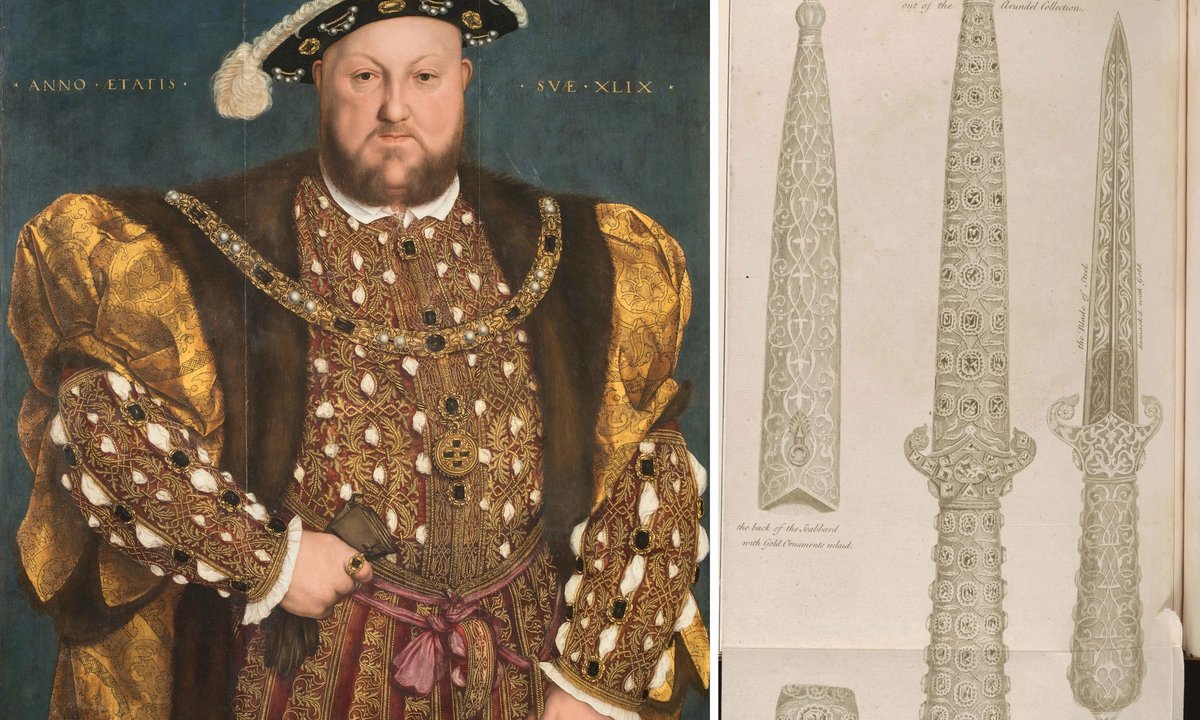
An exhibition opening at Strawberry Hill House in London on November 1 will explore the history of a jewel-encrusted Ottoman dagger long believed to have belonged to Henry VIII. Curator Silvia Davoli has uncovered that the dagger was actually made in late 16th-century Istanbul, decades after Henry's death, and was mistakenly attributed to the king by 18th-century engraver George Vertue. The dagger was owned by Horace Walpole, then passed through several hands before being stolen in a 1946 heist at Hever Castle, where it was kept by the Astor family. Though the original dagger remains missing, the exhibition will display two similar Ottoman daggers from Welbeck Abbey and Vienna's Kunsthistorisches Museum.
The exhibition matters because it unravels a centuries-old art-world mystery involving royal attribution, a dramatic theft, and the enduring power of provenance myths. It highlights how historical objects can acquire legendary status through mistaken identity and sensational events, and how curatorial research can challenge long-held beliefs. The story also touches on broader themes of art crime, aristocratic collections, and the intersection of history and legend in museum narratives.