
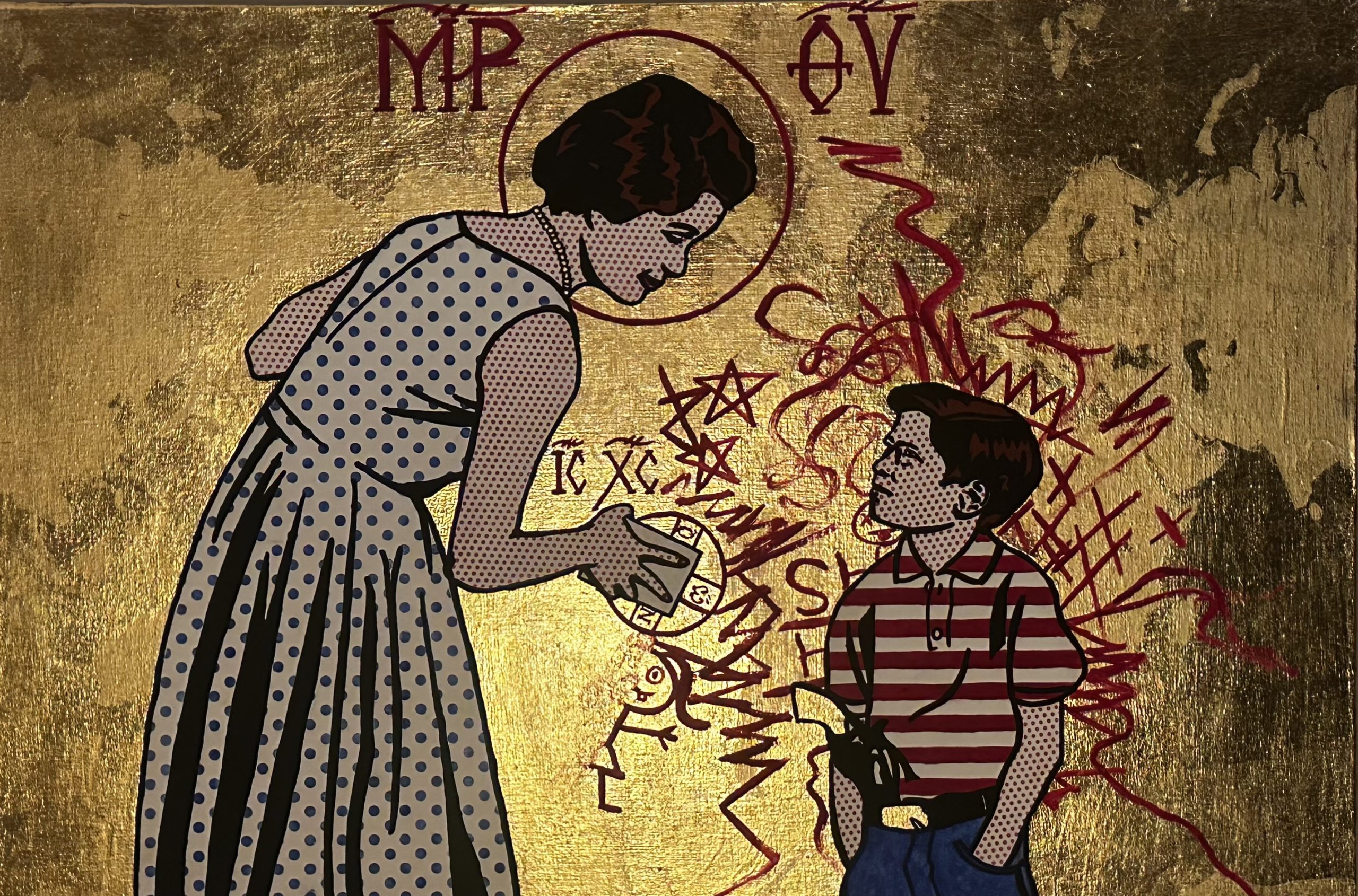
The article is a first-person reflection by Nick Leeper, a Jesuit artist and scholastic, on the Biennale d'Art Contemporain Sacré in Menton, France. Leeper describes entering the Grand Hôtel des Ambassadeurs expecting a traditional sacred art show but finding abstract sculptures, Venetian glassworks, and Man Ray's mirrors alongside his own works and those of artists like Damien Hirst, Yayoi Kusama, and Gerhard Richter. The biennale, founded in 2019 by Liana Marabini, features 180 artists from 29 countries exploring the theme of forgiveness, prompting viewers to question what makes art sacred.
This matters because it challenges narrow definitions of sacred art, arguing that holiness in art is not limited to realistic depictions of religious subjects. Leeper, drawing on his Jesuit training, suggests that the sacred can be found in the absurd, abstract, and ordinary, expanding the conversation about spirituality in contemporary visual art. The article raises enduring questions about the role of intention, biography, and form in defining religious art, relevant to artists, curators, and viewers navigating the intersection of faith and modern creativity.