
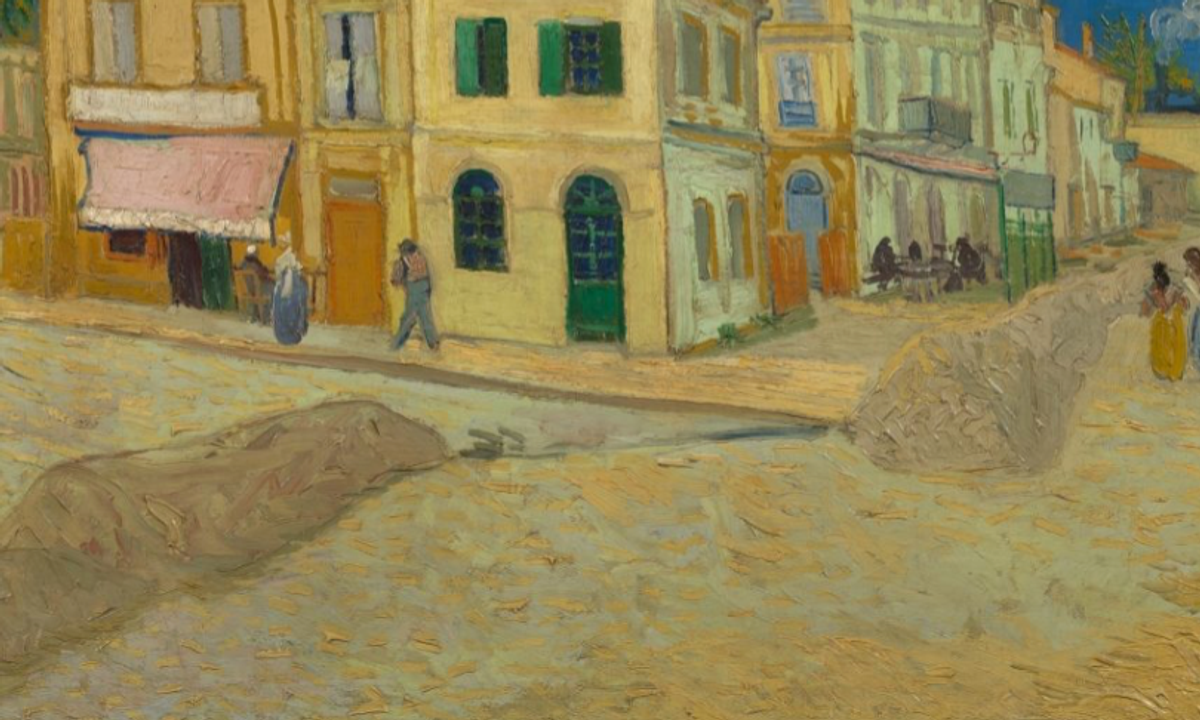
A new study by Van Gogh Museum senior researcher Teio Meedendorp proposes that the mysterious piles of sand in Vincent van Gogh's 1888 painting "The Yellow House" are not, as previously thought, related to gas pipe installation, but rather cleansing sand used to absorb horse manure and urine on the streets of Arles. Meedendorp supports his theory with historical postcards from 1902 showing similar sand piles and street-cleaning practices, as well as municipal records indicating the city had outsourced dung removal in August 1888.
This finding matters because it resolves a long-standing art-historical puzzle about a major Van Gogh work, shifting interpretation from a narrative about modern convenience (gas lighting) to one about everyday urban life in the 19th century. It also highlights how archival research and period documents can illuminate seemingly minor but puzzling details in canonical paintings, offering fresh insight into the artist's environment and the mundane realities that shaped his compositions.