
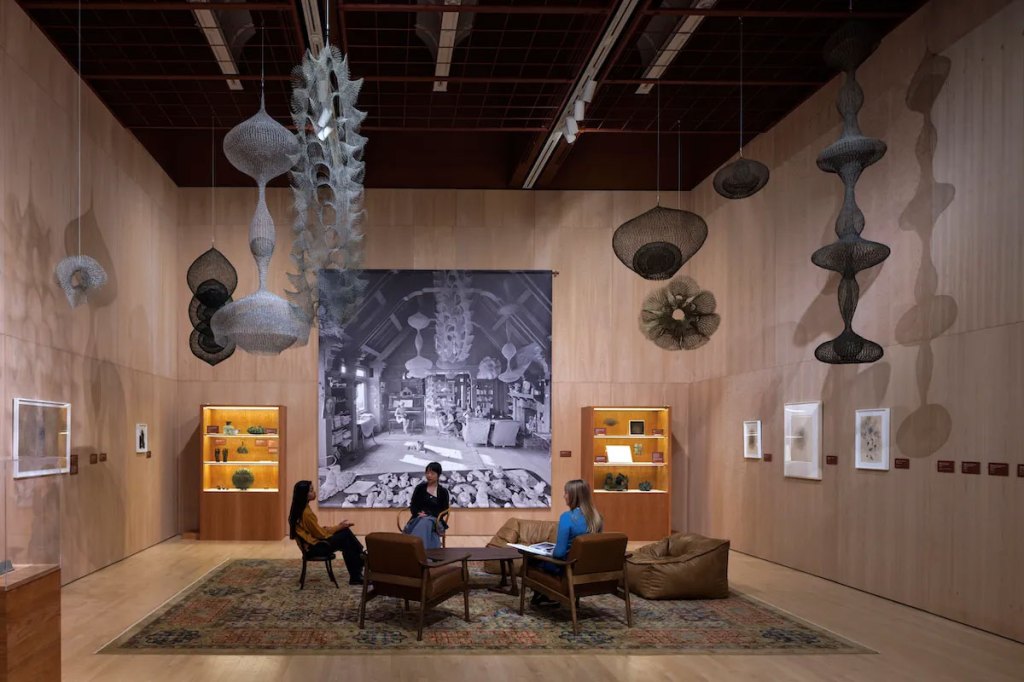
The Smithsonian Institution, a government-funded museum network in Washington, D.C., was forced to close this weekend due to the ongoing government shutdown, marking another blow after repeated attacks by the Trump administration. The National Gallery of Art had already closed the previous weekend, while the Smithsonian had used its own funds to stay open until now. Separately, a traveling Ruth Asawa retrospective opening at New York's Museum of Modern Art on October 19 is reportedly the museum's largest show ever dedicated to a woman artist, featuring 376 works across 16,000 square feet, though MoMA has not officially confirmed this record. Other news includes a forgotten Paul Gauguin painting heading to auction at Artcurial, Sotheby's seeking third-party guarantees for three Klimt paintings from the Leonard Lauder collection, a reattributed Liotard portrait, and Chilean artist Cecilia Vicuña winning the 2025 Roswitha Haftmann Prize.
These developments matter because they highlight the intersection of political instability and cultural institutions—the Smithsonian closure underscores how government funding disputes directly impact public access to national heritage. The Asawa retrospective signals a long-overdue recognition of women artists in major museum programming, while the auction and guarantee news reflect ongoing shifts in the high-end art market. The Liotard reattribution and Vicuña prize demonstrate how art history and contemporary recognition continue to evolve, and the War Child fundraiser shows artists leveraging their work for humanitarian causes in conflict zones.