
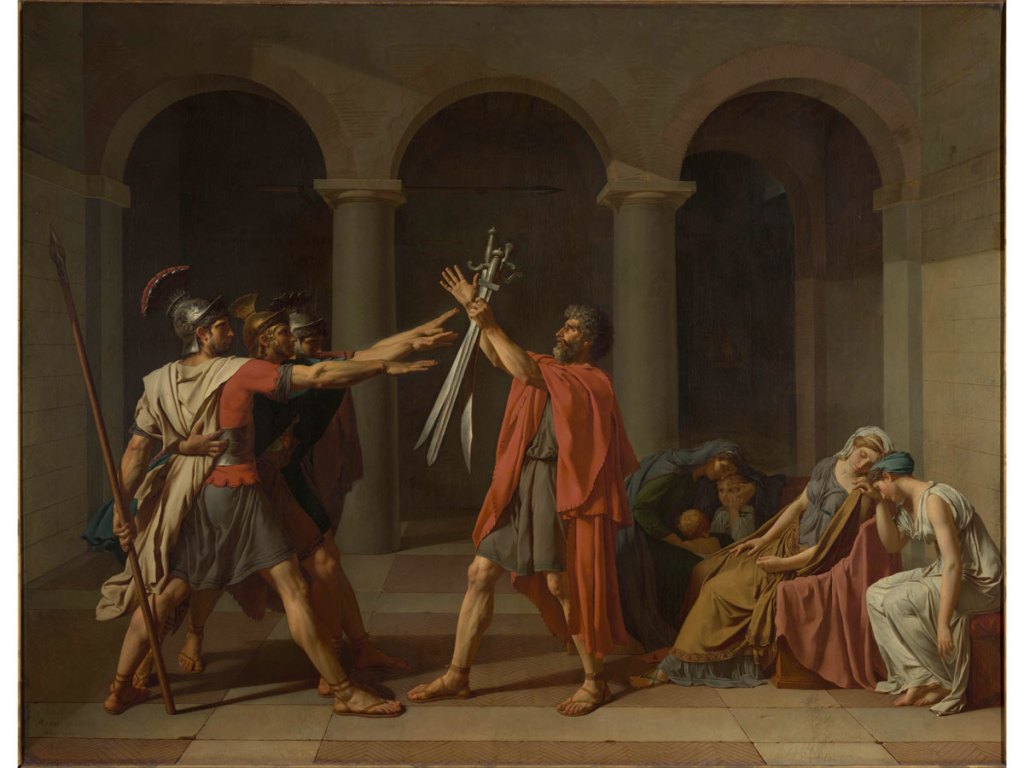
The Louvre in Paris is staging a major retrospective of Jacques-Louis David, featuring 100 works by the French Neoclassical painter, to mark the bicentenary of his death in 1825. The exhibition opens October 15 and runs through January, drawing on the Louvre's own collection and prestigious loans from institutions including the Royal Museums of Fine Arts of Belgium, the Metropolitan Museum of Art, and the Cleveland Museum of Art. Curator Sébastien Allard emphasizes that the show is not a conventional blockbuster but aims to explore under-examined aspects of David's practice, particularly his political engagement across the Ancien Régime, the French Revolution, and the Napoleonic Empire.
This retrospective matters because it is the first comprehensive David exhibition in Paris since 1989, offering a fresh scholarly reassessment after 35 years. By foregrounding David's role as a politically active artist—who served as a revolutionary leader, painted martyrs like Marat, and later became Napoleon's court painter—the show challenges the reductive "Neoclassical" label and argues that his art was inseparable from his moral and political convictions. The accompanying catalog also fills a gap in French-language scholarship, making this a significant contribution to art-historical understanding of a pivotal figure.