
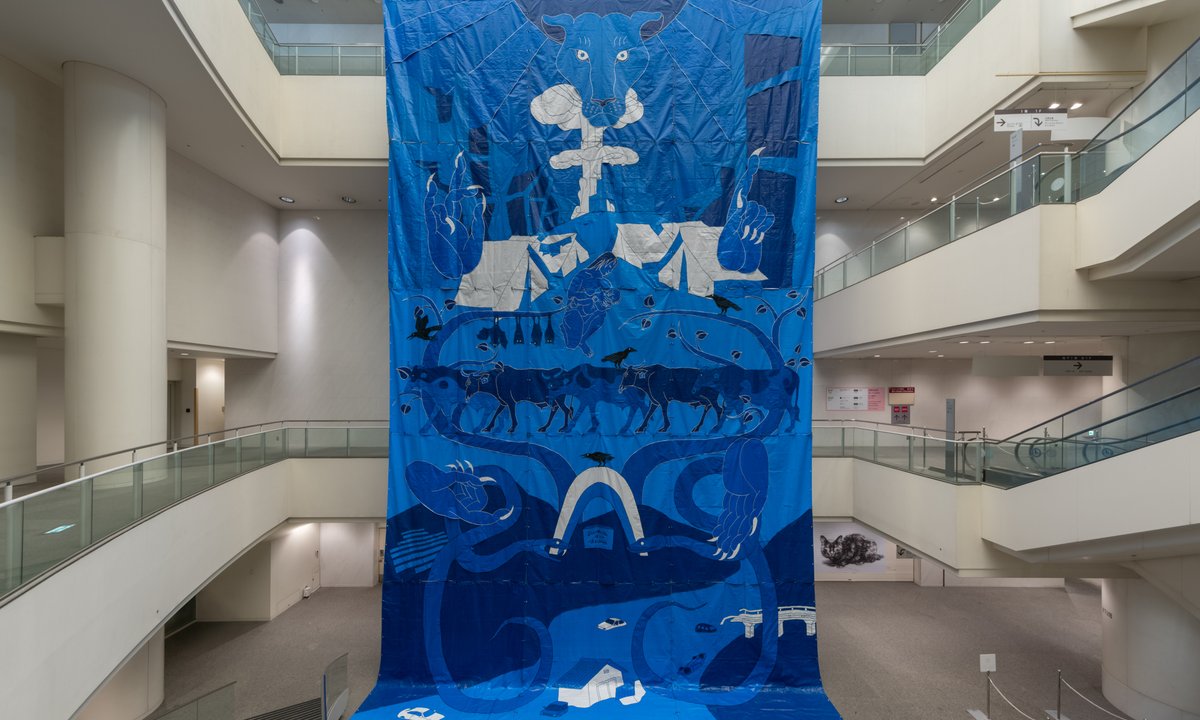
The sixth edition of the Aichi Triennale, titled "A Time Between Ashes and Roses," opened in Japan in September and runs until 30 November. Curated by Hoor Al Qasimi, the first non-Japanese artistic director of the triennial, the exhibition confronts themes of war, displacement, memory, and environmental collapse. Works include Kubo Hiroko's tapestry marking the 80th anniversary of the Hiroshima atomic bombing and a video installation by Palestinian duo Basel Abbas and Ruanne Abou-Rahme. Al Qasimi explicitly linked the triennial to the situation in Gaza, stating, "Free Palestine," during a press conference. Controversy erupted over the Aichi-Israel Matching Program, a separate prefectural initiative pairing Israeli startups with local companies, leading to protests and the resignation of vice chairman Hideyuki Tomita from the organizing committee.
This edition matters because it marks a significant political turn for a major Japanese triennial, directly engaging with ongoing conflicts and genocide accusations while navigating local governmental tensions. By centering Palestinian voices and environmental critique, the triennial challenges both Western media narratives and Japan's institutional neutrality, reflecting a growing trend of art events becoming platforms for urgent geopolitical and ecological discourse. The controversy over the prefecture's ties to Israel underscores the complex intersection of art funding, state policy, and activism.