
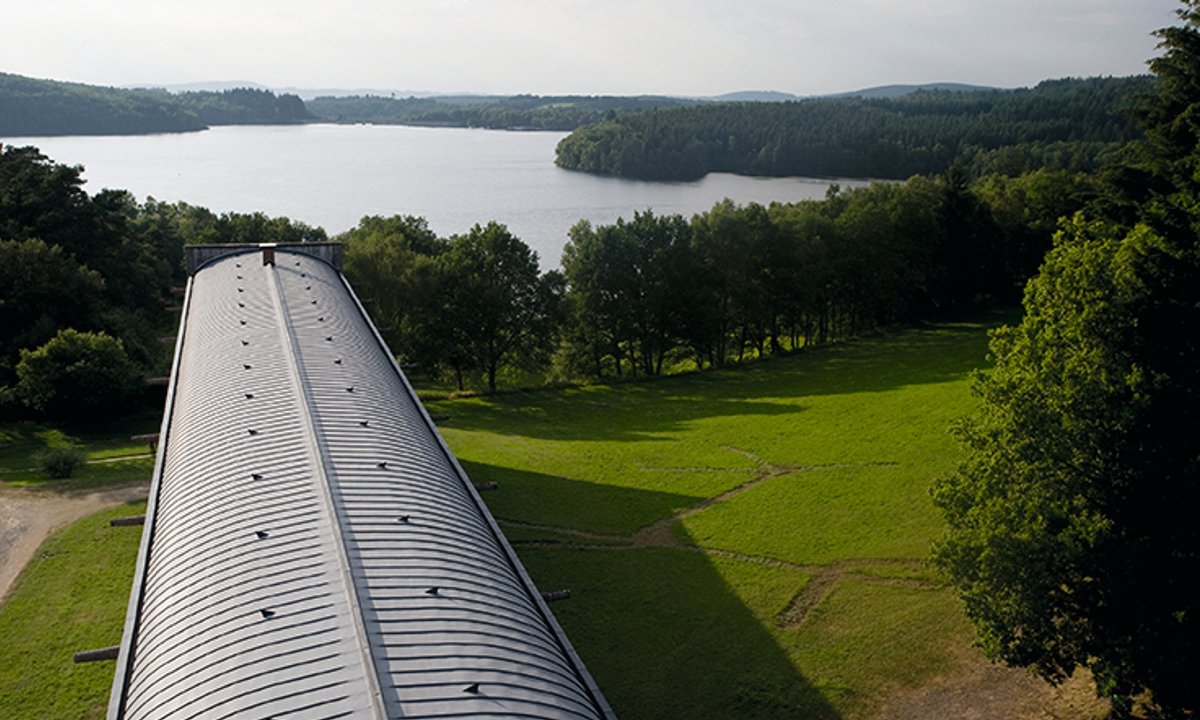
The Centre International d’Art et du Paysage—Île de Vassivière (CIAPV), a rural French arts centre on a forested island in Nouvelle-Aquitaine, is tackling its carbon footprint after a government-mandated analysis revealed that 95% of its emissions come from visitors driving to the remote site. Executive director Alexandra McIntosh is drawing on the island's manmade landscape—shaped by hydroelectric damming, agriculture, and logging—to implement ecological initiatives, including rewilding open fields, creating a self-managing test forest with botanist Francis Hallé, and planting pollinating flowers to boost biodiversity.
This matters because CIAPV exemplifies a growing tension in the art world: internationally focused institutions in rural locations rely on car travel, yet their natural surroundings are a key attraction. By turning its own environmental history into a model for mitigation—rather than limiting programming or visitors—the centre offers a practical, site-specific approach to reducing art tourism's climate impact, potentially inspiring other remote venues facing similar challenges.