
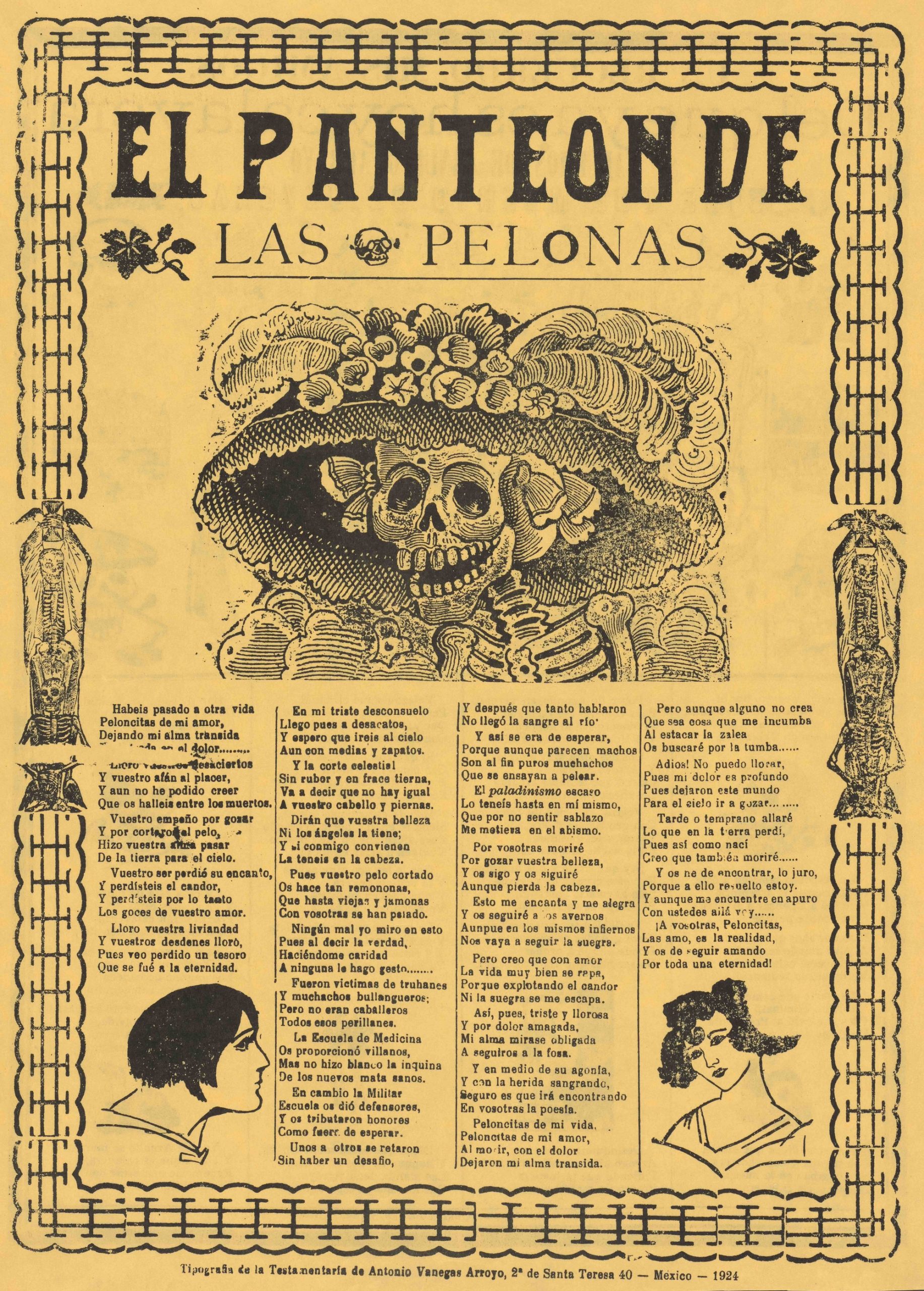
The article profiles the life and work of José Guadalupe Posada, a prolific Mexican printmaker who died in relative obscurity in 1913. It details his career from his early work in lithography and political cartoons to his later, defining collaboration with publisher Antonio Vanegas Arroyo in Mexico City, where he produced sensationalist broadsides and his iconic calaveras (skeletons).
Posada's work, particularly his calaveras, became central to the concept of mexicanidad—a post-revolutionary cultural identity that rejected Spanish colonial influences and celebrated indigenous traditions. His imagery, embraced by artists like Frida Kahlo and Diego Rivera, is now synonymous with the Day of the Dead and is recognized as a foundational element of modern Mexican visual culture, elevating him from a commercial artisan to a national artistic hero.