
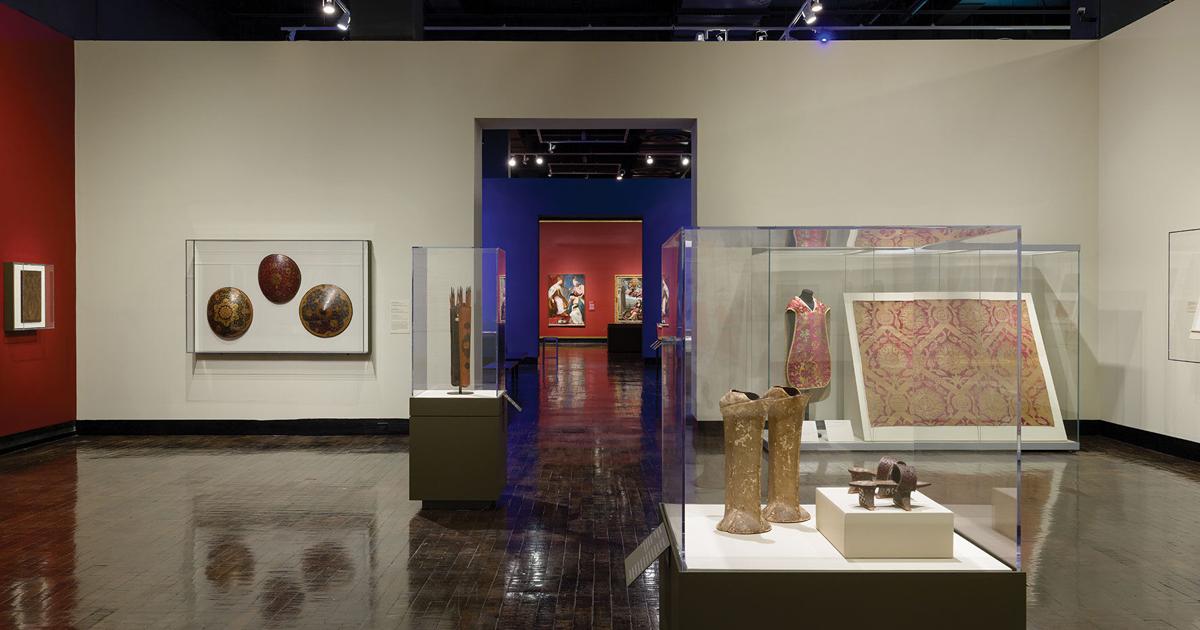
The Frist Art Museum's summer exhibition, "Venice and the Ottoman Empire," presents over 150 artifacts from Venice's civic museums, Fondazione Musei Civici di Venezia, and the University of Zadar's museum. Co-curated by Stefano Carboni and Trinita Kennedy, the show explores the complex relationship between the Ottoman Empire and the Republic of Venice, highlighting not only their centuries of brutal warfare but also their extensive trade networks and cultural exchange. Luxury textiles, including silk and velvet with Ottoman designs, feature prominently, alongside books, a qibla indicator, and military artifacts like a 17th-century Ottoman banner. The exhibition focuses on commerce and the elite who commissioned portraits, though it notably omits discussion of the slave trades and minimizes production processes.
This exhibition matters because it reframes a history often reduced to conflict, emphasizing the peaceful economic and artistic exchanges that shaped both empires. By showcasing cross-cultural influences in luxury goods, design, and diplomacy, it offers a nuanced view of how war and trade intertwined in the early modern Mediterranean. The show also raises questions about historical narratives, as it sidelines darker aspects like slavery and child labor, prompting viewers to consider what stories are prioritized in museum displays. For Nashville audiences, it brings rare Venetian and Ottoman treasures to the American South, fostering broader conversations about global art history and cultural interconnectedness.