
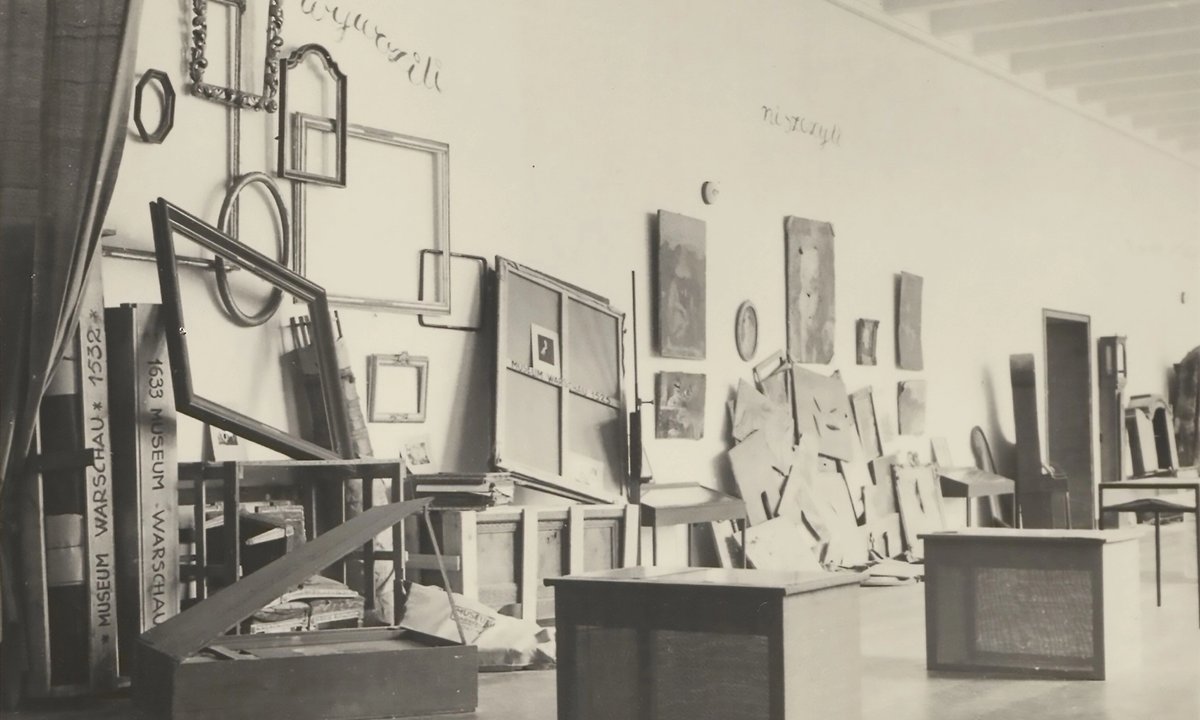
Berlin's Deutsches Historisches Museum has opened an exhibition titled "On Displaying Violence: First Exhibitions on the Nazi Occupation in Europe, 1945-48," which revisits six post-World War II exhibitions that attempted to process the atrocities of the war. These shows took place in venues ranging from the Grand Palais in Paris to a Czech villa formerly occupied by a Nazi official, and included displays such as the UK's Daily Express "The Horror Camps" (1945), the French traveling show "Hitlerian Crimes" (1945), "Warsaw Accuses" (1945) at the National Museum in Warsaw, and "Our Path to Freedom" (1947) at the Bergen-Belsen concentration camp. The Berlin exhibition uses original objects, film footage, photographs, and recordings to recreate the experience of these early post-war shows.
This exhibition matters because it examines a pivotal moment when European societies first confronted the scale of Nazi crimes through public exhibitions, using design and objects to commemorate victims and document atrocities. By reconstructing these historically significant but often overlooked shows, the museum highlights how visual culture and museum practice were used to process collective trauma, shape memory, and begin the long work of reckoning with the Holocaust and war crimes. It also raises enduring questions about how the past continues to inform the present.