
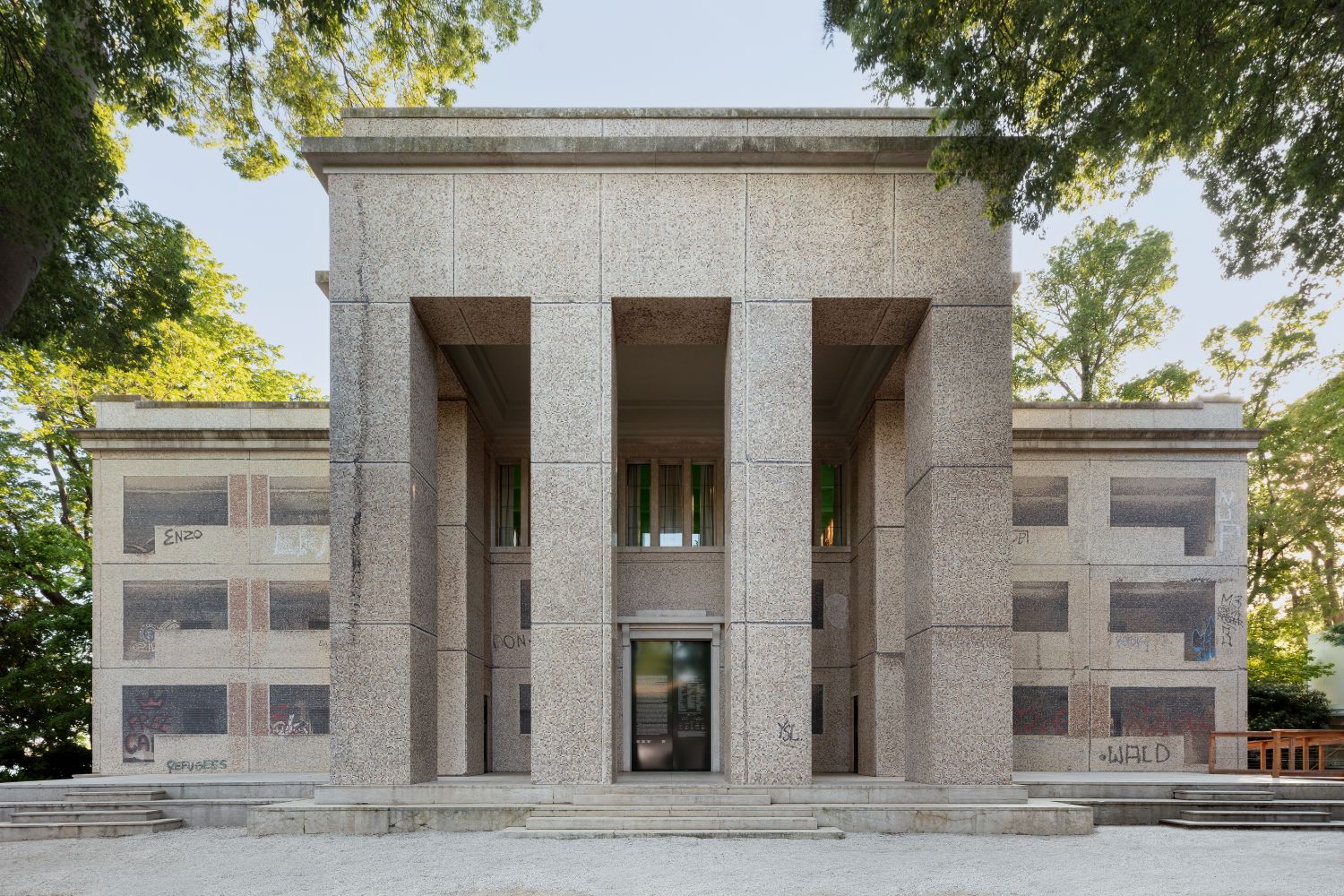
The German Pavilion at the Venice Art Biennale has been transformed into a prefabricated concrete slab building (Plattenbau) for this year's edition, designed by artists Sung Tieu and the late Henrike Naumann, who died suddenly in February at age 41 from cancer. Curator Kathleen Reinhardt described the pavilion as part of a highly political Biennale, with Tieu covering the 1938 fascist-era building with a mosaic of over three million tiles depicting a Berlin apartment block that once housed Vietnamese contract workers. Naumann's interior installation features mint-green references to Soviet barracks in East Germany, a cartography of war, and works including a relief of chairs, a curtain of chainmail, and the performance "Trümmerfrau."
This pavilion matters because it marks the first time East German and East German-migrant voices are presented with such depth and vehemence in the German Pavilion, according to Reinhardt. The project also engages directly with urgent geopolitical debates—the Biennale's jury resigned over disputes about Russia and Israel's participation, and the opening ceremony and Golden Lion awards were canceled. Naumann's work, which includes a warning about the normalization of far-right radicalization and solidarity with Eastern Europe, implicitly addresses Russia's role, making the pavilion a poignant and timely statement on war, memory, and migration.