
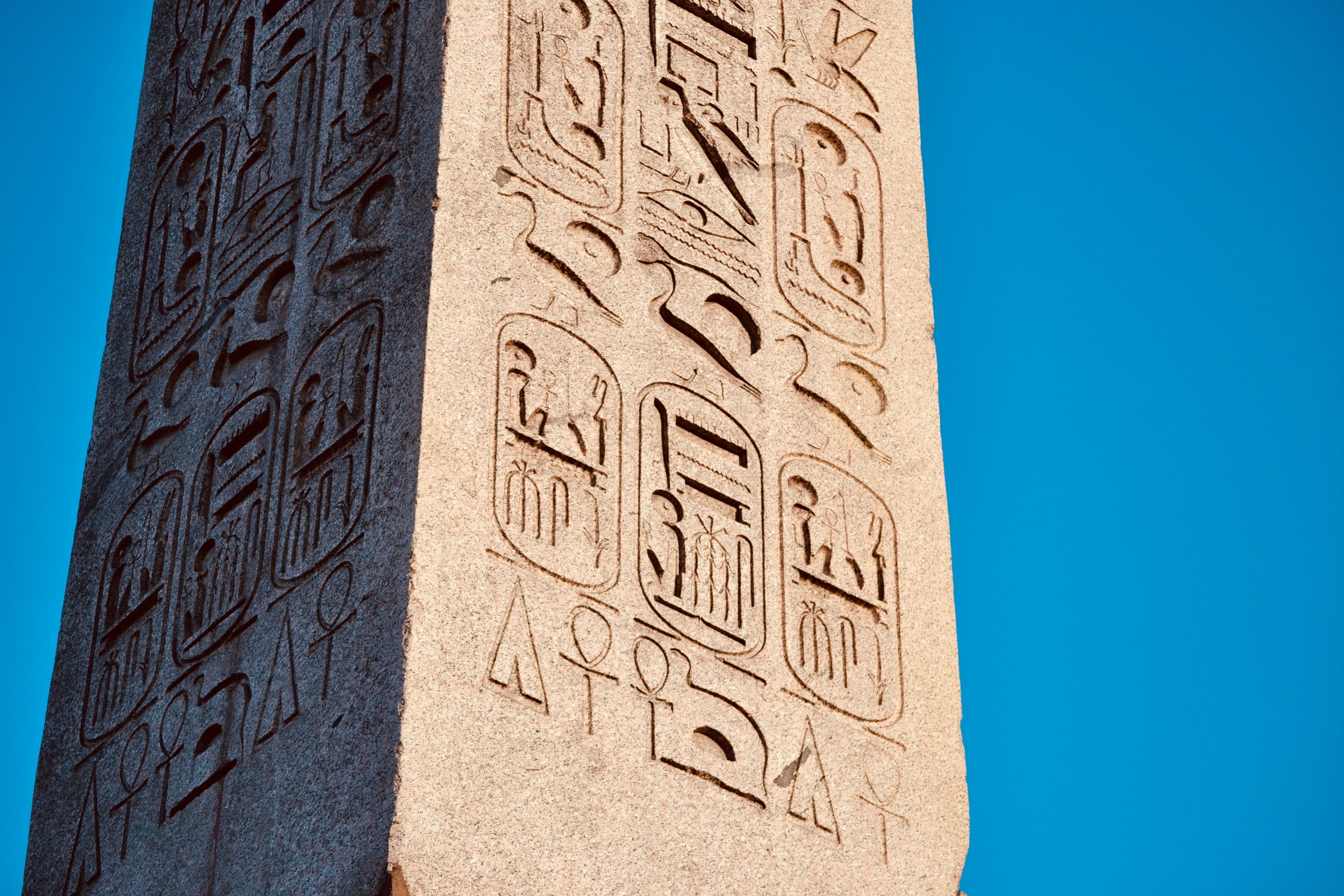
Egyptologist Jean-Guillaume Olette-Pelletier, a lecturer at Sorbonne University, discovered hidden cryptographic messages on the Luxor Obelisk in Paris's Place de la Concorde. During the pandemic, he noticed unusual hieroglyphs while walking past the 3,000-year-old monument. After scaffolding was erected for renovations ahead of the 2024 Olympics, he obtained permission to study the obelisk up close, becoming the first person in over a century to climb it. He identified seven crypto-hieroglyphs—encoded messages using puzzles and wordplay—that only a few experts can read. These inscriptions, set to be published in the journal ENiM, reveal that Pharaoh Ramses II used the obelisk as a propaganda tool to assert his divine right to rule, targeting the intellectual elite who approached the Luxor Temple by boat.
This discovery matters because it provides new insight into ancient Egyptian cryptography and the sophisticated propaganda methods employed by Ramses II to legitimize his reign. The findings challenge conventional readings of pharaonic texts and highlight how monuments can carry layered meanings accessible only to a select few. It also underscores the value of urban archaeology and the serendipitous discoveries that can arise when scholars engage with public monuments in everyday settings.