
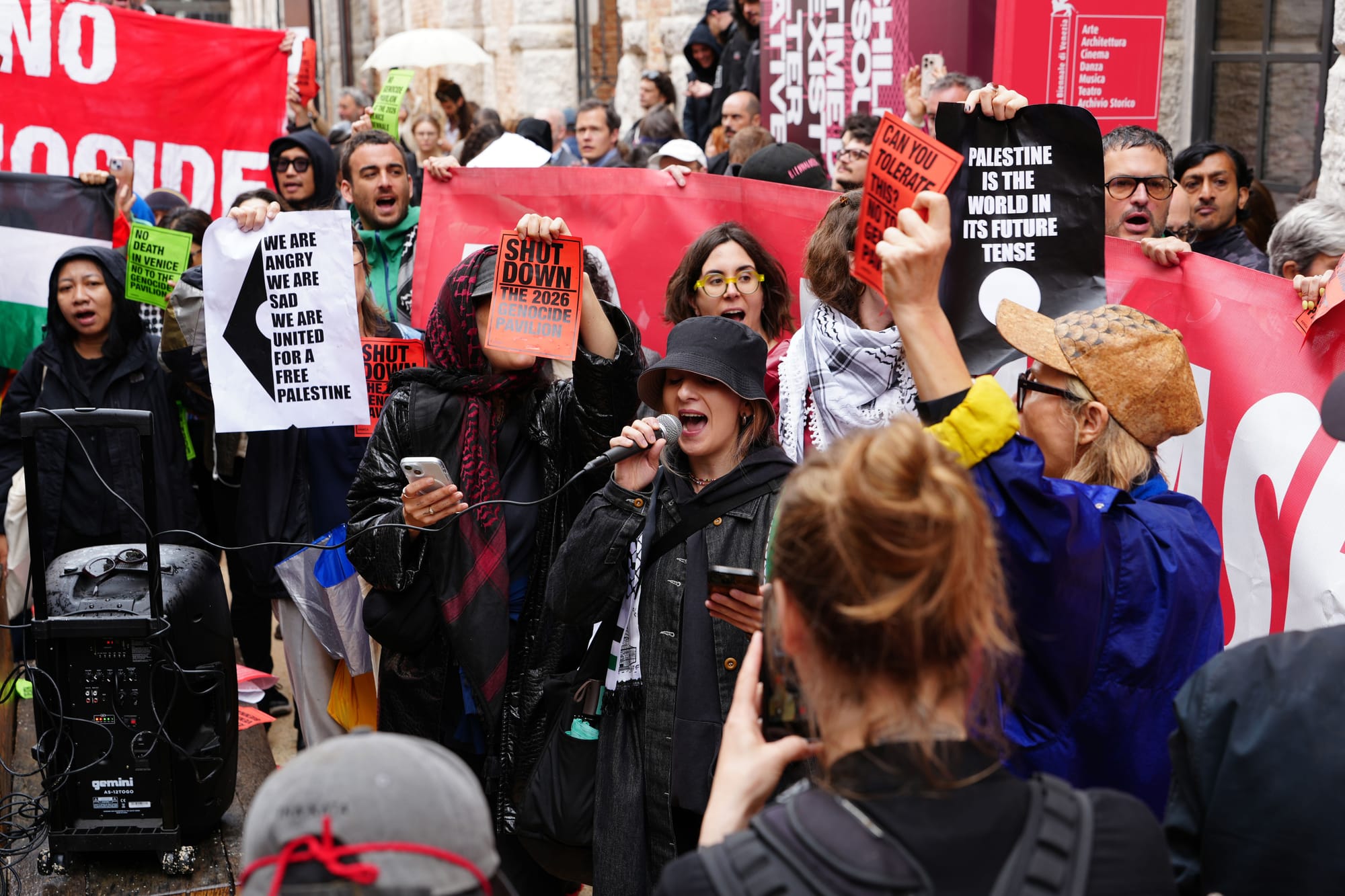
On May 6, 2026, the first day of previews at the Venice Biennale, hundreds of pro-Palestine activists led by the Art Not Genocide Alliance (ANGA) blocked the entrance to the Israeli pavilion, demanding its immediate closure. Protesters waved Palestine flags and banners reading "No Artwashing Genocide" and "No Genocide Pavilion at Biennale," chanting accusations of genocide against Israel. The demonstration temporarily shut down access to Belu-Simion Fainaru's exhibition "Rose of Nothingness" for about half an hour. The protest followed a letter signed by over 200 artists urging the Biennale to exclude Israel, which instead moved the pavilion to an alternative location in the Arsenale due to renovations. Separately, Pussy Riot and FEMEN rallied outside the Russian pavilion, which will only open during preview days due to sanctions. Venice cultural workers plan a 24-hour strike on May 8 in solidarity with Palestinians, potentially disrupting the Biennale's schedule.
This protest matters because it highlights the growing intersection of art and political activism, specifically around the Israel-Palestine conflict, within one of the world's most prestigious art events. The Biennale's decision to keep Israel's pavilion open despite widespread calls for exclusion, and the resignation of its award jury over political backlash, underscores deep tensions in the art world about complicity and institutional responsibility. The planned strike by cultural workers further signals a shift toward collective action against perceived normalization of genocide and precarious labor conditions, making the Biennale a flashpoint for broader debates about ethics, censorship, and the role of art in geopolitical conflicts.