
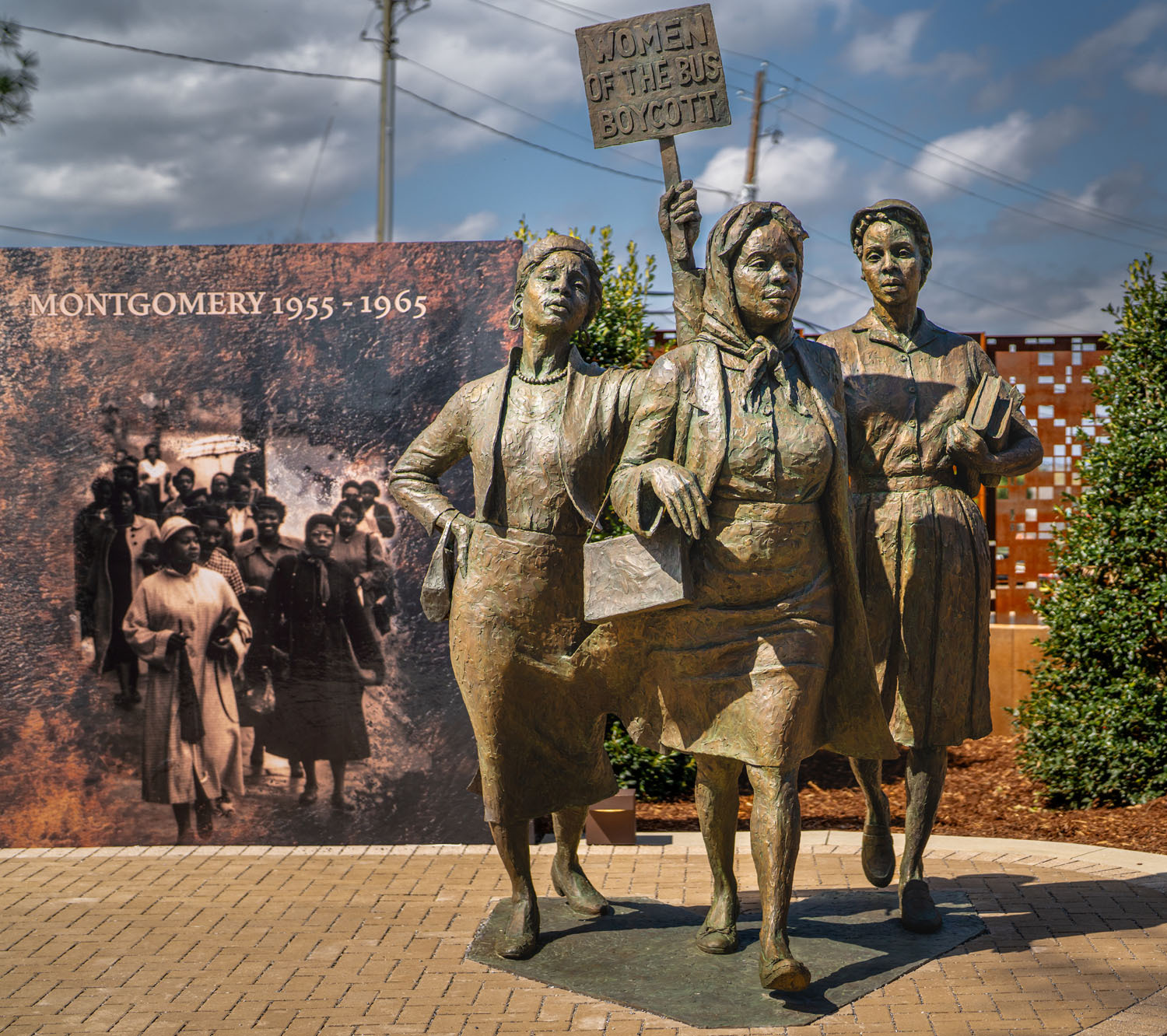
Bryan Stevenson, civil rights attorney and executive director of the Equal Justice Initiative (EJI), opened Montgomery Square in Alabama on the anniversary of the Selma to Montgomery March. The new public space commemorates the acts of courage that led to the Voting Rights Act of 1965, focusing on the Civil Rights era and the role of Montgomery's Black community, including lesser-known figures like Linda Blackmon Lowry and Sheyann Webb. Stevenson discusses the square as part of EJI's broader network of sites—including the Legacy Museum and the National Memorial for Peace and Justice—which aim to deepen public understanding of America's history of racial inequality and mass incarceration.
This matters because Montgomery Square represents a strategic shift from immediate policy advocacy to long-term narrative change, using public art and memorial spaces to reshape how Americans understand their history of enslavement, Jim Crow, and contemporary injustice. As Stevenson argues, addressing the narratives that make punitive policies popular is essential to countering voter suppression and anti-immigrant rhetoric. The site also serves as a gathering place to preserve the lived experiences of aging Civil Rights activists, ensuring their stories inform future generations and ongoing struggles for racial justice.